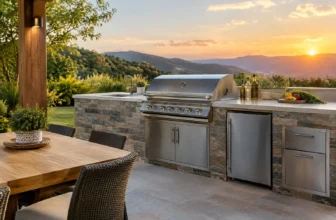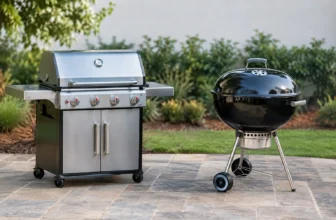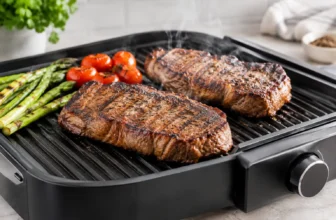

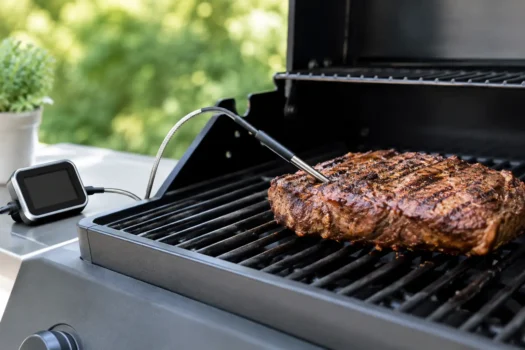
A grill can show 400°F on the lid while the food is sitting over a 325°F grate – or a 550°F hot spot. That gap is why a grill thermometer placement guide matters. If your chicken skin stays rubbery, your burgers cook unevenly, or your ribs take far longer than expected, the problem may not be your recipe. It may be where you are measuring heat.
Built-in lid thermometers are useful for a broad reference, but they rarely tell you the temperature where the food actually cooks. Reliable grilling starts with measuring the right temperature in the right place: at grate level for cooking-zone heat and in the thickest part of the food for doneness.
Grill Thermometer Placement Guide: Start at Grate Level
For most grilling, place an ambient probe at the same height as your food, roughly one to two inches away from it. Do not let the probe touch the cooking grate, the grill wall, or the food itself. Metal contact can conduct heat into the sensor and produce a reading that does not reflect the air around your meal.
The right location depends on whether you are cooking directly over a fire or indirectly beside it. On a gas grill, a grate-level probe belongs over the active burner area when you need to verify searing heat. For indirect cooking, move it to the cooler side where the roast, chicken, or ribs are sitting.
On a charcoal grill, placement matters even more. Coals create a concentrated heat source, and the difference between the coal side and the indirect side can be dramatic. Put the probe near the food, not above the charcoal basket or directly over a pile of briquettes. A probe over the fuel tells you how intense the fire is. A probe beside the food tells you how it is actually cooking.
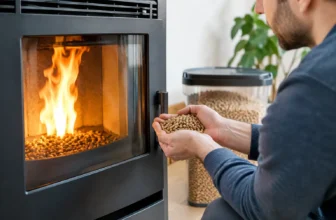
With a pellet grill, place the probe near the center of the grate or in the area where you normally cook. Pellet grills often have warmer zones near the burn pot and cooler zones toward the edges. The controller’s displayed temperature is useful, but it is not a guarantee that every section of the grate is running at that number.
Keep the Probe Out of the Wrong Airflow
Avoid placing an ambient probe directly under a vent, beside a chimney, or in the path of a strong fan outlet. Those areas can read hotter or cooler than the cooking zone because they measure moving air rather than stable grate-level conditions.
The same applies to the lid. A probe clipped high near the dome may read substantially hotter than the grate during some cooks, especially on kamado grills and tall barrel smokers. Heat rises. Your brisket does not.
If you use a probe clip, position the probe tip horizontally whenever possible. This keeps the sensing area exposed to the air and makes accidental contact with the grate less likely. If your thermometer uses a small probe with a pointed end, confirm where the sensor sits. On many models, it is slightly back from the tip, not at the very point.
Use More Than One Temperature Reading When It Counts
One thermometer is enough for a quick weeknight cook. It is not always enough for a long smoke, a large grill, or a two-zone fire. If you routinely cook on a full-size gas grill or a wide offset smoker, two ambient probes can save a lot of guesswork.
Place one probe near the hotter zone and one near the food on the cooler zone. This reveals whether your setup is working as intended. If the indirect side keeps climbing too high, you can reduce burner output, close a charcoal intake slightly, move the food farther from the heat, or adjust the fire before dinner turns into damage control.
A surface thermometer can also be useful for checking a cast-iron griddle, pizza stone, or plancha. It measures the cooking surface itself, which is different from grate-level air temperature. That distinction matters. A grate can be hot enough to sear while the air above it remains moderate, and a pizza stone can need more time to heat through even after the grill has reached its target temperature.
Where to Insert a Meat Probe
Food probes answer a different question: Is the center of the food done? Insert the probe into the thickest part of the meat, avoiding bone, heavy fat pockets, and the cooking surface.
For steaks, chops, and chicken breasts, insert the probe from the side rather than straight down from the top. This gives the probe a longer path through the center and improves your chance of placing the sensor in the true thermal middle. With a thin steak, an instant-read thermometer is often more practical than leaving a wired probe in place.
For a whole chicken or turkey, check the deepest part of the breast and the inner thigh without touching bone. These areas can finish at different times. A bird is not done simply because one convenient spot reads correctly.
For pork shoulder and brisket, place the probe in the thickest section of the muscle, away from obvious seams of fat. Brisket flats are thinner than points and can dry out if the probe is placed only in the fattier, more forgiving end. On pork shoulder, avoid pushing the probe into the bone or too close to the exterior bark.
For burgers, sausages, and other thin or irregular foods, use an instant-read thermometer near the end of cooking. Leaving a probe in a burger can be awkward, and the small cooking area makes placement less reliable.
Do Not Trust a Single Spot in Large Cuts
Large cuts can have real temperature variation from one end to the other. A brisket may show tenderness and a finished temperature in one section while another portion of the flat still needs time. Check a few locations before pulling it, especially when cooking for guests or when the cut is unusually thick or uneven.
Temperature is a strong guide, not a substitute for judgment. For tender barbecue cuts, probe feel matters. A probe that slides into the meat with very little resistance tells you more than chasing one exact number on a display.
Match Placement to Your Grill Type
Gas grills tend to have front-to-back and side-to-side variation based on burner layout, flame tamers, and wind exposure. Learn your grill by placing an ambient probe in the zone you use most, then moving it around over several cooks. The built-in thermometer may be 75°F or more removed from grate reality, particularly with the lid closed.
Charcoal kettles reward deliberate setup. When using a two-zone arrangement, place the food and ambient probe on the indirect side. Keep the lid vent above the food, not above the coals, so heat and smoke travel across the cooking chamber before exiting. The thermometer is there to verify the food zone, not to admire the fire.
Kamado grills hold heat efficiently, which makes small vent changes powerful. A grate-level probe is especially valuable during low-and-slow cooking because the dome thermometer can lag behind changes at the grate. For high-heat pizza cooks, use a surface thermometer for the stone and an ambient probe only if you need to understand dome-to-grate differences.
Pellet grills are convenient, but they are not perfectly uniform ovens. The hottest area may be above the burn pot, while the far edges run cooler. If you repeatedly cook on one side of the grate, measure that side. The display on the controller is useful for managing the machine. Your independent probe tells you what the food experiences.
Common Placement Mistakes That Ruin Good Data
The most common mistake is treating the lid thermometer as the cooking temperature. It is not useless, but it is usually too far from the food to be precise. Use it as a trend indicator: Is the grill climbing, dropping, or holding steady? Use a grate-level probe for decisions that affect cooking time.
Another mistake is clipping a probe directly over the hottest part of the fire while cooking indirectly. That can make you think the grill is running too hot, prompting unnecessary vent or burner changes that leave the food zone underpowered.
Dirty probes create problems, too. Carbon buildup and grease can slow readings and make cleanup harder. Wipe probes after each cook, keep cables away from direct flame, and do not pinch a wire in a lid unless the manufacturer says the cable is designed for it. A damaged cable can produce erratic readings that look like a grill problem.
Finally, remember that opening the lid changes the measurement. Every check dumps heat and introduces fresh oxygen, especially on charcoal grills. Use remote probes during longer cooks, then open the lid only when you need to turn, baste, reposition, or verify the food.
A thermometer cannot fix poor fire management, but correct placement makes the problems visible early. Put the ambient probe where the food sits, put the meat probe in the actual center, and let those readings guide your adjustments. That is how a grill becomes predictable instead of temperamental.