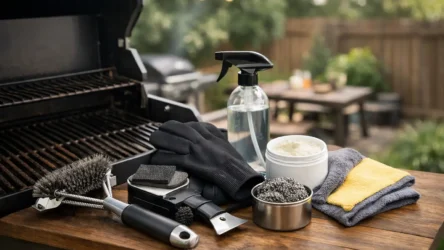
A Clean Grill Works Better – Not Just Looks Better
Most grill problems don’t start suddenly. They build slowly.
Grease accumulates.
Residue hardens.
Airflow becomes restricted.
Heat distribution changes.
Then performance drops – and it feels like the grill is failing. But in most cases, nothing is broken. Maintenance was delayed.
Maintenance is not about appearance.
It’s about performance, safety, and lifespan.
Why Dirty Grills Cook Worse – The Mechanics Behind the Problem
A dirty grill doesn’t just look neglected – it changes how the entire system behaves. Grease and carbon buildup act like insulation between heat and food, reducing the efficiency of heat transfer and creating uneven temperature zones across the cooking surface. Instead of flowing cleanly through metal and air, heat gets trapped, redirected, and absorbed unpredictably. This forces the grill to work harder to maintain temperature, increases fuel consumption, and makes cooking results inconsistent. What feels like a performance issue is usually a maintenance issue in disguise.
How Residue Disrupts Heat, Airflow, and Cooking Stability
Grilling depends on three mechanisms working together: direct heat through metal, circulating hot air, and radiant energy from flame and hot surfaces. Residue interferes with all three at once. Carbon creates microscopic gaps that slow heat transfer during contact cooking, grease blocks airflow channels and vents that regulate temperature, and dirty surfaces absorb radiant heat instead of reflecting it toward food. The combined effect is longer preheat time, unstable heat zones, harsher smoke, and food that cooks unevenly even when the temperature setting hasn’t changed. Clean systems behave predictably; dirty systems behave erratically.
Why Dirty Grills Burn More Fuel and Wear Out Faster
When efficiency drops, the grill compensates automatically by consuming more fuel to reach the same temperature. Burners run longer, charcoal burns faster, and heat shields stay under stress for extended periods. At the same time, grease traps moisture and accelerates corrosion, especially on critical components like burners, grates, and drip trays. Over time this leads to clogged ports, weakened metal, and expensive repairs. Regular cleaning doesn’t just preserve appearance – it preserves the mechanical lifespan of the equipment and keeps operating costs under control.
The Safety Factor Most People Notice Too Late
Grease accumulation is the most common cause of grill fires, and it builds quietly. Fat drips into hidden areas, melts under heat, and eventually reaches ignition temperature. Because the fuel source is below the cooking surface, the fire often starts out of sight and escalates quickly once oxygen feeds it. Early warning signs include sudden flare-ups, sharp smoke запах, popping sounds, and unexpected temperature spikes. Maintaining clean drip paths and empty trays dramatically reduces the risk because it removes the fuel before ignition can occur.
Cleaning Is Not About Appearance – It Resets Performance
A properly maintained grill behaves differently from a neglected one even if both look functional. Heat stabilizes faster, airflow remains unobstructed, food releases from the surface more easily, and smoke becomes cleaner and more controlled. In practical terms, cleaning restores the system to its designed operating state. Waiting until problems appear means the efficiency loss has already begun; cleaning proactively keeps performance stable and predictable.