
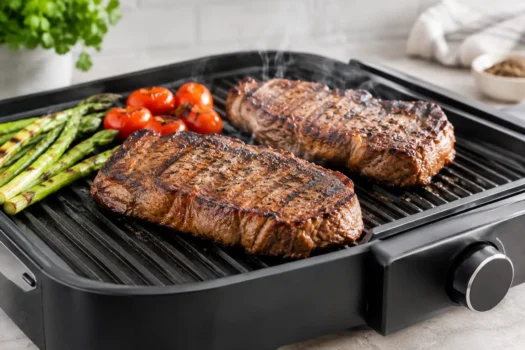
A steak with pale grill marks and a gray band beneath the crust is not a seared steak, no matter what the box claims. So, can electric grills sear steak? Yes, some can. But the answer depends far more on actual grate temperature, preheat time, and grill design than on whether the unit has a “sear” button.
A good electric grill can produce a respectable browned crust on a properly chosen steak. It will not usually match the aggressive heat recovery or full-surface output of a strong gas grill, charcoal kettle, or infrared burner. For apartment patios, small decks, and places where open flame is restricted, though, electric can be a practical compromise. The key is buying and using one with realistic expectations.
Can Electric Grills Sear Steak Well Enough?
For most home cooks, “well enough” means a dark, flavorful crust, visible grill marks, and an interior cooked to the desired temperature without drying out the steak. A capable electric grill can do that, particularly with strip steaks, ribeyes, flat irons, and other cuts around 1 to 1 1/2 inches thick.
What it may struggle with is the deep, edge-to-edge crust associated with restaurant broilers or a heavy cast-iron pan. Electric grills operate from a standard household outlet, which limits available power. Many indoor and outdoor models top out around 1,500 to 1,800 watts. That can heat a grate sufficiently, but it leaves less reserve heat when a cold steak lands on it.
That heat recovery issue matters. If the grate cools sharply after you add the steak, browning slows while the center keeps cooking. Thin steaks are especially unforgiving because they can reach medium before the grill regains enough surface heat to build a proper crust.
The honest answer is this: an electric grill can sear steak, but it rewards technique and punishes shortcuts more than charcoal or high-output gas equipment does.
What Creates a Real Steak Sear
A sear is the result of the Maillard reaction, the browning process that develops when proteins and sugars on the meat’s surface meet high, dry heat. Grill marks alone do not prove much. A steak can have dark stripes while most of its surface remains pale and steamed.
For an electric grill, three factors control the result.
Grate temperature matters more than the dial
A dial marked “high” tells you very little. What matters is whether the cooking surface gets hot enough and stays hot enough under food. A grill that reaches a stable grate temperature in the 450 to 550 degree range has a workable chance of searing. Below that, it can still cook steak, but browning becomes slower and less convincing.
Cast-iron grates generally help because they store more heat than thin stamped metal. Heavier grates do not create more electrical power, but they reduce the temperature drop when the steak hits the grill. That gives you a better first minute, which is often the difference between browning and steaming.
Preheating is not optional
Many disappointing electric-grill steaks start with an underheated grill. The indicator light may say the grill is ready after a few minutes, but the grate may need 15 to 25 minutes to fully heat through. Follow the manufacturer’s safety instructions, keep the lid closed if the model has one, and give the cooking surface time.
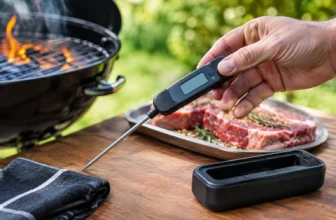
A simple test is to hold your hand several inches above the grate. If the heat feels merely warm, it is not ready. Better yet, use an infrared thermometer to check the grate. It is one of the few accessories that can quickly expose whether a grill’s advertised temperature is useful in real cooking.
Surface moisture works against browning
Pat the steak dry with paper towels before seasoning. This is not fussy restaurant technique. It is basic physics. Water must evaporate before the surface can brown, and electric grills do not have excess heat to waste boiling off moisture.
Avoid marinades with lots of sugar for a first attempt. They can scorch before the steak develops a proper crust. A dry steak, salt, pepper, and a light coating of high-smoke-point oil is the dependable starting point.
How to Sear Steak on an Electric Grill
Start with a steak at least 1 inch thick, ideally closer to 1 1/4 inches. A thinner steak can work, but it leaves very little margin for error. Ribeye and strip steak are good candidates because their fat content supports flavor even if the grill does not produce an ultra-hard crust.
Preheat the grill on its highest setting for longer than you think necessary. Once hot, lightly oil the steak rather than flooding the grates with oil. Place it on the hottest section of the grill and close the lid if the design allows. The lid traps heat and helps the top cook, which can shorten the total time the steak spends over the element.
Leave the steak alone for the first 90 seconds to two minutes. Moving it too early interrupts browning and can tear at the surface. Then rotate it if you want crosshatch marks, or flip it and repeat on the second side.
Use an instant-read thermometer instead of relying on time alone. Pull the steak a few degrees before your final target because carryover cooking continues during the rest. For medium-rare, many cooks pull around 125 to 130 degrees Fahrenheit and rest the steak for five to 10 minutes. Actual carryover varies with steak thickness and grill temperature.
If the steak reaches its target internal temperature before the exterior looks right, do not keep grilling it in hopes of a miracle. That is how a medium-rare steak becomes dry medium-well. Next time, dry it better, preheat longer, choose a thicker cut, or use a different cooking method.
Where Electric Grills Fall Short
Electric grilling has real limitations, and pretending otherwise does buyers no favors. The biggest one is heat recovery. A crowded cooking surface can overwhelm a small electric grill quickly. Two steaks may be manageable; four thick, refrigerator-cold steaks can drop grate temperature enough to compromise every one of them.
Outdoor temperature also matters. On a cold, windy day, a lightweight electric grill may struggle to hold its top setting. Some models are designed mainly for sheltered balconies or tabletops, not year-round exposed patio use. Long extension cords can also reduce performance and create a safety concern. Plug the grill directly into a properly rated outlet whenever the manufacturer instructs you to do so.
Flavor is another trade-off. Electric grills can create browning, but they do not produce charcoal’s smoke profile or the flare-ups and vaporized drippings associated with gas grilling. Drippings may hit a shield or drip tray, but the flavor effect is usually milder. If smoke-kissed steak is the goal, electric will feel limited no matter how good the sear looks.
Cleaning can be easier than charcoal, but it is not maintenance-free. Grease trays need regular attention, and electric elements must be kept clear according to the manufacturer’s instructions. A grill with removable grates and an accessible drip tray is easier to own than one that forces you to work around fixed heating components.
When an Electric Grill Is the Right Tool
An electric grill makes sense when local rules prohibit propane and charcoal, when space is tight, or when you want predictable, low-fuss cooking without fuel storage. It is also useful for cooks who grill a couple of steaks or burgers at a time and value simple cleanup over maximum firepower.
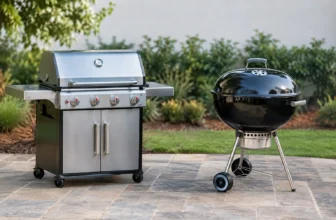
It is a weaker choice for frequent large gatherings, thick steakhouse-style cuts, or anyone who considers a hard crust and live-fire flavor nonnegotiable. In those cases, a quality gas grill with strong burners, a charcoal grill, or a cast-iron skillet on the stove will usually deliver better results.
Before buying, look beyond stated wattage. Look for a lid that closes securely, grates with real mass, a usable grease-management system, enough cooking area for your normal batch size, and controls that hold steady rather than cycling wildly. A “sear zone” label is not meaningful if the grill cannot maintain heat after food goes on.
For the right household, an electric grill is not a toy or a consolation prize. It is a practical cooking appliance with a defined performance ceiling. Preheat it thoroughly, cook in small batches, and choose steaks thick enough to give the grill time to work. That approach will get you much closer to a proper sear than any marketing promise on the carton.