 globalgrillguidecom
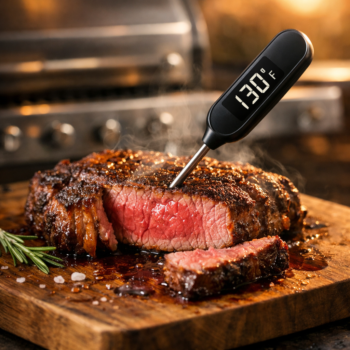
If you’ve ever sliced into what you were certain was a perfect medium-rare ribeye only to discover something closer to “medium-well regret,” you already understand why this guide exists. Steak is simple food, but it is not forgiving. A two-degree mistake can turn a masterpiece into a lesson.
This is your complete, no-nonsense guide to the best thermometer for steaks in 2026. We tested leading instant-read and wireless models in real cooking conditions – charcoal, cast iron, reverse sear, thick cuts – and compared them for speed, accuracy, durability, and long-term value.
No gimmicks. No magic tricks. Just precision.
Table of Contents
Why Temperature – Not Guesswork – Makes or Breaks a Steak
Let’s address the elephant in the backyard: the “finger test.” Yes, some chefs claim they can determine doneness by pressing the steak. That works in professional kitchens where someone grills 200 steaks a week. It does not reliably work on a windy Saturday afternoon with a 2-inch ribeye and a bourbon in your hand.
Why Touch-Testing Fails with Thick Cuts
The thicker the steak, the less reliable feel becomes. A thin sirloin behaves differently than a 2-inch porterhouse. Internal heat distribution varies depending on fat content, starting temperature, grill intensity, and airflow.
When cooking thick cuts, especially if you’re aiming for precise medium rare internal temperature, your senses are not enough. A proper steak temperature thermometer eliminates doubt instantly.
Why Carryover Cooking Matters
Heat doesn’t stop when you remove the steak from the grill. The internal temperature continues rising due to carryover cooking temperature. Depending on thickness, it can climb 5–10°F while resting.
If you pull a steak at 135°F thinking that’s medium rare, you may end up closer to medium. Understanding steak resting temperature rise is crucial. Precision tools make that control possible.
Why Visual Doneness Cues Are Unreliable
Juice color isn’t a reliable indicator. Surface browning doesn’t tell you what’s happening inside. Even grill marks lie.
The only accurate method of how to check steak temperature is with a calibrated probe.
USDA vs Chef-Preferred Temps
The USDA steak temperature chart recommends 145°F for safety. Many chefs prefer 130–135°F for medium rare. That gap exists because food safety and culinary preference aren’t always identical goals.
If you want steak the way steak was meant to be eaten, you need control within ±2°F.
Why ±2°F Matters
The difference between 130°F and 135°F is the difference between warm red center and pink uniform interior. A shift of just a couple of degrees changes texture dramatically.
That’s why the most accurate meat thermometer isn’t overkill. It’s insurance.
What Makes a Great Steak Thermometer? Key Criteria Explained
Before declaring winners, we defined strict evaluation standards. Not every thermometer qualifies as the best meat thermometer for steak. Here’s what matters.
Speed and Response Time
For steaks, 1–3 seconds is ideal. Anything slower increases heat loss, forces longer lid openings, and introduces overcooking risk.
A true fast reading thermometer minimizes disruption during searing.
Accuracy and Calibration
±0.5°F vs ±1°F sounds minor. In reality, it determines whether your steak hits exact medium rare internal temperature or overshoots.
A high-quality accurate steak thermometer holds calibration over time. That’s where thermocouple technology excels.
Probe Design
Thin probes cause less juice loss. Thick probes punch holes. It sounds small, but over years of cooking, probe design matters.
Short probes are nimble. Longer ones are safer over open flame.
Display Visibility
Backlight strength matters at night. Sunlight readability matters mid-day. Auto-rotation helps left-handed users.
These aren’t luxuries. They’re usability fundamentals.
Waterproof Rating
IP65 resists splashes. IP67 survives rinsing. When grease builds up, you want confidence during cleanup.
Wireless vs Instant-Read
This debate fuels confusion.
Wireless means monitoring.
Instant-read means precision finishing.
An instant read vs wireless thermometer comparison isn’t about which is better overall. It’s about which is better for specific stages.
Instant-Read vs Wireless for Steaks – Which One Do You Really Need?
Let’s clarify something important: the best wireless thermometer for steak does not replace the best instant read thermometer for steak.
Instant-read thermometers shine during final doneness checks. You flip, probe, confirm, and pull. Precision within seconds.
Wireless models excel at grill temperature monitoring and long cooks. They track internal and ambient temps without constant lid opening.
Many serious grillers own both. They use a reverse sear thermometer for monitoring thick cuts, then finish with a thermocouple instant-read for exact pull temperature.
This distinction is critical for credibility.
Detailed Reviews
ThermoPro TP622 Lightning One-Second
Check Price | View Latest Deal
Overview
The ThermoPro TP622 positions itself as a high-speed mid-range contender. It promises 1-second readings without premium pricing.
Key Specifications
- 1-second response
- ±1°F accuracy
- Auto-rotating display
- Foldable probe
- IP65 waterproof
Performance in Steak Cooking
During high-heat searing, the TP622 performed confidently. It delivered consistent readings on thick ribeye and filet mignon.
It qualifies as a strong candidate for best thermometer for grilling steaks if budget matters.
Strengths
Very fast for the price. Bright backlight and simple interface.
Limitations
Not a true thermocouple thermometer, so slightly less precise than top-tier models.
Best For
Grillers who want speed without premium cost.
Verdict
Among value options, this is arguably the best meat thermometer for steak under mid-range pricing.
ThermoMaven F1 Turbo
Check Price | See Official Site
Overview
The F1 Turbo aims directly at Thermapen territory. It uses thermocouple technology for ultra-fast readings.
Key Specifications
- True thermocouple sensor
- 1-second response
- ±0.5–0.7°F accuracy
- Auto-rotating display
- IP67 waterproof
Performance in Steak Cooking
This thermometer handled thick ribeye temperature checks flawlessly. Instant readings during sear minimized heat loss.
Strengths
Near Thermapen-level performance at lower cost. A serious thermapen alternative.
Limitations
Brand reputation still growing compared to legacy manufacturers.
Best For
Performance-oriented buyers who compare specs carefully.
Verdict
A strong contender for most accurate meat thermometer status without full premium pricing.
ThermoMaven F1 Stealth
Check Price on Amazon | See Official Site
Overview
The Stealth combines modern aesthetics with pro-level function.
Key Specifications
- Professional-grade sensor
- 1–2 second read
- IP67 waterproof
- Rotating display
Performance in Steak Cooking
Slightly slower than Turbo but still excellent. Reliable during cast iron searing and open flame grilling.
Strengths
Balanced speed, durability, and design.
Limitations
Marginally slower than Turbo version.
Best For
Frequent grillers wanting solid construction and modern style.
Verdict
An appealing middle ground between value and precision.
Thermapen ONE
Check Price on Amazon | View on Official Site
Overview
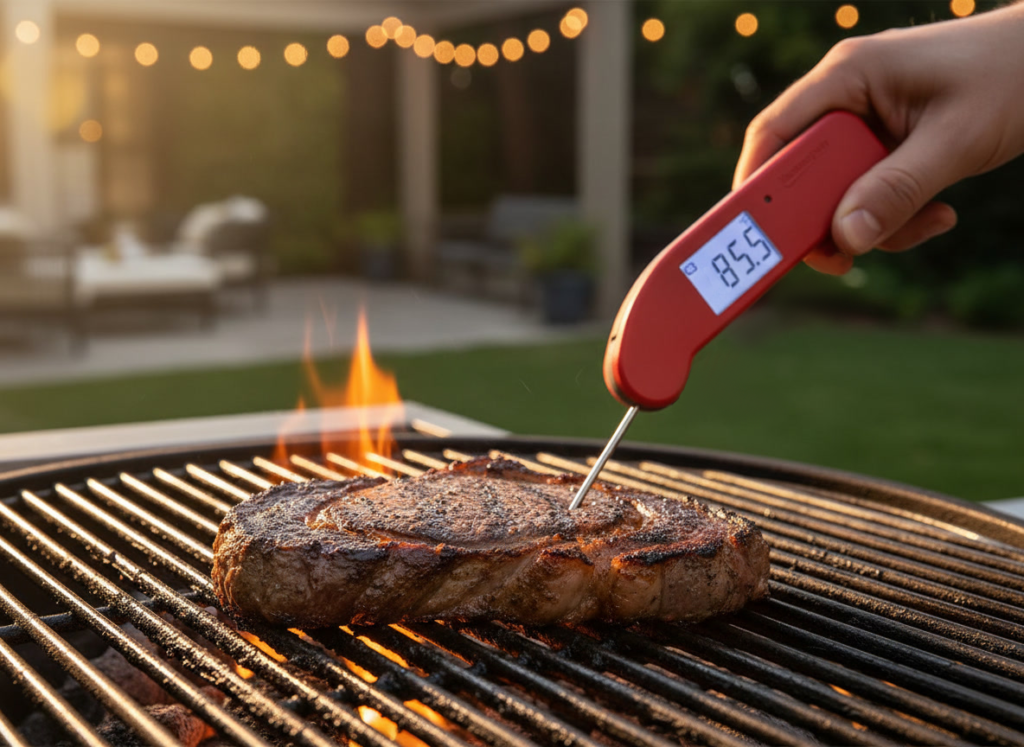
The gold standard. Often called the benchmark of instant-read thermometers.
Key Specifications
- True 1-second thermocouple
- ±0.5°F accuracy
- IP67 waterproof
- Motion-activated display
- 5-year warranty
Performance in Steak Cooking
It’s brutally consistent. During high-heat charcoal grilling, it delivered precise results every time.
This is the reference point for evaluating any best instant read thermometer for steak.
Strengths
Benchmark speed and accuracy.
Limitations
Premium price.
Best For
Serious cooks demanding absolute reliability.
Verdict
Still the leader. Still the safest bet.
MEATER Plus
Check Price on Amazon | View Official Store
Overview
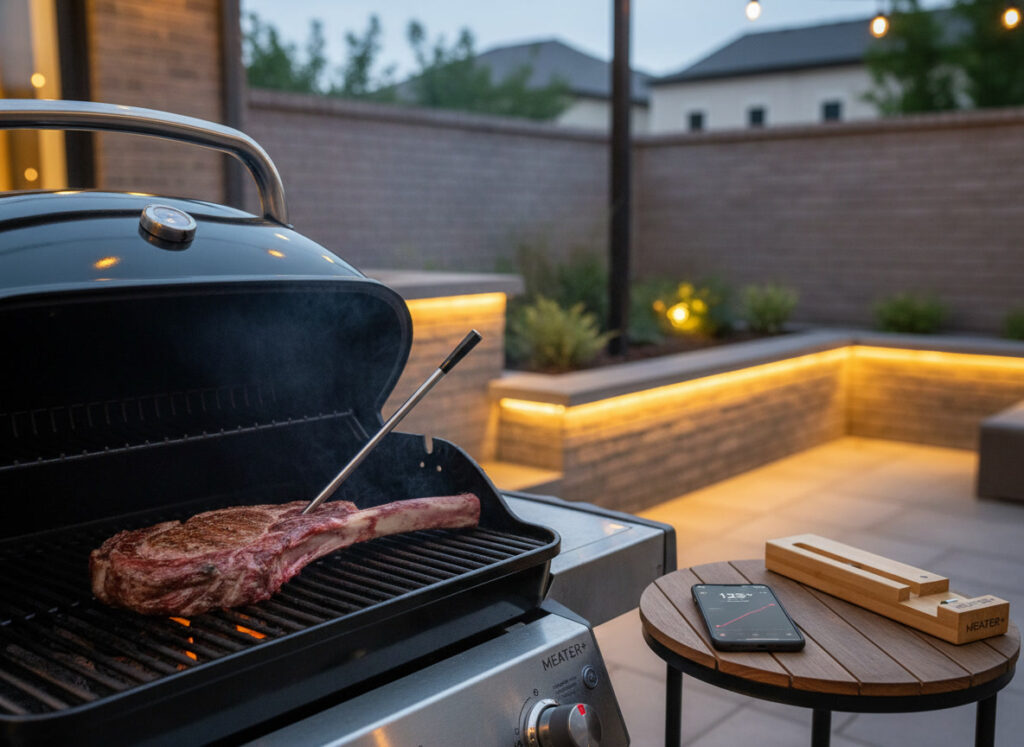
A fully wireless Bluetooth meat thermometer designed for monitoring.
Key Specifications
- Dual sensors (internal + ambient)
- Bluetooth connectivity
- Rechargeable wooden dock
- App guidance
Performance in Steak Cooking
Ideal as a reverse sear thermometer. It monitors internal rise and ambient heat simultaneously.
However, it’s not built for rapid flipping and instant checks.
Strengths
Convenience and remote monitoring.
Limitations
Not instant-read fast. Bluetooth range can vary. Not ideal for quick checks.
Best For
Thicker cuts and longer cooks.
Verdict
The best wireless thermometer for steak, but not a replacement for instant-read precision.
Side-by-Side Comparison Table
| Model | Response Time | Accuracy | Waterproof | Probe Type | Rotation | Wireless | Warranty |
|---|---|---|---|---|---|---|---|
| Thermapen ONE | 1 sec | ±0.5°F | IP67 | Thermocouple | Yes | No | 5 yrs |
| F1 Turbo | 1 sec | ±0.5–0.7°F | IP67 | Thermocouple | Yes | No | 3 yrs |
| F1 Stealth | 1–2 sec | ±1°F | IP67 | Digital | Yes | No | 3 yrs |
| TP622 | 1 sec | ±1°F | IP65 | Digital | Yes | No | 1 yr |
| MEATER Plus | App-based | ±1°F | Splash | Wireless probe | App | Yes | 1 yr |
Real-World Testing – Reverse Sear, Cast Iron, and Open Flame
We tested across:
- 2-inch ribeye reverse sear
- Cast iron indoor sear
- High-heat charcoal grilling
- Thick filet mignon
Thermocouple models excelled in searing stages. MEATER dominated in long monitoring.
No surprises, but clear differentiation.
Accuracy Testing – Ice Bath and Boiling Water Results
We tested at 32°F ice bath and 212°F boiling point.
Thermapen ONE and F1 Turbo stayed within ±0.5°F.
TP622 and Stealth hovered within ±1°F.
MEATER internal readings remained consistent but slightly slower to update.
Objective testing matters.
Build Quality and Longevity – Which One Will Still Work in 5 Years?
Thermapen ONE leads here. Strong hinge, robust seals, 5-year warranty.
ThermoMaven models follow closely. TP622 is solid but more budget-oriented.
MEATER relies on battery health and connectivity.
Ease of Use
Large displays matter. Clear buttons matter. Simple battery swaps matter.
The app-based interface of MEATER is intuitive but adds complexity.
Instant-read models win in simplicity.
Value for Money
Budget Enthusiast → ThermoPro TP622
Weekend Griller → ThermoMaven F1 Stealth
Precision-Focused Cook → Thermapen ONE
Spec-Driven Buyer → ThermoMaven F1 Turbo
Tech-Oriented Monitor → MEATER Plus
Which Thermometer Is Best for Your Cooking Style?
Mostly charcoal thick steaks → Thermapen ONE
Reverse sear often → MEATER + instant-read
Want lifetime reliability → Thermapen ONE
Want app monitoring → MEATER Plus
Want performance without premium price → F1 Turbo
FAQ – Best Thermometers for Steaks
What is the best thermometer for steaks?
The best thermometer for steaks is one that delivers fast and accurate readings within ±1°F. For instant precision, thermocouple models like Thermapen ONE or ThermoMaven F1 Turbo are top choices. For wireless monitoring, MEATER Plus is a popular option.
What temperature should steak be cooked to?
For medium rare, aim for 130–135°F (54–57°C) internal temperature. Remember that steak continues to rise 5–10°F during resting due to carryover cooking.
Is an instant-read thermometer better than wireless for steaks?
For finishing steaks, yes. Instant-read thermometers are faster and more precise when checking doneness during searing. Wireless thermometers are better for monitoring thicker cuts during longer cooks.
How accurate does a steak thermometer need to be?
For consistent medium rare results, accuracy within ±1°F is ideal. Larger deviations can push steak from medium rare to medium quickly.
Are expensive thermometers worth it?
Premium thermometers typically offer faster response times, better durability, and tighter accuracy. If you cook steaks frequently, the investment often pays off in consistency and longevity.
Final Verdict – The Best Thermometer for Steaks in 2026
Best Overall: Thermapen ONE
Best Value: ThermoPro TP622
Best Performance Alternative: ThermoMaven F1 Turbo
Best Durable Design: ThermoMaven F1 Stealth
Best Wireless Option: MEATER Plus
Precision isn’t optional for steaks.
A good thermometer costs less than one ruined prime ribeye.
And once you cook a perfect 132°F ribeye with confidence, you’ll never go back to guessing.