
A $200 kettle and a $1,200 kamado can both turn out excellent ribs, steak, chicken, and burgers. That is what makes a kettle kamado comparison harder than the marketing suggests. The real question is not which grill is “better.” It is which one gives you the results you want without creating extra cost, space demands, or maintenance you will regret six months later.
Kettles remain one of the most capable tools in backyard cooking because they are simple, forgiving, and affordable. Kamados offer a different proposition: heavy ceramic construction, unusually stable temperatures, and efficient fuel use. Both burn charcoal. Both can grill hot and smoke low. Their ownership experience is very different.
Kettle vs. Kamado: The Differences That Matter
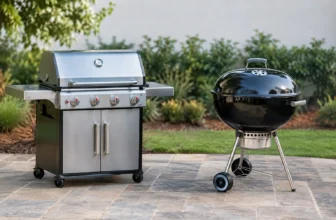
A kettle is a thin-walled steel charcoal grill with a rounded lid, lower intake vents, and an exhaust vent in the lid. Its strength is versatility through simplicity. You can build a two-zone fire for chicken, bank coals for indirect cooking, or fill a charcoal basket for a short hot cook. Most models are light enough for one person to move around the patio.
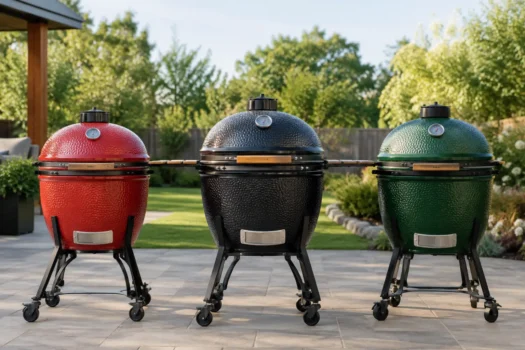
A kamado is an insulated ceramic cooker, usually egg-shaped, with a tightly sealing lid and adjustable vents. It holds heat exceptionally well. Once it settles at 250°F, it can maintain that temperature for hours with surprisingly little charcoal. It can also reach pizza-oven temperatures that would be hard on an ordinary kettle.
That insulation creates the central trade-off. A kamado is more controlled after it is stabilized, but it is slower to heat, slower to cool, and less forgiving when you overshoot your target temperature. A kettle responds faster to vent changes and is easier to reset during a cook, but wind and cold weather affect it more.
Heat Control Is Not the Same as Ease of Use
Kamado buyers often hear that ceramic cookers offer superior temperature control. In a narrow sense, that is true. The thick body buffers temperature swings, and the efficient fire needs little airflow once established. For brisket, pork shoulder, or an all-day rib cook, this is a genuine advantage.
But stable does not automatically mean easy. A kamado can take time to dial in. If you light too much charcoal or leave the vents open too long, the cooker may climb well past your target. Bringing a hot ceramic grill back down takes patience because the entire body is storing heat. New owners commonly chase temperatures by making large vent adjustments, then wait too little time to see the result.
A kettle loses heat faster, which sounds like a weakness until you need to make a correction. Adding or removing fuel is straightforward, and its simpler airflow makes it easier to understand. With a quality charcoal basket or two-zone setup, a kettle can hold smoking temperatures very well. It just may need a little more attention on a cold or windy day.
For weeknight cooking, the kettle’s quicker startup and cooldown often matter more than the kamado’s long-haul precision. For frequent overnight cooks or winter smoking, the kamado’s insulation earns its keep.
Cooking Space and Accessory Costs Change the Value Equation
Do not compare grate diameter alone. A standard 22-inch kettle has a broad, open cooking surface that is useful for direct grilling. It can handle a large batch of burgers, a full load of chicken pieces, or a couple of racks of ribs with little setup.
Many kamados have a round grate that looks comparable on paper but can feel more restricted, especially on smaller models. Their vertical shape can limit placement around a large indirect heat deflector. Larger kamados solve that issue, but prices rise quickly, and the cooker becomes extremely heavy.
Kamados also depend more on accessories to realize their full potential. A heat deflector is essential for low-and-slow cooking. Multi-level grates, baking stones, pizza accessories, ash tools, and fitted stands may all be sold separately. None of those items are frivolous, but they can turn an attractive entry price into a much larger purchase.
A basic kettle is ready to grill out of the box. Add an inexpensive charcoal basket, a hinged grate, or a temperature probe if you want more control. Premium kettles and dedicated smoking accessories can narrow the price gap, but the typical kettle setup still costs far less than a comparably equipped ceramic cooker.
Fuel Efficiency Favors the Kamado
Kamados use charcoal efficiently because the ceramic body and tight seals reduce heat loss. On a long cook, a properly managed kamado may use a fraction of the fuel required by an open steel kettle. That matters if you smoke often, use high-quality lump charcoal, or cook through colder months.
There is a catch. Efficient combustion also means you need clean, dry charcoal and careful fire management. Poor-quality lump can produce inconsistent airflow, while a blocked fire grate can make a kamado frustrating to relight. Kettles are less sensitive. They burn more fuel, but they are generally more tolerant of ordinary briquettes and imperfect setups.
For high-heat searing, either grill can deliver strong results. A kamado can produce intense radiant heat from its ceramic walls, while a kettle excels with a close-to-the-coals setup. If your usual cook is steaks, burgers, chops, and vegetables, fuel savings alone rarely justify a kamado.
Cleaning and Maintenance Are Different Jobs
Neither grill is maintenance-free, despite what product photos imply. Ash management is the main routine task with charcoal cooking.
A kettle usually wins for quick cleanup. Many models use a simple ash-sweeping system that pushes cooled ash into a removable catcher. The steel grate, charcoal grate, and bowl are easy to access. Over time, expect some surface rust if the grill lives uncovered in wet weather, but replacement parts are widely available and relatively affordable.
Kamados produce less ash during long cooks, but ash removal can be more awkward. You typically rake ash through the fire grate and scoop it from the bottom vent. The ceramic interior must be handled with more care, and the gasket around the lid will eventually wear. Replacing a gasket is manageable, but it is another ownership task.
Ceramic is not invincible. A quality kamado can last for many years, but a hard impact can crack a firebox, dome, or heat deflector. Moving one without help is a bad idea. A kettle can dent, chip, and rust, yet it is far less stressful to transport, reposition, or take to a tailgate.
Who Should Buy a Kettle?
Choose a kettle if you want a capable charcoal grill without a major financial commitment. It is the sensible fit for first-time charcoal cooks, renters, occasional smokers, families who grill mostly on weekends, and anyone who wants to cook for a crowd without managing a heavy ceramic appliance.
It is also the better choice if you value speed and flexibility. A kettle handles a fast dinner, a reverse-seared steak, and a six-hour pork butt with the same basic equipment. It does not hold temperatures as effortlessly as a kamado, but good technique closes much of that gap.
A premium kettle makes sense for buyers who want better grates, sturdier hardware, and thoughtful airflow design while keeping the advantages of a light, open grill. Paying more for a well-built kettle can be smarter than stretching for the cheapest kamado available.
Who Should Buy a Kamado?
Buy a kamado if low-and-slow barbecue is central to how you cook, not an occasional project. It is especially useful for cooks who want long, steady burns, strong performance in cold weather, and the option to bake bread or cook pizza at very high temperatures.
It also fits owners who have a permanent outdoor cooking area and do not need to move the grill often. The weight is not a minor specification. Once a large kamado is in place, it tends to stay there.
Skip the kamado if you want a casual charcoal grill, have a tight budget, or dislike waiting for a cooker to heat and cool. The best kamado is a serious outdoor oven as much as it is a grill. That is an advantage only when you will use that capability.
The Straight Answer on This Kettle Kamado Comparison
A kettle delivers the better value for most backyard cooks. It is cheaper to buy, easier to move, simpler to clean, and fully capable of excellent grilling and smoking. Its limitations are real, particularly in harsh weather and on very long cooks, but they are manageable.
A kamado delivers better insulation, greater fuel efficiency, and more stable low-temperature cooking. It earns its higher price for committed charcoal cooks who will use those strengths often enough to matter. It is not a magic shortcut to better food, and it will not make a rushed cook patient.
Before buying either one, picture the meal you make most often, the number of people you feed, and where the grill will live. The right charcoal cooker is the one you will light regularly, learn well, and still be happy to clean after dinner.