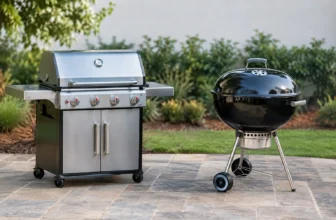

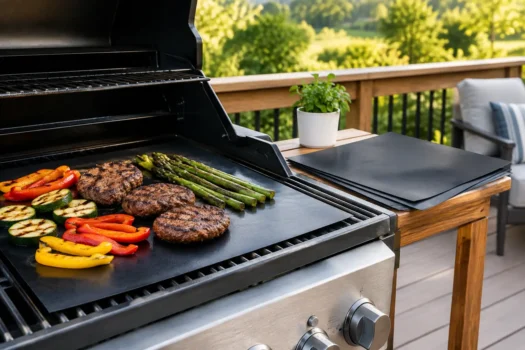
A grill mat has one job: keep grease, food drips, ash, and grime off the deck without creating a new heat problem underneath the grill. The best grill mats for decks do that job well, but the wrong mat can trap moisture, stain composite boards, curl at the edges, or give homeowners a false sense of fire protection.
No mat makes an unsafe grill setup safe. If your grill sits too close to siding or railings, has poor clearance beneath the firebox, or regularly drops hot charcoal, solve those problems first. A mat is a protective layer for normal cooking messes and minor spills, not a substitute for following the grill manufacturer’s clearance requirements.
What Makes a Grill Mat Safe for a Deck?
The first question is not whether a mat looks heavy-duty. It is whether its material fits your grill and deck surface.
For most gas grills, the main threat is grease. A quality PVC or rubber-style mat with a textured, non-slip surface is usually the sensible choice. These mats are easy to wipe down, stay flat under a cart grill, and keep grease from soaking into wood grain or collecting in the grooves of composite decking. They are practical, but they are not designed to handle direct contact with burning coals.
Pellet grills need a little more thought. Routine cooking produces manageable grease, but grease fires, ash cleanup, and the occasional dropped hot part during maintenance make heat resistance more valuable. A thick mat with a heat-resistant fiberglass core and a silicone coating is a better fit when the grill has adequate ground clearance. It also makes sense for smokers that run for hours and leave a larger cleanup area behind.
Charcoal grills and kamado cookers are the hardest category. Hot ash, sparks, and falling embers can damage a standard vinyl or rubber mat quickly. For these grills, look for a genuinely fire-resistant hearth-style pad or a rigid grill deck protector rated for high heat. Even then, keep the cooker stable, use an ash catcher, and avoid emptying ashes anywhere near the mat until they are completely cold.
Composite decks add another variable. They resist many stains better than bare wood, but grease can still discolor boards, particularly on lighter colors or textured finishes. Some soft mats can also leave a shadow line or trap water beneath them. Check the decking manufacturer’s care guidance before leaving any mat in one spot all season.
Best Grill Mats for Decks by Grill Type
There is no single best material for every backyard. The right choice depends on what is under the grill, what is inside the grill, and how you cook.
For standard gas grills: thick, textured PVC or rubber
A large, flat PVC or rubber grill mat is usually the best value for a gas grill with a closed cart and a properly insulated firebox. Choose one that is thick enough to resist curling but flexible enough to lift for cleaning. A textured top helps keep grease from spreading, while a smooth underside is less likely to grind grit into the deck when the grill moves.
Avoid thin, bargain-bin mats that feel like a car floor liner. They often buckle in direct sun, slide when the grill is rolled, and become difficult to clean once grease settles into shallow texture. On a wood deck, a mat that lies flat and can be moved regularly matters more than a flashy heat-resistance claim.
For pellet grills: heat-resistant fiberglass with silicone coating
For a pellet grill, a fire-resistant mat made with fiberglass and coated in silicone is a stronger all-around choice. It handles grease but offers more protection against brief heat exposure than ordinary PVC. Look for a mat with reinforced edges and a coating that can be wiped clean without shedding fibers.
The trade-off is maintenance. Fiberglass-based mats can collect dust and grease in their woven surface, especially around the hopper and grease bucket area. They need periodic washing, not just a quick sweep. If the coating cracks or the fiberglass begins to fray, replace the mat rather than stretching its service life.
For charcoal and kamado grills: a rigid fireproof pad
A flexible grill mat is not the best answer for a charcoal grill that sits low to the deck. A rigid fireproof pad, often built with layered heat-resistant materials, provides a more reliable barrier against radiant heat and hot debris. It is less convenient to move and usually costs more, but that is the trade-off for cooking with live fire over combustible decking.
Pay close attention to the grill’s legs and air vents. A pad cannot fix a cooker that vents hot air directly onto the deck or has insufficient clearance underneath. If the grill manual advises against use on combustible surfaces, take that instruction seriously.
For portable grills: compact, easy-clean protection
A compact mat is enough for a small propane tabletop grill or portable griddle, provided the appliance is used on a stable stand and according to its manual. Prioritize a mat that extends beyond the cooking area and can be cleaned after each use. Small grills make small messes, but they are also more likely to be moved while grease is still warm.
Size Matters More Than Most Buyers Expect
The most common mistake is buying a mat that matches the grill’s footprint. That only protects the wheels or legs. Grease splatter, sauce drips, and dropped food happen beside the grill, particularly near the side shelves and grease tray.
For a typical three- or four-burner gas grill, aim for a mat that extends at least 18 inches beyond the grill on the sides where you stand and work. If the grease tray drains from one side, give that side extra coverage. Pellet grills often need a wider mat around the hopper and grease bucket, while charcoal grills need enough room for ash tools and a safe place to set a lid or grate during cleaning.
Do not buy the largest mat possible if it creates a trip hazard or blocks a deck drainage path. A mat should make the cooking area easier to maintain, not turn it into an obstacle course.
Heat Ratings Are Not the Whole Story
Manufacturers often advertise an impressive maximum temperature, but that number needs context. A mat may tolerate a brief exposure to high heat while still being unsuitable beneath a low-clearance grill that radiates heat for several hours.
Read heat ratings as one part of the decision, not proof of safety. Also check the mat’s recommended use, the grill’s underside clearance, and whether the material is rated for direct ember contact. If that information is vague, assume the mat is intended for grease protection rather than serious heat shielding.
This is especially relevant with vinyl decking. Vinyl can soften, warp, or discolor under heat well below the temperature that damages wood. A heat-resistant mat helps, but a grill with generous clearance and stable feet is the better starting point.
Cleaning and Long-Term Deck Care
A grill mat only protects a deck if you clean beneath it. Grease can migrate around an edge, rainwater can carry debris under the mat, and trapped moisture can encourage mildew on wood decks. Lift the mat every few weeks during grilling season, sweep underneath, and let the deck dry before putting it back.
Clean grease from the top before it hardens. Warm water, mild dish soap, and a soft brush are enough for most mats. Skip harsh degreasers unless the manufacturer specifically allows them. Strong chemicals can break down coatings and may leave residue that marks composite decking.
Inspect the mat at the same time. Replace it if it develops cracks, brittle spots, melted areas, curled corners, or stains that no longer come clean. A deck protector is cheaper than replacing boards, but only when it is still doing its job.
The Buying Decision
For most homeowners using a gas grill, a thick, textured mat sized wider than the grill is the practical answer. Pellet grill owners should spend more for a coated, heat-resistant mat, especially if the grill runs long cooks on a wood or composite deck. Charcoal and kamado owners should skip ordinary grill mats and choose a rigid fireproof pad designed for live-fire cooking.
Buy protection that matches the real risk in your setup, not the biggest temperature claim on the package. A clean, level grill with proper clearance and a mat you can actually maintain will protect a deck far better than any piece of marketing copy.