
A gas grill that suddenly struggles to get hot can turn a simple weeknight cook into a frustrating mess. Knowing when to replace a grill regulator helps, but the regulator is not automatically the problem. Empty propane tanks, tripped safety devices, clogged burners, leaking connections, and failing igniters can all create symptoms that look similar.
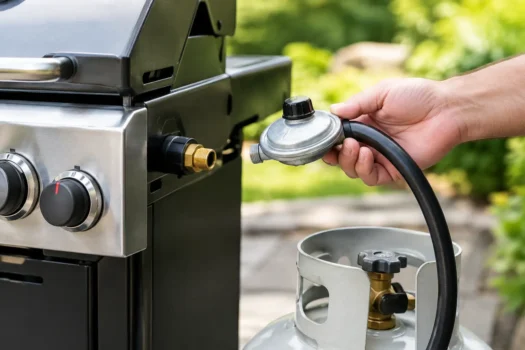
The regulator is the small control unit attached to the hose between your fuel source and the grill. On most propane grills, it reduces high tank pressure to the lower, steady pressure your burners need. When it works, you barely notice it. When it does not, heat becomes weak, uneven, unpredictable, or unsafe.
When to replace a grill regulator
Replace the regulator when you have ruled out the obvious causes and the unit still cannot supply stable gas flow. There is no useful calendar schedule for this part. Some regulators last many years; others fail early after exposure to weather, grease, insects, or repeated rough handling.
The strongest case for replacement is a recurring performance problem that returns after a proper reset, a full tank, and a basic inspection. If the hose is cracked, the regulator body is corroded, or you can smell gas from the assembly, stop using the grill until the issue is corrected. A regulator is not a part to patch with tape, sealant, or guesswork.
Here are the warning signs that deserve attention:
- The grill will not get properly hot even with a full propane tank and all burners set to high.
- Flames stay unusually small or weak across multiple burners, rather than on one burner only.
- Burner flames surge, fade, or pulse while the control knobs remain in the same position.
- The grill repeatedly drops into low-flow mode after you have reset it correctly.
- You see cracking, hardening, abrasion, swelling, or corrosion on the regulator or hose assembly.
- You smell gas, hear persistent hissing, or find bubbles during a soapy-water leak test.
- The grill runs normally with a known-good compatible regulator but not with the original one.
A visible leak or damaged hose is not a situation to troubleshoot while cooking. Turn off the burner controls and tank valve, disconnect the tank if it is safe to do so, and replace the damaged assembly before using the grill again.
Weak heat does not always mean a bad regulator
Low heat is the most common reason owners suspect the regulator, and it is also the symptom most often misdiagnosed. Start with the fuel supply. Propane tanks can feel heavier than expected and still be nearly empty, while cold weather reduces vapor pressure and can make a partly full tank perform poorly. Try a known-full tank before buying parts.
Then look at the burners. If one burner produces a weak flame while the others are normal, the regulator is unlikely to be the cause. That points more toward blocked burner ports, a dirty venturi tube, a damaged burner, or an issue at that specific control valve. A regulator affects the whole system, so its failures usually show up across all burners.
Spiders and insects are another common culprit. They can nest in burner tubes and restrict airflow, producing weak flames, yellow flames, or uneven heating. Grease buildup, food debris, and corrosion can do the same. Clean the burner ports with a soft brush or small wire and clear the burner tubes according to your grill manufacturer’s instructions. Do not enlarge the burner holes with a drill bit or oversized tool.
Reset the propane regulator before replacing it
Many propane grills use a built-in excess-flow safety device. Opening the tank valve too quickly can cause the device to restrict gas flow. The result is a grill that barely heats up, even though nothing is actually broken.
Before deciding the regulator has failed, reset the system. Turn every burner knob off, close the tank valve, and disconnect the regulator from the tank. Wait a few minutes. Reconnect the regulator, then open the propane tank valve very slowly. After that, light the grill following its normal startup sequence.
If normal heat returns and stays normal, you likely tripped the safety device rather than discovered a failed regulator. If the problem returns repeatedly even when you open the tank slowly, replacement becomes more reasonable. Still check the hose and burner system first. A reset that repeatedly fails can also indicate a restriction elsewhere.
How to inspect the regulator and hose safely
Do the inspection outside in a well-ventilated area, with the grill cool and away from open flames, cigarettes, and electrical sparks. Check the hose from end to end. Look closely where it bends near the tank connection, where it passes through the grill cart, and where it joins the regulator. These are common wear points.
A soapy-water test is the practical way to find an external gas leak. With the burner knobs off, connect the tank and open the tank valve slowly. Apply a mixture of dish soap and water to the tank connection, regulator fittings, and hose. Growing bubbles indicate a leak. Shut off the gas immediately. Never use a match or lighter to check for leaks.
Some discoloration on an older brass fitting is normal. Deep corrosion, loose fittings, a bent connector, or a hose that feels stiff and brittle is not. Replace the complete regulator-and-hose assembly when possible. On many consumer grills, the hose and regulator are designed and sold as one matched part.
Choose the right replacement, not just a cheap one
A replacement regulator has to match the grill’s fuel type, connection, and pressure requirements. Propane and natural gas regulators are not interchangeable. A regulator made for a portable one-pound propane cylinder may also differ from one used with a standard 20-pound tank. The connector style matters just as much as the pressure rating.
The safest route is usually an OEM replacement specified for your grill model. A quality aftermarket assembly can be fine when it is explicitly rated for your grill’s fuel type and configuration, but generic is not automatically compatible. Avoid buying based on hose length or connector appearance alone.
Also pay attention to multi-burner grills with side burners, rotisserie burners, or built-in cabinets. Those systems may use a particular regulator capacity to feed several burners at once. Installing an undersized or incorrect-pressure regulator can create poor heat performance, flare-up risk, and difficult-to-diagnose ignition problems.
After installing a replacement, perform another soapy-water leak test before lighting the grill. Then light one burner first, followed by the others, and watch the flame pattern. A healthy propane flame is mostly blue with small yellow tips. Large yellow, lazy flames suggest an air or burner issue, while a flame that lifts off the burner can indicate excessive airflow or an incorrect setup.
Keep the next regulator alive longer
Regulators live in a rough spot. They are exposed to rain, heat, grease vapor, lawn chemicals, and the occasional accidental tug when moving the grill. Keep the hose from rubbing against sharp cart edges, and do not let it hang where it can kink or drag on the ground.
A grill cover helps, but it is not a cure-all. Moisture can still collect beneath it, particularly in humid climates. During seasonal cleaning, inspect the regulator before the first cook rather than waiting for a failed preheat. If you store the grill for a long period, keep the regulator connection clean and protected according to the grill manufacturer’s guidance.
Do not replace a regulator just because the grill is a few years old. Replace it when inspection, testing, and performance point to a real problem. That approach costs less, avoids chasing the wrong repair, and gets your grill back to doing the only job that matters: delivering steady, usable heat when dinner is waiting.