
A pellet grill can turn out steady, wood-fired food with far less fire management than charcoal. The trade-off is that ash and grease have to go somewhere. So, are pellet grills hard to clean? No, not when the grill is well designed and cleaned on schedule. But they are less forgiving of neglected maintenance than a basic gas grill, and some models make the job much easier than others.
The short version: expect a small cleanup after most cooks and a more thorough cleaning every few bags of pellets. That is normal ownership, not a design failure. A pellet grill that is allowed to collect ash, grease, and damp pellets for months can become unreliable, messy, and potentially unsafe.
Are Pellet Grills Hard to Clean Compared With Other Grills?
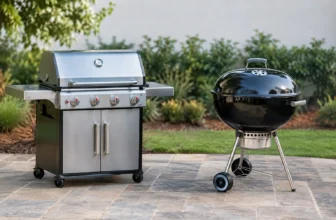
Pellet grills sit in the middle of the cleaning spectrum. They are generally easier to live with than a charcoal grill, which produces a large volume of ash and can leave soot on almost everything inside. They usually require more attention than a simple gas grill, where you can often brush the grates, empty the grease tray, and keep cooking.
The reason is the pellet grill’s operating system. A fire pot burns compressed hardwood pellets, and a fan moves heat and smoke through the cooking chamber. The burn is efficient, but it still creates fine ash. That ash settles in the bottom of the grill, around the fire pot, and sometimes on internal heat-management parts. Grease from food travels down toward a drip tray and grease bucket or cup.
Neither task is difficult. The work becomes annoying only when the grill has awkward internal parts, a shallow grease channel, no easy way to remove ash, or a hopper that is hard to empty. These details matter more over three years of ownership than a flashy controller screen.
What Cleaning a Pellet Grill Actually Involves
Most owners do not need to disassemble their grill after every rack of ribs. A sensible routine keeps the work manageable and helps the grill hold temperature consistently.
After each cook: deal with the food-contact surfaces
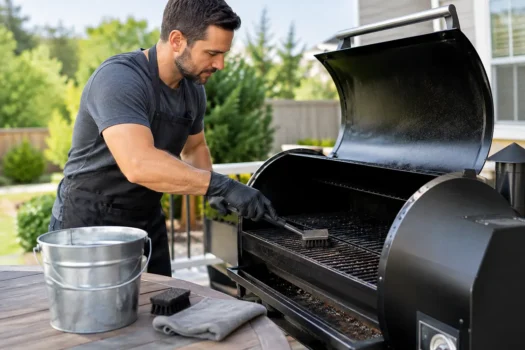
Once the grill is cool enough to handle, brush the cooking grates and remove stuck-on food. If you cooked fatty chicken thighs, burgers, or skin-on poultry, check the grease bucket and the front edge of the drip tray for overflow. Empty the bucket before it gets close to full.
This takes a few minutes. It is similar to basic gas-grill cleanup, although pellet grill grates can collect more smoke residue over time. A stiff grill brush or scraper is usually enough. Avoid soaking grates unnecessarily if they are cast iron, since poor drying can lead to rust.
Every few cooks: remove ash from the fire pot
This is the pellet-specific chore. Fine ash can build up around the igniter and restrict airflow through the fire pot. Eventually, that can contribute to rough startups, flameouts, temperature swings, or an oversized initial fire when fresh pellets ignite.
Let the grill cool completely, remove the grates and drip tray as needed, and vacuum the fire pot and bottom of the cook chamber with a shop vacuum rated for fine ash. Do not vacuum hot ash. It can smolder longer than it looks, and a household vacuum is not the right tool for the job.
How often depends on the grill and how you cook. A low-and-slow weekend cook produces ash slowly, while several hot cooks at 400°F or above can fill the fire pot faster. Many owners find that vacuuming after every two to five cooks prevents problems. If the manufacturer gives a stricter schedule, follow it.
Every few weeks: inspect the grease system
Pull out the grease bucket or cup, wipe the channel, and look under the drip tray. Grease is the maintenance item that deserves the most respect. Ash can cause poor performance, but accumulated grease can fuel a flare-up or grease fire inside the grill.
If your grill uses disposable drip-tray liners or foil, replace them before grease starts pooling. If it uses a bare steel tray, scrape it while the residue is still manageable. Do not cover drain holes or the grease channel with foil. That shortcut can send grease in the wrong direction.
A few times a year: clean for long-term reliability
At the beginning and end of grilling season, give the entire unit a closer inspection. Vacuum the cook chamber, clean the temperature probe gently, inspect the chimney or rear exhaust path, and check that the fan intake is free of dust, leaves, and insect nests. Wipe the exterior with a mild cleaner suitable for the finish.
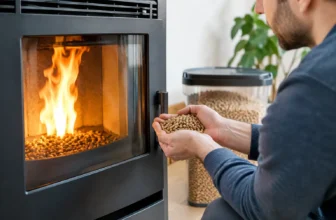
Also inspect the hopper. Pellets should be dry, firm, and shiny, not swollen, crumbly, or damp. Moisture turns pellets into sawdust-like material that can swell in the auger. Clearing a jammed auger is far more work than emptying the hopper before extended wet weather or long storage.
The Design Features That Make Cleaning Easier
Not all pellet grills deserve the same answer. A well-built unit can be straightforward to maintain. A poorly thought-out one can make a routine vacuuming job feel like appliance repair.
An accessible fire pot is the first feature to look for. Some grills have an ash cleanout chute, removable ash cup, or a simple path to vacuum the pot without removing half the interior. These systems do not eliminate cleaning, but they reduce the time and mess.
A full-length drip tray with a clear slope toward a large grease bucket is equally valuable. Look for a bucket that is easy to remove without spilling and a drain path that does not trap grease in corners. Interior parts should lift out without bending, scraping painted surfaces, or requiring tools.
Pellet purge systems are another practical convenience. If you switch wood flavors often or store the grill where humidity is a concern, a hopper cleanout door makes it easier to remove unused pellets. This is not essential for everyone, but it is a real ownership benefit, not a gimmick.
Finally, favor durable materials and a sensible interior layout over claims that a grill is “self-cleaning.” Pellet grills are not self-cleaning ovens. High heat can burn off some residue on grates, but it does not remove ash from the fire pot or grease from the drain system.
What Makes a Pellet Grill Messy to Own
Most cleaning complaints trace back to one of four habits: cooking very greasy foods without checking the drain system, skipping ash removal, using wet or low-quality pellets, or leaving pellets in the hopper through damp storage conditions.
Long brisket cooks can also create more cleanup than quick weeknight grilling. The grill may run for 10 to 16 hours, rendering fat steadily onto the drip tray while producing ash the entire time. That does not make pellet smoking impractical. It simply means the post-cook routine should match the job.
Very high-heat pellet grilling has another trade-off. Running at high temperatures can bake grease onto the drip tray and grates more aggressively. If your main goal is hard searing several nights a week, a gas grill may be easier to wipe down between meals. If you value smoking, roasting, and steady indirect cooking, the modest extra maintenance of a pellet grill is usually worth it.
A Cleaning Routine That Prevents Bigger Problems
The easiest way to own a pellet grill is to avoid turning maintenance into a seasonal rescue project. Keep a dedicated ash vacuum, a scraper, a grease-bucket liner or small disposable container, and a covered metal can nearby. When the grill is cool, cleanup is quick and predictable.
Do not obsess over spotless interior walls. A dark smoke coating inside the lid and cook chamber is normal. Focus on the parts that affect safety and performance: the fire pot, temperature probe, grease tray, drain channel, grates, and hopper pellets.
If you notice unusual smoke on startup, repeated ignition errors, poor temperature recovery, grease running somewhere it should not, or ash blowing onto food, clean the grill before troubleshooting electronics. In many cases, the problem is basic maintenance rather than a failed controller or igniter.
A pellet grill is not hard to clean. It does ask for a little more discipline than turning off a gas burner and walking away. For cooks who will vacuum ash periodically and keep the grease path clear, that is a fair exchange for reliable wood-fired cooking. Choose a model with easy access to the fire pot and grease system, then clean it before buildup becomes a problem. That is the difference between a grill that feels low-maintenance and one that becomes a weekend chore.