
A grill can look right in the store and still be the wrong grill for your backyard. The fuel system determines how fast you cook on a weeknight, how much attention a long smoke requires, what cleaning looks like afterward, and whether you actually use the grill often. This backyard grill fuel types guide focuses on those ownership realities, not the sales-floor version of convenience.
The best fuel is not the one with the strongest fan base. It is the one that fits your cooking habits, available space, local rules, and tolerance for maintenance. Charcoal can produce excellent results but asks more from the cook. Gas is hard to beat for speed. Pellets bring set-it-and-forget-it temperature control with more moving parts. Electric makes sense in places where open flame does not. Wood is powerful, but it is not a casual starting point.
Start With How You Actually Cook
Before comparing flavor claims, be honest about your schedule. If most meals are burgers, chicken, vegetables, and quick weeknight dinners, getting a fire started in 20 minutes may become a reason not to grill. If you enjoy tending a fire on a Saturday and care about hard searing, the extra work of charcoal may be part of the appeal rather than a drawback.
Also consider what happens after the food comes off. Ash disposal, grease management, pellet storage, propane refills, and electrical access are not minor details over several years of ownership. A grill that is easy to clean and easy to start gets used more. That matters more than a feature list.
Backyard Grill Fuel Types Guide: The Real Trade-Offs
Charcoal: Best for fire control and high-heat cooking
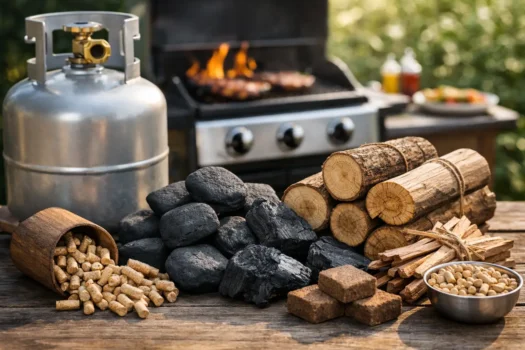
Charcoal remains the most direct route to classic live-fire grilling. Lump charcoal burns hot, lights relatively quickly, and produces less ash than briquettes, though bag-to-bag consistency can vary. Briquettes generally burn more predictably and are easier to arrange for controlled two-zone cooking, but they create more ash and can take longer to light.
A well-built charcoal grill can sear steaks aggressively, cook indirect chicken without burning the skin, and handle low-and-slow barbecue with practice. It also gives the cook direct control over vent settings, coal placement, and airflow. That control is rewarding, but it is not automatic. Wind, weather, charcoal quality, and vent discipline all affect the result.
The downside is time and mess. Expect roughly 15 to 25 minutes to establish a usable fire with a chimney starter, plus time for the grill to cool before ash handling. Cheap charcoal grills often make this worse through poor vent design, thin metal, leaky lids, and ash systems that are more marketing than function.
Choose charcoal if you enjoy the process, want strong searing ability, and do not mind cleanup. Avoid it if your main goal is pressing a button and serving dinner fast.
Propane gas: Best for everyday convenience
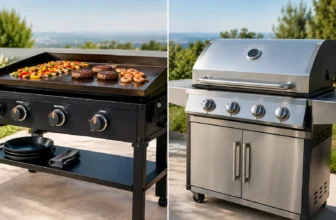
For most busy households, propane is the practical answer. Turn the knobs, ignite the burners, preheat for 10 to 15 minutes, and start cooking. Multi-burner gas grills are especially good for direct and indirect zones, allowing you to sear on one side while finishing thicker food on the other.
Gas grills do not create the same combustion profile as charcoal or wood, but the flavor gap is often overstated. Drippings hitting hot flavorizer bars or heat diffusers create some smoke and browning. More importantly, a gas grill that gets used three times a week will usually produce more good meals than a charcoal grill that stays covered because firing it up feels like a project.
The long-term issue is build quality. Burners, igniters, cooking grates, grease trays, and heat shields are wear items. Thin stainless steel and painted steel cabinets can deteriorate quickly when left exposed. A good cover helps, but it does not fix weak materials or poor drainage. Check replacement-part availability before buying, particularly for burners and heat tents.
Propane also requires tank management. Keep a spare tank or refill before it is empty. Running out halfway through dinner is a predictable problem, not bad luck.
Natural gas offers the same basic cooking experience without tank swaps, but it requires a properly installed gas line and locks the grill into one location. It is a strong option for a permanent patio setup, less so for renters or anyone who may move the grill around.
Pellet grills: Best for controlled smoking with less babysitting
Pellet grills burn compressed hardwood pellets fed by an electric auger into a fire pot. A controller adjusts fuel delivery and airflow to hold a selected temperature. In normal conditions, that makes them one of the easiest ways to cook ribs, pork shoulder, brisket, turkey, and other long-cook foods without managing a charcoal fire every hour.
Their strength is consistency, not maximum heat. Many pellet grills can roast and bake very well, but basic models may struggle to produce the intense direct heat needed for a proper steakhouse-style sear. Some higher-end units and models with direct-flame features improve this, but those designs need careful grease management and still do not behave exactly like a charcoal grill.
Pellet ownership has more mechanical considerations than gas or charcoal. The hopper must stay dry. Pellets can swell and jam the auger when exposed to moisture. Ash accumulates in the fire pot and needs regular vacuuming. Controllers, fans, igniters, and auger motors can fail, so warranty support and parts availability matter.
Pellet grills also need electricity. An outdoor outlet is mandatory, and a long extension cord is not an ideal permanent solution. Choose a pellet grill if smoked food is your priority and you value repeatable temperatures over hands-on fire management.
Electric grills: Best for restricted spaces and simple small meals
Electric grills are often dismissed by serious outdoor cooks, sometimes fairly. They do not produce the same high heat, smoke, or open-flame character as charcoal, gas, or wood. But they solve a real problem for apartment balconies, condos, and communities where charcoal and gas grills are prohibited.
A quality electric grill can cook sausages, burgers, chicken breasts, fish, vegetables, and smaller cuts reliably. It is simple to start, generally easy to clean, and does not require fuel storage. Preheating can take longer than expected, and recovery after adding cold food may be slow, especially on compact units.
Electric is not the choice for someone chasing crusty steaks, big barbecue cooks, or heavy smoke flavor. It is the right choice when local rules, safety restrictions, or lack of outdoor fuel storage limit every other option. A grill you are allowed to use is better than a prohibited grill that sits in a garage.
Wood and stick burners: Best for committed barbecue cooks
Cooking with splits of hardwood can produce exceptional barbecue and a deep level of fire-cooking satisfaction. It can also produce frustration, dirty smoke, temperature swings, and an expensive pile of undercooked food when the pit is poorly designed or the operator lacks experience.
A stick burner requires seasoned wood, steady fire management, airflow awareness, and regular attention. It is not truly hands-off. Maintaining clean combustion means adding appropriately sized splits at the right time, managing the coal bed, and avoiding a smoldering fire. Cheap offsets make this harder because they often leak air, use thin steel, and create uneven heat from one end of the cooking chamber to the other.
For a homeowner who wants traditional barbecue as a hobby, a good offset can be worthwhile. For a first grill or an occasional weekend cook, it is usually too much grill. Start with charcoal or pellets unless you specifically want to learn the craft.
Cost, Maintenance, and Storage Matter More Than Fuel Price
Fuel cost varies by region, but purchase price alone rarely tells the whole story. Charcoal and pellets require dry storage. Propane needs safe tank storage and occasional refills. Natural gas needs installation. Electric needs reliable power. Wood needs the most space and the most attention to dryness and seasoning.
Maintenance follows the same pattern. Gas grills need grease removal and periodic part replacement. Charcoal grills need ash removal and rust prevention. Pellet grills need grease cleanup, fire-pot vacuuming, and protection from moisture. Electric grills need clean cooking surfaces and drip trays, but typically have fewer fuel-related chores. Stick burners require ash cleanup, rust control, and routine attention to the firebox and chimney.
Weather changes the equation, too. Wind can make charcoal and wood cooking less predictable. Cold weather increases fuel use on pellet grills and can lengthen preheat times on every grill. If the grill will live outdoors year-round, prioritize a stable cart, solid lid, durable grates, proper drainage, and a cover that fits well. Fuel choice cannot compensate for a poorly built grill.
Match the Fuel to the Cook, Not the Marketing
Choose propane gas if you want the most useful all-around backyard grill for fast, frequent meals. Choose charcoal if high heat, hands-on control, and classic fire cooking matter more than convenience. Choose pellets if barbecue and repeatable low-and-slow performance are your main goals. Choose electric when restrictions make it the sensible option. Choose wood only when you are ready to make fire management part of the cook.
There is no prize for buying the most complicated fuel system. Buy the grill that matches the meals you cook, the time you have, and the maintenance you will honestly do. That is how a grill earns its space on the patio instead of becoming another expensive object under a cover.