 globalgrillguidecom
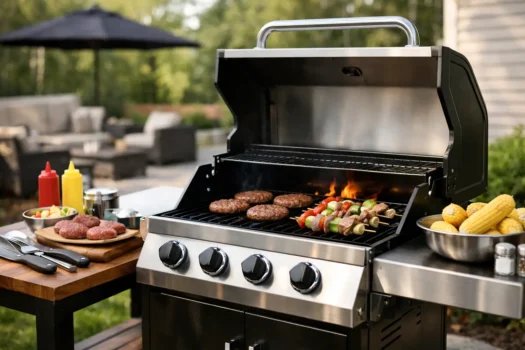
You do not need a giant stainless steel grill with six burners and a side sear station to cook good food. If this is your first purchase, the best gas grill for beginners is usually the one that starts easily, heats evenly enough to be forgiving, and does not turn routine cleanup into a chore you dread by week three.
That rules out a lot of flashy options right away.
Beginners tend to shop by burner count, BTU numbers, or whatever happens to be on sale at the nearest big-box store. Those things matter less than people think. What matters more is whether the grill helps you learn basic heat control without fighting hot spots, flare-ups, cheap parts, or confusing extras you will not use.
What makes the best gas grill for beginners?
A beginner-friendly gas grill is not just inexpensive. It is predictable.
That means the ignition works without drama, the control knobs make useful adjustments instead of swinging from too cool to too hot, and the cooking grates give you enough room to cook dinner without forcing you into a huge footprint. For most first-time buyers, a two-burner or three-burner grill hits the sweet spot. It is large enough for real meals, but small enough to heat efficiently and manage without a learning curve.
Build quality matters here more than marketing features. A grill with a solid lid, decent burner protection, and parts that do not feel disposable will teach you more than a feature-heavy model built to look impressive on a showroom floor. You want a grill that behaves the same way every weekend, because consistency is how beginners improve.
Start with size, not brand hype
Most beginners overbuy.
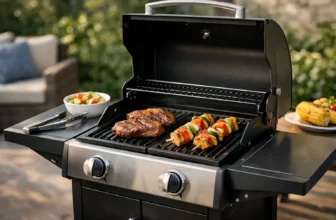
If you usually cook for two to four people, a compact three-burner grill is often the right answer. It gives you enough space for burgers, chicken, vegetables, or a few steaks without wasting fuel or making temperature control harder than it needs to be. Two-burner models can also work well, especially if patio space is tight, but some feel cramped once you start cooking full meals instead of a few hot dogs.
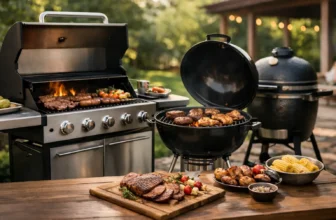
A four-burner grill can make sense for larger households, but it is rarely the easiest starting point. Bigger cook boxes take longer to preheat, cost more, and often tempt buyers into paying for capacity they will not use. The best gas grill for beginners should fit your actual cooking habits, not your once-a-year barbecue fantasy.
Heat control beats high BTU numbers
This is where new buyers get misled.
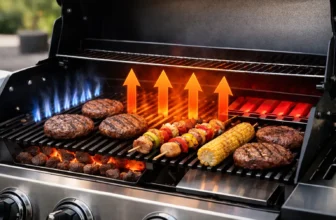
High BTU output does not automatically mean better grilling. In some cases, it just means the grill burns more fuel. What you want is usable heat – enough power to preheat properly, enough control to cook chicken without torching the outside, and enough evenness across the grates that food does not require constant rescue.
A good beginner grill should let you create two-zone cooking with little effort. On a two-burner model, that means one burner on and one off. On a three-burner, it might mean keeping one side cooler while the other handles direct heat. This matters because beginners benefit from a safety zone. If burgers are flaring or chicken is browning too fast, you need somewhere to move the food without losing control of the cook.
The features beginners actually need
Most extra features are optional. A few are genuinely useful.
A built-in thermometer in the lid is nice, though you should not treat it as perfectly accurate. Folding side shelves can be helpful in small spaces. Electronic ignition is worth having if it is dependable. Heavy enough grates matter too, because they retain heat better and tend to cook more consistently than the thinnest stamped alternatives.
What beginners usually do not need is a rotisserie setup, infrared side burner, smoker box, app connectivity, or fancy lighting. Those features add cost and sometimes add more parts to maintain. If a grill is trying hard to impress you with accessories, look closely at the core construction. Weak burners, poor grease management, and thin metal do not become acceptable just because the control panel glows.
Cleaning is part of ownership, not an afterthought
This is one of the biggest separators between a grill that gets used and one that gets ignored.
Beginners should pay close attention to grease management and access to the firebox. If the grease tray is awkward to remove, too small, or badly positioned, cleanup becomes messy fast. If the interior is hard to reach, grease buildup turns into flare-ups and frustration. A grill that is easy to brush down, empty, and maintain will stay safer and perform better over time.
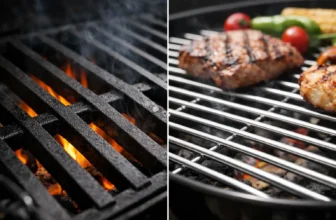
Porcelain-coated cast iron grates are common for a reason. They hold heat well and clean up reasonably easily, though they need some care to avoid chipping and rust. Stainless steel grates can be lower maintenance on some models, but quality varies a lot. Cheap stainless is not automatically better than well-made coated cast iron.
If you want the simple version, buy the grill that looks easiest to clean after looking a little dirty. That is a more useful test than most spec sheets.
Best gas grill for beginners by type
There is no single right pick for every first-time buyer, but there are clear categories that make more sense than others.
Best choice for most beginners
A mid-sized three-burner gas grill is the safest recommendation for most households. It offers enough space for everyday cooking, enough flexibility for direct and indirect heat, and usually a better balance of performance and price than either tiny portable grills or oversized cart models.
This is the category where you should focus most of your attention if you are cooking for a family, want room to grow, and care about long-term value.
Best for small patios or simple weeknight cooking
A solid two-burner gas grill works well for couples, smaller homes, and buyers who want straightforward operation above all else. The smaller footprint is easier to live with, preheat times are often shorter, and fuel use is lower.
The trade-off is capacity. Once you try to cook protein and vegetables at the same time, a cramped grill shows its limits quickly. Still, if space is your biggest constraint, a good two-burner is far better than a cheap oversized model.
Best for buyers who think they need more grill than they do
If you are leaning toward a four-burner because it feels more future-proof, stop and ask how often you really cook for six or more people. Bigger grills are not automatically better for beginners. They cost more, take up more room, and can be less efficient for small meals.
If you regularly host, a four-burner can make sense. If not, it is usually unnecessary.
What to avoid on your first grill
Cheap construction causes more beginner frustration than limited features ever will.
Be careful with grills that feel light in the lid, have wobbly carts, thin burners, loose knobs, or badly fitted doors. Those details usually point to weaker long-term durability. Also be cautious with unusually low-priced grills that promise a long feature list. Something had to be cut to hit that price, and it is often the stuff that affects actual performance.
Replacement parts matter too. Burners, igniters, flavorizer bars, and grates wear over time. A beginner grill should not become trash just because one common part fails after a few seasons. Long-term ownership is cheaper when basic maintenance parts are available.
How much should a beginner spend?
For most buyers, the value range sits in the middle.
The cheapest gas grills are tempting, but they often disappoint fast. Uneven heating, weak ignition systems, and poor corrosion resistance are common at the bottom end. On the other hand, premium pricing does not make much sense if you are still figuring out how often you grill and what kind of cooking you enjoy.
A sensible beginner budget usually buys a well-built two-burner or three-burner model with reliable burners, decent grates, and straightforward cleanup. That is where performance starts to feel stable enough to learn on without paying for luxury finishes or niche features.
At Global Grill Guide, that is usually the line we care about most – not the cheapest grill, and not the one with the flashiest badge, but the one that still makes sense after two or three seasons of real use.
A simple buying filter that works
If you are comparing models and getting buried in specs, use this filter.
First, choose the smallest size that realistically fits your normal cooking. Second, ignore extras until you are satisfied with the burner layout, grate quality, and grease management. Third, look for signs the grill was built for repeated use, not just showroom appeal. Finally, think about whether you will still want to clean, cover, and maintain it after the novelty wears off.
That last point matters. The best beginner grill is not just easy to cook on. It is easy to live with.
A first grill should build confidence, not demand workarounds. Buy the one that feels steady, simple, and honest about what it is, and you will learn more from it than from any oversized grill loaded with features you never asked for.
Summary Table: Best Gas Grill for Beginners: What to Buy
| Buying Factor | Key Takeaway | Recommendation for Beginners |
|---|---|---|
| Overall Goal | A beginner grill should be easy to use, predictable, and simple to maintain. | Prioritize reliability over flashy features. |
| Ideal Grill Size | Most first-time buyers purchase grills that are larger than necessary. | A 2- or 3-burner gas grill is the best starting point for most households. |
| Best Choice for Most People | Three burners provide the best balance of cooking space, flexibility, and efficiency. | Recommended for families or anyone cooking for 2–4 people regularly. |
| Two-Burner Grills | Compact, fuel-efficient, and easier to manage. | Best for couples, apartments, balconies, or small patios. |
| Four-Burner Grills | More cooking space but higher cost and fuel consumption. | Only worth buying if you frequently cook for 6+ people. |
| BTU Rating | High BTU numbers do not automatically mean better performance. | Focus on even heating and temperature control, not maximum output. |
| Heat Control | Learning indirect cooking is easier with controlled heat zones. | Choose a grill that allows simple two-zone cooking. |
| Build Quality | Solid construction has a greater impact than extra accessories. | Look for sturdy lids, durable burners, and quality materials. |
| Cooking Grates | Grates affect heat retention and cooking consistency. | Porcelain-coated cast iron is generally the best value; quality stainless steel is also a good option. |
| Useful Features | Only a few features improve the grilling experience. | Electronic ignition, folding side shelves, and a lid thermometer are worthwhile. |
| Features to Skip | Many premium features add cost without helping beginners. | Avoid paying extra for rotisseries, infrared burners, Wi-Fi, smoker boxes, or decorative lighting. |
| Cleaning & Maintenance | Easy cleanup encourages regular use and improves safety. | Choose grills with accessible grease trays and interiors that are easy to clean. |
| Replacement Parts | Wear items eventually need replacing. | Buy from brands that offer burners, igniters, grates, and heat shields separately. |
| Budget Advice | Extremely cheap grills often sacrifice durability and performance. | Spend enough for a dependable mid-range model instead of the cheapest option. |
| Buying Strategy | Simplicity usually beats feature overload. | Choose the smallest grill that fits your everyday cooking habits and is easy to maintain. |
FAQ: Best Gas Grill for Beginners: What to Buy
What is the best size gas grill for beginners?
A three-burner gas grill is the best choice for most beginners. It provides enough cooking space for everyday meals while allowing direct and indirect cooking without being difficult to manage. If you usually cook for one or two people or have limited patio space, a two-burner model is also an excellent option.
How much should I spend on my first gas grill?
A mid-range budget generally offers the best value. Spending a little more than the cheapest models usually gets you better burner performance, more reliable ignition, sturdier construction, and longer-lasting components, making the grill easier to learn on and cheaper to own over time.
Are more burners always better?
No. More burners increase cooking capacity but also raise the price, fuel consumption, and overall grill size. For most households, a three-burner grill provides all the flexibility needed without unnecessary complexity. Four burners are mainly beneficial if you regularly cook for large groups.
What features should a beginner look for in a gas grill?
The most useful features include:
- Reliable electronic ignition
- Even heat distribution
- Quality cooking grates
- Easy-to-remove grease tray
- Sturdy construction
- A built-in lid thermometer
- Folding side shelves if space is limited
These features improve everyday cooking more than premium extras.
What should beginners avoid when buying a gas grill?
Avoid choosing a grill based solely on high BTU ratings, burner count, or a long list of accessories. Also avoid cheaply built models with thin metal, unstable carts, weak burners, poor grease management, and limited availability of replacement parts. A simple, well-built grill will usually outperform a feature-packed budget model over the long term.