 globalgrillguidecom
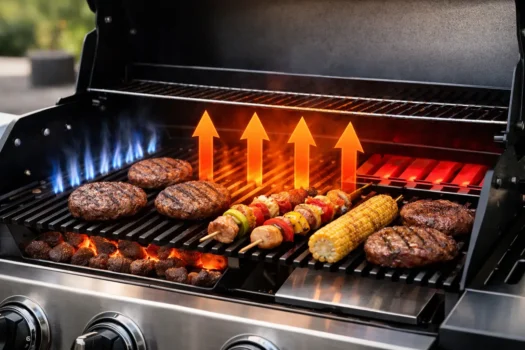
A grill can have plenty of burners, a big BTU number, and a shiny lid yet still cook chicken unevenly. Gas grill heat distribution is what separates a grill that lets you use the whole cooking surface from one that forces you to rotate food every few minutes and avoid a troublesome corner.
That does not mean every square inch should run at exactly the same temperature. It should not. A useful gas grill has distinct zones: hotter areas for searing and cooler areas for gentler cooking. The real question is whether those zones are predictable, usable, and stable from one cook to the next.
What Good Heat Distribution Looks Like
Even heating is often oversimplified as a grill that produces the same temperature everywhere. In real backyard cooking, that is only part of the picture. You need enough consistency to cook a row of burgers, chicken thighs, or vegetables without constantly playing musical chairs with the food.
A well-designed grill usually has a clear direct-heat zone above each burner, a moderately even central cooking area, and enough space for indirect cooking. If you turn off one burner and leave another running, food on the unlit side should cook gently without scorching. That matters more for bone-in chicken, pork tenderloin, ribs, and thicker steaks than it does for a quick batch of hot dogs.
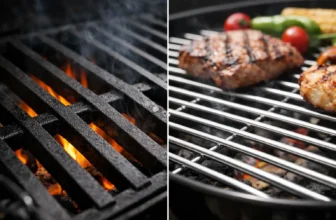
Some variation is normal. The rear of a grill may run hotter because heat rises toward the lid and exhaust. The areas directly over the burners will usually be hotter than the gaps between them. What you want to avoid are extreme cold strips, flare-up-prone hot spots, or a front edge that is too weak to cook on.
Predictable Beats Perfect
A grill with a known hot zone can be easy to use. You sear over it, then move food to a cooler section to finish. A grill with random temperature swings is harder to manage, especially when you are cooking for guests.
This is why heat distribution is not just a specification-sheet issue. It affects how much of the grate is genuinely usable, how often you need to reposition food, and how stressful dinner becomes when several items need different cooking times.
What Controls Gas Grill Heat Distribution
The burner system is the starting point, but it is not the whole story. Heat has to travel from the burners, through the grill’s heat-management components, and across the cooking grates. Weakness at any point shows up on the food.
Burner Layout and Burner Count
More burners can provide better control, but only if they are properly spaced and independently adjustable. Three burners on a moderately sized grill are often enough for most households. Four or more burners can be useful on larger grills because they create more flexible zones and reduce the distance between heat sources.
Long gaps between burners often create cooler strips. This is most noticeable when cooking foods that cover much of the grate, such as burgers, kebabs, or a full tray of vegetables in a grill basket. Burner placement also affects indirect cooking. A grill with independently controlled left, center, and right burners gives you more options than a two-burner model with limited zone control.
Do not assume that a higher BTU rating means better distribution. BTUs describe fuel input, not how evenly the grill manages that heat. A poorly designed high-output grill can still have hot spots and burn more fuel doing it.
Heat Tents, Flavorizer Bars, and Diffusers
The metal pieces above the burners do several jobs. They shield burners from drippings, reduce direct exposure to flame, spread heat, and vaporize some drippings for flavor. Their design has a major effect on day-to-day performance.
Wide, solid heat tents can help bridge the gaps between burners. Narrow or lightweight pieces may leave more pronounced hot lines over the burner ports. Stainless steel, porcelain-coated steel, and cast components can all work well, but thickness and fit matter more than the label on the product page.
There is a trade-off. Heavier diffusers can improve heat stability, but they take longer to preheat and may retain grease if they are poorly shaped or neglected. Thin components heat quickly but may warp over time, which can worsen both heat distribution and flare-up control.
Grates and the Grill Box
Cooking grates do not create the grill’s overall heat pattern, but they influence how food contacts heat. Heavy cast iron holds heat well and creates strong sear marks, though it needs more maintenance and can rust. Thick stainless grates are easier to maintain and can deliver good results, but they may not store as much heat for a hard sear.
The firebox matters too. A deeper, well-built cook box gives heat room to circulate. A thin, shallow box can lose heat quickly in cold weather and may struggle to recover when you open the lid or load it with food. The lid shape, rear venting, and overall construction all affect where heat settles.
How to Test a Grill’s Heat Pattern at Home
You do not need laboratory equipment to learn where your grill runs hot and cool. Start with a clean grill, preheat it with the lid closed for 10 to 15 minutes, and set all burners to the same medium setting. Then place slices of inexpensive sandwich bread across the grates in an even grid.
Close the lid briefly, then check the bread after roughly 30 to 60 seconds. The exact timing depends on the grill, so do not walk away. Areas that brown much faster are your hot zones. Barely colored slices show cooler areas. Repeat the test at a lower setting if you want to know how the grill behaves for slower cooking.
The bread test is more useful than pointing an infrared thermometer at shiny grill grates. Infrared readings can be misleading on reflective metal surfaces. A grate-level probe thermometer can help, especially when comparing zones with the lid closed, but it still measures air temperature rather than exactly what food experiences.
Run the test with one side of the grill off as well. This tells you whether the grill can hold a practical indirect zone. If the supposedly cool side gets too hot for chicken or a roast, you will have less control than the burner count suggests.
Why Distribution Changes Over Time
A grill that cooked evenly in its first season may develop uneven performance later. Grease buildup, clogged burner ports, damaged heat tents, and rusted components all interfere with normal heat flow.
Inspect the burners periodically with the gas supply disconnected. Burner flames should be mostly blue and reasonably even along the tube. Yellow, weak, or uneven flames can point to blocked ports, spider-web contamination in the venturi area, or a regulator issue. Clean burner ports gently with a soft brush or a nonmetal tool that will not enlarge them.
Also check that heat tents are seated correctly and have not warped into gaps. Empty and clean the grease system regularly. A greasy grill does not just create flare-ups. It can make you avoid parts of the grate because food burns there before it cooks through.
Wind and cold weather can also expose a grill’s limitations. On an exposed patio, a strong crosswind may cool one side of the cook box and push heat toward the other. This is not necessarily a defect, but a grill with a thin body and loose-fitting lid will show the effect more than a heavier, better-built model.
What to Look For When Buying a Gas Grill
When comparing grills, look past burner count and maximum BTUs. Check whether the burners are independently controlled, how much space sits between them, and what kind of heat tents cover them. A large grill with only two burners may be fine for basic direct grilling, but it is less flexible when you want to cook over indirect heat.
Pay attention to the cooking grate layout. A grill with a large advertised cooking area is not automatically more useful if the outer edges run too cool or the center is prone to flare-ups. The usable cooking area is what matters.
Build quality is tied directly to heat performance. A solid lid, a reasonably thick cook box, stable grates, and components that fit without large gaps help the grill maintain temperature and recover after the lid is opened. These details are not glamorous, but they matter every time you cook.
For smaller households cooking burgers, sausages, vegetables, and occasional steaks, a compact two- or three-burner grill with predictable zones may be the better purchase. For families or frequent hosts cooking multiple foods at once, prioritize a wider grill with at least three independently controlled burners and a clearly workable indirect zone.
The best grill is not the one that claims perfectly even heat. It is the one that gives you enough predictable heat control to cook the way you actually eat: a hot spot for searing, a cooler space for finishing, and no mystery section that ruins dinner when the patio is full.