
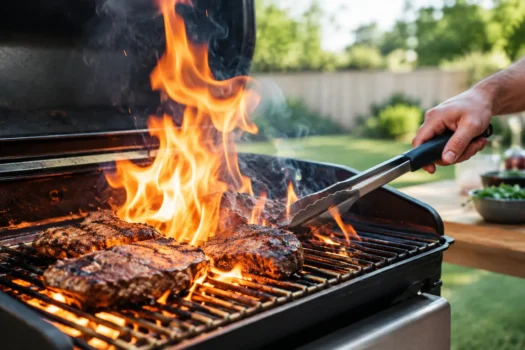
A row of burgers is almost done when a flame leaps above the grate, blackens the edges, and sends everyone taking one step back from the grill. That moment is why grill flames flare: fat and food debris reach a hot ignition source, then burn fast. Some flare-ups are normal. Repeated, tall flames that scorch food are a control problem – and usually a cleaning problem.
The goal is not a grill with zero visible flame. The goal is predictable heat that cooks the food instead of turning dinner into a smoke-and-char exercise. Here is what is actually happening, what to do when it starts, and how to prevent it without treating every cookout like fire duty.
Why Grill Flames Flare: The Basic Cause
A flare-up happens when grease, oil, marinade, or loose food particles hit a hot surface or open flame. On a gas grill, that may be the burner, the heat diffuser, or the grease pooled beneath it. On a charcoal grill, it is usually dripping fat landing on fully lit coals. The fuel vaporizes and ignites, producing a sudden flame.
That is different from the steady blue flame beneath a gas grill’s flavorizer bars or the orange glow of charcoal. Those are the intended heat sources. A flare-up is extra fuel entering the fire quickly.
Fatty foods are the usual trigger. Ribeyes, chicken thighs with skin, sausages, burgers made from higher-fat ground beef, and skin-on poultry can all drip enough rendered fat to create flames. Sugary sauces also contribute. Barbecue sauce, teriyaki, honey glazes, and some marinades can burn on the cooking surface even when the meat itself is fairly lean.
The condition of the grill matters just as much as the menu. A clean grill can still flare when a fatty steak hits high heat. A neglected grill can flare when you cook almost anything because old grease has collected on the grates, heat tents, drip tray, and firebox.
A Brief Flare-Up Versus a Grease Fire
A short burst of flame that settles when you move the food is usually manageable. You may lose a little surface control, but it is not automatically a sign that the grill is unsafe. Long flames that continue after food is moved, or flames coming from under the cook box, require a different response.
A grease fire has enough accumulated fuel to keep burning on its own. On a gas grill, flames may roll out from the sides or rear of the lid, build under the grates, or continue with burners turned down. On a charcoal grill, a grease fire can become a sustained blaze across the coal bed and drip area.
Do not pour water into a grill grease fire. Water can scatter burning grease and make the situation worse. If it is safe to reach the controls, turn off the gas supply and close the lid to reduce oxygen. Keep the lid closed and allow the fire to burn down. For a fire that is spreading, cannot be contained, or threatens nearby structures, move people away and call emergency services.
A fire extinguisher rated for grease fires is worth keeping near an outdoor kitchen or grill area. It should be accessible, not stored behind the grill where you would need to reach through heat to get it.
What to Do When Flames Rise During Cooking
Start by staying calm. Most food flare-ups become worse because the cook reacts by repeatedly opening the lid, shifting food back and forth, or spraying the grill with water. Give yourself a simple sequence: move the food, reduce the heat, and close the lid briefly if the flame needs oxygen cut off.
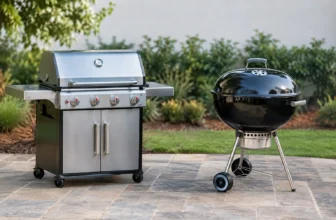
On a gas grill, move food from the direct-heat zone to an unlit burner or lower the burners under that section. If every burner is running at full power, you have no escape zone. That is one reason two- and three-burner grills are easier to manage than single-zone setups when cooking fatty food for a crowd.
On a charcoal grill, slide food to the cool side of a two-zone coal arrangement. Closing the lid and partially closing the vents can slow the fire, though shutting vents too aggressively can leave dirty smoke hanging around the food. The better solution is to build the grill with a direct and indirect zone before cooking starts.
Avoid pressing burgers, steaks, or chicken with a spatula. It does not seal in juices. It pushes fat and moisture into the fire, increasing flare-ups while drying out the meat. Likewise, do not brush on a heavy coat of sugary sauce over active high heat. Cook the food most of the way first, then glaze during the final minutes over lower or indirect heat.
The Equipment Details That Affect Flare-Ups
Not every grill handles drippings the same way. Design does not eliminate flare-ups, but it can make them easier or harder to control over years of use.
Gas grill heat diffusers and grease management
Most gas grills place metal heat tents, plates, or briquettes between the burners and the grates. These components spread heat and protect burners from drips. They also get hot enough to vaporize some drippings, which can add grilled flavor in moderation. When they become coated in carbonized grease, they stop doing their job cleanly and can become their own fuel source.
A well-designed grease system directs runoff into a removable tray or cup. A poorly maintained one directs it into a tray that is already full. Check it before a long cook, especially if you are grilling burgers, chicken thighs, or several pounds of sausage. Emptying a grease tray is unglamorous maintenance, but it is cheaper than replacing burners, igniters, and a damaged lid after a fire.
Charcoal layout and grate distance
Charcoal grills tend to produce more dramatic flare-ups when coals are piled directly under fatty food. A two-zone setup gives drippings a place to fall without landing on the hottest coals. It also gives you room to finish thick cuts without burning the outside.
Grate height matters too. A grate close to the coal bed produces excellent searing heat but gives drippings less time and space to dissipate. That can be useful for thin steaks or kebabs, but it is less forgiving with chicken skin, burgers, and heavily marbled cuts.
Pellet and electric grills
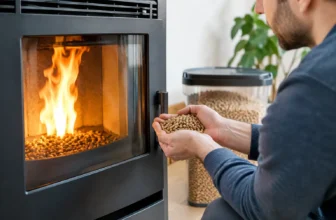
Pellet grills are less prone to classic open-flame flare-ups because food generally cooks above a heat diffuser. But grease can still accumulate in the drip channel and bucket, and a neglected grill can still burn internally. High-temperature searing modes can also expose food to more direct heat, depending on the design.
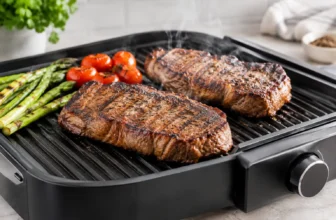
Electric grills do not have an open flame, but oil and food residue can smoke, burn, and create hot spots. The same rule applies: clean the surfaces that catch drippings before they become a layer of old fuel.
Prevent Flare-Ups Before Food Hits the Grate
The best time to manage flare-ups is before preheating. Start with a cold grill and scrape loose debris from the grates. Remove and empty the grease tray or cup. On gas grills, inspect heat tents for thick, flaky buildup and check that burner ports are clear. On charcoal grills, remove ash and old grease deposits from the bowl and ash catcher.
Then set up the cook for the food you are making. High-fat foods benefit from a cooler zone. Thick chicken pieces need indirect heat more than maximum burner output. If you want a hard sear on a ribeye, sear it over direct heat, then move it away from the hottest area to finish. That approach gives you crust without letting dripping fat dictate the cook.
Trim only the excess exterior fat that is likely to render and drip heavily. Do not turn every steak into a lean cut. Fat brings flavor, and trimming has trade-offs. The point is to remove loose, hanging pieces that will fall into the fire before they help the meal.
Use less oil than many recipes suggest. A light coating helps seasoning stick and promotes browning. Oil pooling on the grate or dripping from vegetables is simply more fuel. Pat marinated food lightly before grilling, particularly if the marinade contains sugar or a lot of oil.
When Flare-Ups Point to a Bigger Problem
If your grill flares every time you cook, even with lean food and moderate heat, stop blaming the recipe. Look at the grill. Grease buildup, clogged burner ports, damaged heat tents, a blocked grease channel, or a tray installed incorrectly can all cause recurring trouble.
For gas grills, uneven flames, yellow burner flames, or flames emerging from places other than the burner area may indicate a burner or ventilation issue. Turn off the gas and let the grill cool before inspecting it. Replace corroded burners and badly deteriorated heat diffusers rather than trying to stretch another season out of parts that are no longer safe or functional.
For charcoal grills, excessive flare-ups may mean you are using too much fuel for the food and grill size. More charcoal is not automatically better. It raises the chance of burnt surfaces, grease ignition, and wasted fuel. Build the fire around the temperature you need, not the biggest fire the grill can hold.
A grill that stays clean, offers a true indirect zone, and has functional grease management will not remove every flare-up. It will give you the control to treat one as a brief adjustment instead of a ruined cook. That is the standard worth looking for every time you light the grill.