 globalgrillguidecom
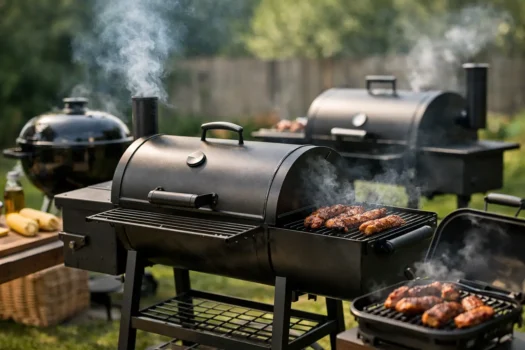
A charcoal grill can turn out excellent barbecue, but not every charcoal grill is good at smoking. That gap matters. Plenty of models can hit high heat for burgers and steaks, then struggle to hold 250 degrees for ribs without constant babysitting. If you are shopping for the best charcoal grills for smoking, the real question is not which grill looks impressive. It is which one gives you steady airflow, manageable fuel use, enough cooking space, and cleanup you can live with after the novelty wears off.
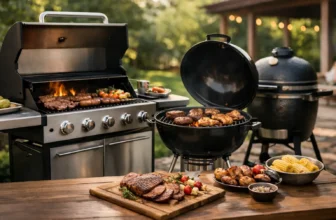
For smoking, charcoal grills generally fall into three useful camps: kettle grills, barrel-style grills, and kamado cookers. Each can work. Each also comes with trade-offs that get glossed over in too many roundups. A kettle is affordable and flexible but usually needs more attention. A barrel grill can offer more space and easier two-zone setups, but heat control varies a lot by design. A kamado is the easiest of the bunch for long, steady cooks, though the price climbs fast and weight becomes a real ownership issue.
What makes the best charcoal grills for smoking
The first thing to look at is airflow control. Smoking is a low-and-slow process, so small vent adjustments need to produce predictable changes. Grills with sloppy dampers, poor seals, or thin metal bodies tend to swing more than they should. You can still make good food on them, but the work shifts from the grill to you.
Thermal stability matters just as much. Heavy ceramic kamados and thicker steel cookers usually recover better after opening the lid and hold temperature longer in wind or cold weather. Smaller kettles can absolutely smoke well, but they are more sensitive to weather and fuel layout. If you cook year-round, that difference is not minor.
Then there is usable smoking space. A grill may have a decent total cooking area but still be awkward for indirect cooking. Once you bank coals to one side and set a drip pan in place, your actual smoking zone shrinks. That is one reason some compact grills look fine on paper and feel cramped when you try to fit a full rack of ribs or two pork butts.
Cleanup and ash management are also part of the ownership equation. A grill that smokes well but leaves you scraping ash by hand every cook gets old fast. The best options balance temperature control with practical maintenance.
Our picks for the best charcoal grills for smoking
Weber Original Kettle Premium 22-Inch
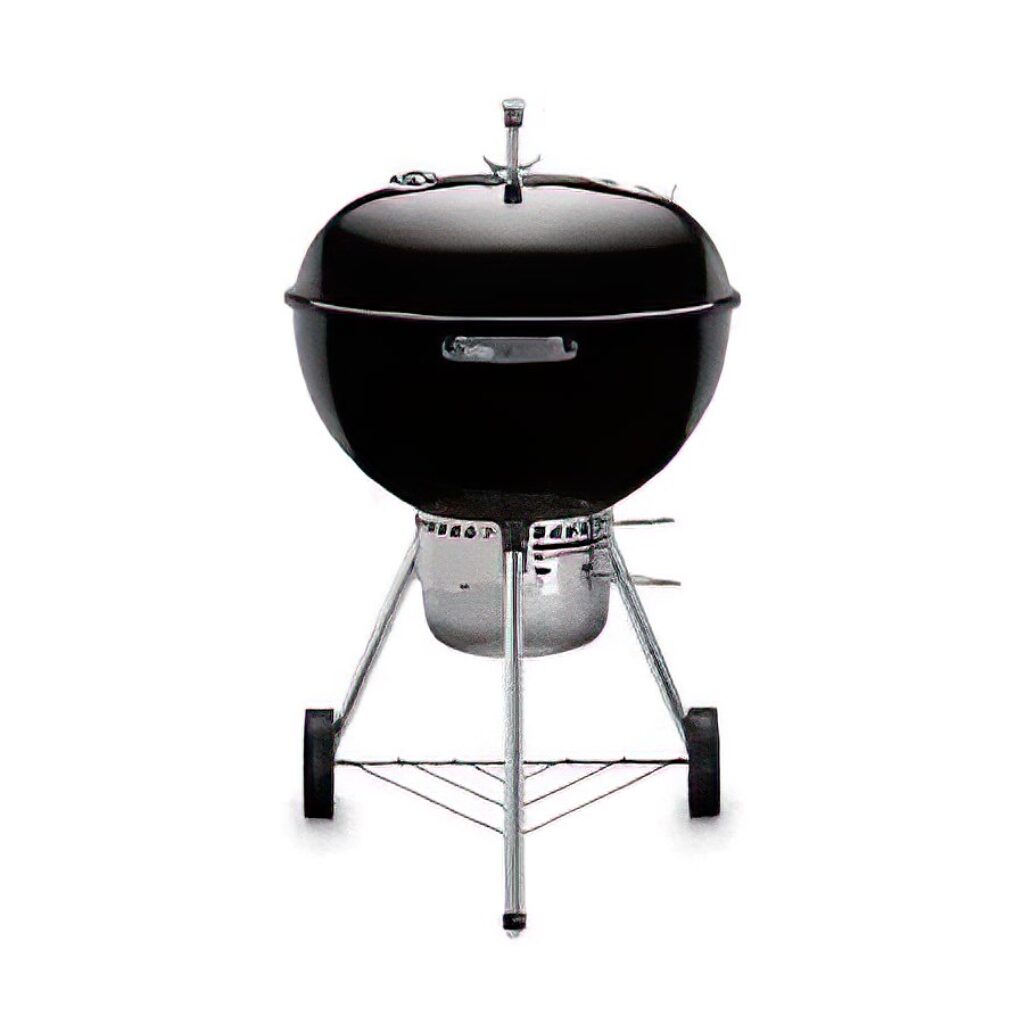
For most buyers, this is still the baseline recommendation. Not because it is perfect, but because it does a lot well without costing kamado money. The 22-inch kettle has enough room for indirect setups, replacement parts are easy to find, and the airflow is predictable once you learn it.
Its main strength is versatility. You can smoke ribs, pork shoulder, and even a small brisket, then turn around and grill over direct heat the next day. The trade-off is attention. A kettle does not insulate like a kamado, so longer cooks often need more fuel management, especially in cold weather. For first-time smokers who want one cooker that can do nearly everything, it is hard to beat.
Read our grand review Weber Original Kettle Premium 22 — Classic Charcoal Grill Review
Weber Master-Touch 22-Inch
This is the kettle you buy when you know you want more than the basic model. The cooking performance is familiar, but the added features improve day-to-day use. Better included hardware, more flexibility with accessories, and a generally more refined setup make it easier to live with long term.
For smoking, it does not suddenly behave like a dedicated pit. It is still a kettle, with the same basic limitations on heat retention. But if you want a dependable charcoal grill that can smoke regularly without moving into premium pricing, this is a smart upgrade.
PK Grills Original PK300
The PK300 has a loyal following for a reason. Its cast aluminum body holds heat well, resists rust, and gives you very precise control with its four-vent system. That vent layout makes it easier to build stable two-zone fires than on many standard grills.
The downside is shape and space. It is efficient, but not especially roomy for larger smoking sessions. If you mostly cook for a small household and care more about control and durability than maximum capacity, it is one of the strongest long-term ownership choices in the category.
Char-Griller Akorn Kamado
If you want kamado-style smoking performance without ceramic kamado pricing, the Akorn is one of the few budget-friendly options worth serious consideration. It is insulated, relatively fuel-efficient, and capable of holding low temperatures better than most kettles in the same broad price range.
It is not built to the same standard as premium kamados, and that shows over time in hardware quality and overall refinement. But judged fairly for the price, it delivers a lot of smoking capability. For buyers who want easier low-and-slow cooking without spending deep into four figures, this is a practical pick.
Kamado Joe Classic Joe
This is where charcoal smoking starts to feel easy. The Classic Joe offers strong heat retention, stable airflow control, and enough cooking flexibility to handle both long smokes and high-heat searing. For many backyard users, it hits the sweet spot between premium performance and manageable size.
What you pay for is consistency and convenience. What you give up is portability, lower upfront cost, and some simplicity. Ceramic kamados are heavy, they can crack if abused, and accessories add up. Still, if smoking is a major reason for buying, this is one of the most capable all-around charcoal cookers for home use.
Big Green Egg Large
The Large Egg remains a strong performer because the cooking system works. It holds heat exceptionally well, uses charcoal efficiently, and turns out reliable smoking results once dialed in. For overnight cooks or shoulder-and-rib weekends, that stability is a real advantage.
The hesitation for some buyers is value. The core cooker is solid, but getting to a fully equipped setup often costs more than expected. A lot depends on local dealer support and package pricing. If you have strong dealer access and prefer the Egg ecosystem, it is a legitimate choice. If you are comparing raw value, there are competitors that make the decision harder than it used to be.
Weber Summit Kamado
This is one of the most interesting options for buyers who want kamado-style smoking performance without going full ceramic. It is lighter than a traditional ceramic kamado, heats efficiently, and has excellent versatility across low-and-slow and high-heat cooking.
Its biggest advantage is usability. You get strong temperature stability with less of the weight and fragility that comes with ceramic construction. The cost is still high, so this is not a casual purchase. But for buyers who smoke often and want a premium charcoal grill that is easier to handle than a ceramic tank, it makes a lot of sense.
Oklahoma Joe’s Rambler or similar small charcoal grills
Small charcoal grills can smoke, but this is where many buyers talk themselves into the wrong product. If you mostly want to smoke larger cuts, compact grills are limiting in ways that specs do not always reveal. Fire management gets tighter, indirect space disappears quickly, and temperature swings become more noticeable.
That does not make them useless. For apartment-adjacent patios, tailgate-style cooking, or occasional small-batch smoking, a compact charcoal grill can still work. Just do not confuse capability with comfort. These are niche picks, not all-purpose smoking solutions.
Char-Griller Grand Champ or barrel-style charcoal grills
A good barrel-style charcoal grill gives you more room than a kettle and often a more natural setup for offset-style indirect cooking. That extra space helps when cooking for a crowd or when you want a little more separation between the fire and the meat.
The catch is build quality. In this category, construction differences matter a lot. Thin steel bodies and weak seals can make temperature control frustrating, especially in wind. A well-built barrel grill can be a very useful smoker-grill hybrid. A cheap one can turn every cook into fire management practice.
Which type fits your cooking style
If you are new to smoking and want the safest recommendation, start with a 22-inch kettle. It gives you room to learn, does not lock you into one cooking style, and keeps replacement costs reasonable if you need accessories later.
If your main goal is easier smoking with fewer temperature swings, a kamado is usually the better tool. That is especially true if you cook in colder climates, smoke longer cuts often, or simply do not want to reload charcoal as much. The higher price can be justified if you actually use that stability.
If capacity matters most, look hard at larger kettles or well-built barrel grills. Smoking for two people is one thing. Smoking for family gatherings or game-day groups is another. Space gets valuable quickly once you move beyond a couple racks of ribs.
Common buying mistakes
One of the biggest mistakes is buying based on headline temperature range instead of low-temperature control. Almost any charcoal grill can get hot. That tells you very little about how calmly it will sit at 250 degrees for six hours.
Another is underestimating maintenance. Ash cleanup, grate access, replacement parts, and weather resistance all affect how often you actually use the grill. A cooker that performs well but is annoying to maintain often gets used less than a slightly less capable one with easier ownership.
The last mistake is buying too small. People often shop for the average Tuesday night meal, then regret it the first time they want to smoke for company. If smoking is a key use case, think in terms of indirect capacity, not total grate area.
At Global Grill Guide, the best advice is usually the least flashy: buy the grill that matches how you will cook most weekends, not the one that sounds most impressive in a showroom. A dependable kettle beats an overpriced kamado you barely use, and a stable kamado beats a cheap barrel grill that leaks heat and patience. Choose the cooker you can manage, maintain, and enjoy using, and the barbecue will follow.