 globalgrillguidecom
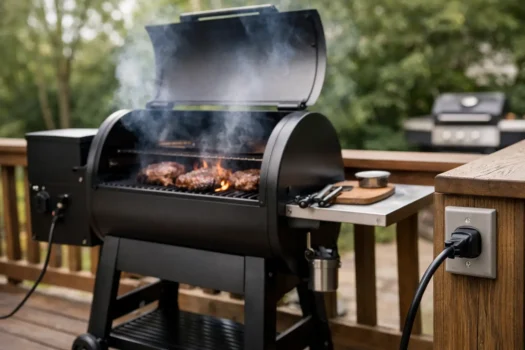
You plug in a pellet grill, fill it with pellets, and press the power button. That alone answers the main question: do pellet grills need electricity? Yes, they do. Unlike a charcoal grill or a basic gas grill, a pellet grill is not just burning fuel. It uses electricity to run the controller, auger, fan, and ignition system that make the whole cook possible.
That does not mean pellet grills are power-hungry appliances in the same category as an electric oven. It means they rely on a small but essential amount of electricity to function. If the power goes out, the grill does not keep operating normally just because there are wood pellets in the hopper. For buyers comparing fuel types, that detail matters a lot more than marketing usually admits.
Why pellet grills need electricity
A pellet grill works because several systems operate together. The pellets are the fuel, but electricity is what feeds and manages that fuel. When you start the grill, an electric igniter rod heats up to ignite pellets in the fire pot. At the same time, an auger motor moves pellets from the hopper into that fire pot, and a fan supplies airflow to keep combustion stable.
The controller is the brain of the system. It monitors grill temperature and tells the auger and fan when to cycle on and off. That is how a pellet grill maintains relatively steady heat with much less manual effort than a charcoal setup.
Take away the electricity and the pellet grill loses the systems that make it a pellet grill in the first place. No igniter means no automatic startup. No auger means no pellet feed. No fan means poor combustion and unstable heat. No controller means no meaningful temperature regulation.
What uses electricity on a pellet grill?
If you are wondering whether pellet grills need electricity only for startup, the answer is no. They need it during the full cook.
Startup usually draws the most power because the igniter rod is heating up. After that, power demand drops, but the grill still needs electricity for the controller, fan, and auger motor. Some premium models also power extras like Wi-Fi modules, meat probe ports, internal lights, or touchscreen displays. Those features are not the main reason the grill needs electricity, but they do add to the dependence.
In practical terms, most pellet grills use a modest amount of electricity compared with large kitchen appliances. The issue is not high energy cost. The issue is total dependence. Even low power use does not help if you are cooking somewhere without an outlet.
Do pellet grills need electricity all the time?
Yes. A pellet grill needs a live power source for startup, cooking, and shutdown.
Shutdown is often overlooked. Many pellet grills run a fan cycle after cooking to burn off remaining pellets and cool internal components. If you unplug the grill immediately instead of using the proper shutdown cycle, you can end up with leftover smoldering pellets, extra ash buildup, or startup issues on the next cook. Over time, that kind of shortcut can create avoidable maintenance problems.
This is one of the reasons pellet grills are easy to use when conditions are normal but less forgiving than charcoal grills when power is interrupted. Convenience comes from automation, and automation depends on electricity.
What happens if the power goes out?
This is where the answer to do pellet grills need electricity stops being a technical detail and becomes an ownership issue.
If your power fails during a cook, the controller turns off, the auger stops feeding pellets, and the fan stops pushing air. The fire may die out, or it may smolder unpredictably depending on how many pellets were already in the pot. When power returns, you usually cannot just pretend nothing happened. In many cases, you need to inspect the fire pot, clear excess pellets if they accumulated, and restart the grill correctly.
That matters most on long cooks like pork shoulder, brisket, or ribs. Pellet grills are popular for overnight and low-and-slow cooking because they are relatively hands-off. But if your area gets frequent outages, storm-related flickers, or unstable extension-cord setups, a pellet grill becomes less dependable than the sales pitch suggests.
Can you use a pellet grill without an outlet?
You can, but only if you provide electricity from another source. The grill itself still needs power.
Some owners run pellet grills from a generator, a portable power station, an inverter connected to a vehicle battery, or a dedicated 12-volt adapter if the grill supports it. That can work well for tailgating, camping, or cooking in parts of the yard where outlet access is poor. But it adds equipment, cost, and one more thing to manage.
This is where buyer expectations often go sideways. People hear “wood-fired” and assume pellet grills are close cousins of stick burners or charcoal cookers. They are not. In terms of user experience, pellet grills are closer to outdoor wood-fueled convection ovens with mechanical fuel delivery. That is not a knock on pellet cooking. It is just the reality of how the system works.
Are pellet grills practical for camping and tailgating?
Sometimes, but not automatically.
If you mostly cook at home on a patio with a nearby outlet, electrical dependence is usually a non-issue. If you want a grill for parking lots, campsites, cabins, or off-grid spaces, pellet grills become more situational. You need to think through power access, extension cord length, weather protection, and startup reliability before you assume the grill fits that use.
Portable pellet grills exist, and some are well designed. But portable does not always mean convenient. A compact gas grill is usually simpler for true grab-and-go cooking because it does not need external power and has fewer electronic failure points. A small charcoal grill is even less dependent on gear, although it asks more from you during cooking.
So yes, you can take a pellet grill on the road. No, it is not the easiest option for every road-use case.
Do pellet grills need electricity more than other grills?
Compared with charcoal and standard gas grills, yes.
A charcoal grill needs fuel, fire, and airflow. A standard gas grill needs propane or natural gas and a burner ignition source, which can often be replaced with a lighter if the built-in igniter fails. A pellet grill needs fuel and a functioning electrical system. That makes it more convenient in normal use, but also more dependent on components working properly.
This trade-off is worth it for many people. Pellet grills are popular because they simplify temperature control, reduce babysitting, and make smoking more approachable for beginners. But if your priority is maximum reliability during outages or complete independence from power, they are not the best fit.
The buying decision most shoppers should make first
Before comparing pellet capacity, Wi-Fi features, or sear claims, ask a simpler question: how and where will you actually use this grill?
If you cook in a fixed backyard setup with easy outlet access and you want push-button smoking with steady temperatures, a pellet grill makes a lot of sense. Electrical dependence is just part of the package. If you live somewhere with frequent power interruptions, plan to cook off-grid, or want a grill that still works when conditions are less than ideal, that same dependence becomes a real drawback.
This is also why cheap pellet grills can become frustrating faster than cheap charcoal grills. When a low-cost charcoal grill is crude, it is still usually usable. When a low-cost pellet grill has weak electronics, poor auger performance, inconsistent ignition, or a bad controller, the whole cooking experience suffers. Build quality and control quality matter more here than they do on simpler grill types.
So, do pellet grills need electricity? Yes, and that should shape your choice
The short answer is yes, pellet grills need electricity to start, run, regulate temperature, and shut down properly. The better question is whether that dependence works for the way you cook.
For many backyard users, it is a fair trade for convenience and consistency. For anyone expecting true off-grid flexibility or outage-proof cooking, it is a limitation you should take seriously before buying. The smartest grill purchase is usually the one that fits your real habits, not the one with the best-looking feature list.