 globalgrillguidecom
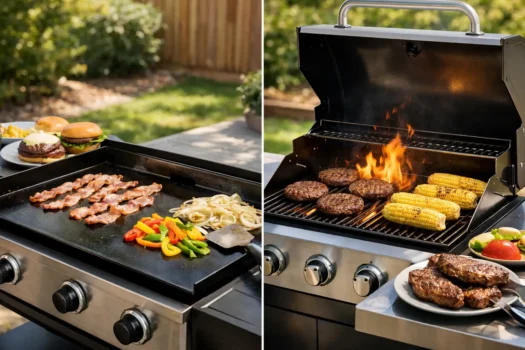
A flat top vs gas grill decision is not really about which cooker is better. Both commonly run on propane, both can turn out a solid weeknight dinner, and both can be built into a serious outdoor kitchen. The real question is what you cook most often – and whether you want food cooked on a solid steel surface or over open grates.
That difference affects heat control, cleanup, grease handling, maintenance, and the meals you will realistically make after the new-grill excitement wears off. No hype. A flat top is not a replacement for every grill, and a gas grill is not automatically more versatile just because it has a lid.
Flat Top vs Gas Grill: The Real Cooking Difference
A flat top, often called a griddle, cooks food directly on a broad steel plate. Heat comes from burners below the plate, then spreads across the cooking surface. Food sits in its own rendered fat, added oil, or sauce rather than over flame. That makes it especially effective for small, loose, delicate, or chopped ingredients that would be difficult to manage on grates.
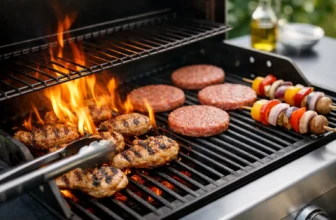
A gas grill uses burners below cooking grates, with flavorizer bars, heat tents, briquettes, or another barrier between the flame and food. The food gets more direct exposure to rising heat and smoke from drippings vaporizing on the hot components below. That is what creates grill marks, browned edges, and the familiar grilled flavor many buyers expect.
Neither system is automatically more powerful. A well-built gas grill can sear hard, and a thick flat top can hold impressive heat. What matters more is usable heat across the cooking area, recovery after cold food hits the surface, and how well the cooker avoids frustrating hot and cool zones.
When a Flat Top Makes More Sense
A flat top earns its space when you cook for groups or regularly make foods that benefit from a continuous surface. Breakfast is the obvious example: eggs, bacon, pancakes, hash browns, and breakfast sandwiches can all cook at once. But the better reason to buy one is dinner flexibility. Smash burgers, fajitas, fried rice, cheesesteaks, tacos, chopped vegetables, and fish all become easier when nothing can fall through the grates.
The large surface also changes how you manage a meal. You can keep cooked food warm at one side, brown protein in the center, and soften onions or toast buns in another zone. That kind of zone cooking is practical when feeding six people, not just fun for a video.
A flat top is also forgiving for beginners. You can see every piece of food, move it with a spatula, and flip it before it burns. There is less chance of a flare-up turning chicken skin black while the inside remains undercooked. For families that want fast, repeatable outdoor meals, that control has real value.
The trade-off is that a griddle does not deliver the same open-grate cooking. You can get excellent browning, crust, and caramelization, but you will not get classic grill marks or much flame-driven flavor. Thick steaks still cook well, but a flat top is less natural for fatty cuts where you want rendered fat to drip away and briefly flare below the meat.
When a Gas Grill Is the Better Buy
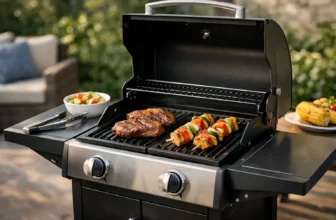
A gas grill is the better all-around choice for buyers who picture steaks, bone-in chicken, burgers, pork chops, sausages, corn, and larger roasts. The grates let fat drain away, and the hood gives you options that a standard open flat top cannot match. Close the lid and you can cook with convection heat, roast a whole chicken, finish thick cuts indirectly, or bake pizza with the right setup.
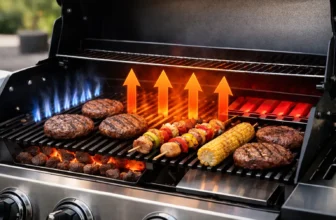
That lid is more useful than it first appears. On a good gas grill, you can create a hot direct zone for searing and a cooler indirect zone for finishing food without drying it out. That is a major advantage for chicken thighs, reverse-seared steaks, ribs, tenderloins, and any cook where the center matters as much as the surface.
Gas grills also generally work better for food that benefits from a drier cooking environment. Vegetables can char instead of steam. Chicken skin can render and crisp. A burger can retain some open-flame character without sitting in a pool of grease. You still need to manage flare-ups, especially with cheap thin grates and uneven burner systems, but the cooking style suits traditional backyard grilling.
The limitation is small food. Shrimp, diced vegetables, chopped onions, and thin strips of meat require a basket, plancha insert, or more attention. You can buy a griddle plate for a gas grill, but it usually provides less usable area than a dedicated flat top and may not heat as evenly. It is a worthwhile accessory for occasional breakfasts, not a perfect substitute for a purpose-built griddle.
Heat Control and Cooking Consistency
Do not compare cookers by BTU numbers alone. BTUs tell you how much fuel a burner can consume, not how efficiently the cooker turns that fuel into stable, usable heat. Grill box design, burner layout, lid fit, plate thickness, wind exposure, and cooking surface material all matter more in real use.
On a flat top, thick rolled steel or cast iron stores heat well and helps prevent temperature crashes when you add burgers or cold vegetables. It also takes longer to preheat and can be slow to cool down. Thin steel models often develop noticeable hot spots, particularly above individual burners. That may be manageable for eggs, but it becomes irritating when one side burns onions while the other barely browns them.
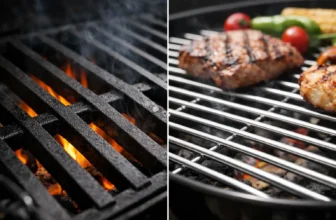
On a gas grill, look for even burner coverage and enough separation between direct and indirect zones. A grill that runs hot only in the center will make you work around its weakness every time you cook. Quality grates also matter. Heavy cast iron retains heat well but requires maintenance. Stainless steel is easier to live with and often lasts longer, though very thin stainless grates do little for searing.
Wind is another ownership reality. An exposed flat top can lose heat quickly and may burn more propane on cold or breezy days. A gas grill’s hood provides some protection, but poorly sealed lids and shallow fireboxes still struggle in bad weather. If your patio is exposed, build quality is not a luxury feature.
Cleanup and Maintenance Are Not Equal
A flat top is easier to clean during cooking but asks more from you after cooking. Scrape food residue and grease toward the trap, wipe the surface, then apply a thin coat of oil after it cools enough. If the surface is bare carbon steel or cast iron, that seasoning routine prevents rust and keeps food from sticking. Skip it for too long, especially in humid climates, and you can end up with corrosion and a restoration project.
Grease management also deserves attention. A rear grease channel is convenient, but only if it is wide enough to handle bacon and burger grease without overflowing. Grease cups fill fast during big cooks. Letting one overflow is messy and can stain a patio.
Gas grills need less surface seasoning but more periodic internal cleaning. Drippings collect on heat tents, flavorizer bars, grease trays, and the bottom of the firebox. Left alone, that buildup can cause flare-ups, foul smoke, clogged drain holes, and grease fires. Brush the grates after cooking, empty the grease tray regularly, and clean the firebox thoroughly several times a season depending on use.
Long-term durability comes down to materials and weather protection. Thin painted steel cabinets rust first. Low-grade stainless can discolor and corrode near the coast. Burner tubes, igniters, regulator hoses, and grease systems are wear items on both types of cooker. A cover helps, but only after the unit is completely cool and dry. A wet cover trapped against steel can create its own problems.
Which One Fits Your Cooking Style?
Buy a flat top if your outdoor cooking is built around breakfast, smash burgers, stir-fry-style meals, tacos, sandwiches, and feeding a crowd with minimal fuss. It is the practical choice when maximum usable surface area matters more than open-flame flavor.
Buy a gas grill if you want a cooker for steaks, chicken, roasts, vegetables, and indirect cooking under a lid. It is usually the stronger single-cooker choice for a household that wants classic grilling first and occasional specialty cooking second.
If you cook outdoors often and have the room, a gas grill plus a dedicated flat top is not redundant. They solve different problems. But if you are buying only one, do not choose based on the biggest cooking area or the shiniest cart. Think about the last ten meals you cooked and the next ten you actually plan to make. That answer will tell you more than any marketing claim on the showroom floor.
Flat Top vs Gas Grill: Summary Comparison
| Category | Flat Top (Griddle) | Gas Grill |
|---|---|---|
| Best For | Breakfasts, smash burgers, fajitas, fried rice, tacos, cheesesteaks, vegetables, seafood | Steaks, burgers, chicken, pork chops, sausages, roasts, pizza, vegetables |
| Cooking Surface | Solid steel plate | Open cooking grates |
| Cooking Style | Food cooks in its own juices, oil, or sauce | Food cooks over open flame with rendered fat dripping away |
| Flavor | Rich browning and caramelization | Classic grilled flavor with grill marks and smoke from vaporized drippings |
| Heat Control | Large continuous cooking surface with multiple working zones | Direct and indirect heat zones using burners and lid |
| Lid Cooking | Most standard models have no enclosed cooking chamber | Lid enables roasting, baking, indirect cooking, and convection heat |
| Small Foods | Excellent—nothing falls through the surface | Often requires grill baskets or griddle inserts |
| Large Cuts of Meat | Good, but less suited for indirect finishing | Excellent for thick steaks, whole chickens, ribs, and roasts |
| Flare-Ups | Very rare due to solid cooking plate | Possible with fatty foods if grease management is poor |
| Preheating | Thick steel heats more slowly but retains heat well | Usually heats faster with quicker temperature recovery |
| Cleanup | Scrape grease, wipe surface, apply oil to maintain seasoning | Clean grates, burners, grease trays, and firebox regularly |
| Maintenance | Requires seasoning to prevent rust (carbon steel/cast iron) | Requires periodic internal cleaning and burner maintenance |
| Best Choice For | High-volume family meals and versatile flat-surface cooking | Traditional backyard grilling and maximum cooking versatility |
FAQ – Flat Top vs Gas Grill for Your Backyard Cooking
Is a flat top better than a gas grill?
Neither is universally better. A flat top excels at foods like breakfast, burgers, tacos, vegetables, and stir-fry meals, while a gas grill is better for steaks, chicken, roasts, and traditional barbecue.
Can a flat top replace a gas grill?
Not completely. While a flat top offers excellent versatility for many meals, it cannot fully replicate the open-flame flavor, grill marks, and indirect cooking capabilities of a gas grill with a lid.
Which is easier to clean: a flat top or a gas grill?
A flat top is usually easier to clean immediately after cooking by scraping the surface and wiping it down. Gas grills require more extensive maintenance, including cleaning grates, burners, grease trays, and the firebox.
Is a gas grill better for steaks than a flat top?
For most people, yes. Gas grills provide higher direct heat, better fat drainage, grill marks, and indirect cooking options that make them more suitable for thick steaks and larger cuts of meat.
Should I buy a flat top or a gas grill for everyday cooking?
Choose a flat top if you frequently cook breakfasts, smash burgers, tacos, fried rice, or meals for large groups. Choose a gas grill if your routine centers on steaks, chicken, burgers, vegetables, and classic outdoor grilling with greater overall versatility.