
A crowded grill cart is not proof that someone takes barbecue seriously. It usually means they bought too many grill accessories that solve problems they do not actually have. The tools worth keeping earn space by making food more consistent, reducing cleanup, preventing mistakes, or helping the grill last longer.
The right setup depends on what you cook and how often. A person grilling burgers twice a month needs a different kit than someone running a charcoal cooker every weekend. Start with the accessories that address real limits in your current setup. Add specialty gear only when your cooking habits justify it.
Start With Grill Accessories That Improve Control
Temperature control is the difference between guessing and cooking with confidence. This matters on every grill type, but especially on charcoal and pellet grills, where changes can take time to show up at the grate.
A dependable instant-read thermometer
An instant-read thermometer is one of the few accessories almost every grill owner should buy early. Grill lid thermometers are measuring air high above the cooking surface, not the center of a chicken breast or steak. They are useful for a general sense of cooker temperature, but they cannot tell you when food is done.
Look for a thermometer that reads quickly, is easy to clean, and has a probe long enough to keep your hand away from heat. Accuracy matters, but so does usability. A slightly more accurate thermometer that is slow, awkward, or difficult to read will stay in a drawer.
For long cooks, a leave-in probe thermometer is worth considering. It is particularly useful for brisket, pork shoulder, ribs, whole poultry, and reverse-seared roasts. Wireless models add convenience, but they also add batteries, connection issues, and another device to charge. A basic wired unit often provides better value for cooks who stay close to the grill.
Heat-resistant gloves
Good gloves are more useful than most oversized barbecue tool sets. They let you move hot grates, adjust charcoal baskets, handle a chimney starter, rotate cast-iron cookware, and manage large cuts of meat without reaching for a towel.
The trade-off is dexterity. Thick insulated gloves protect well but make delicate tasks harder. Choose gloves with enough heat resistance for your grill type, then use tongs for routine flipping and repositioning. Gloves are for hot, heavy, and awkward jobs, not every task at the grate.
Long-handled tongs and a solid spatula
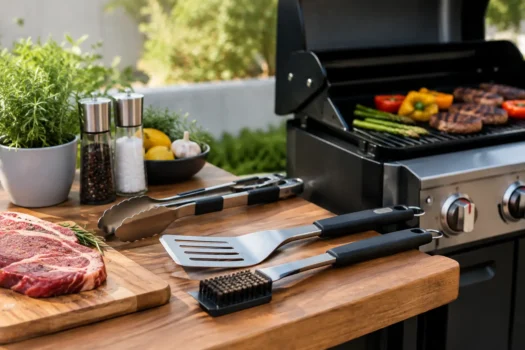
A pair of locking stainless-steel tongs and a sturdy spatula cover most direct-heat cooking. Tongs should close squarely, feel controlled in your hand, and not flex when lifting a heavy piece of chicken or a rack of vegetables. Avoid versions with loose hinges or silicone ends that tear after a season of high heat.
For burgers, fish, and delicate items, use a thin, wide spatula with a beveled edge. A heavy, blunt spatula tends to crush food or leave part of the crust stuck to the grate. You do not need six specialty flippers. You need one that gets under food cleanly.
Cleaning Gear Is Not Optional
A grill that is hard to clean eventually gets used less. Worse, grease buildup, old ash, and blocked burners create performance problems that people often blame on the grill itself. The best cleaning accessories are the ones you will use after ordinary weeknight cooks, not just before a holiday gathering.
A grill brush can work, but wire bristles deserve caution. Loose bristles can end up on grates and, in rare but serious cases, in food. If you use one, inspect it often and replace it when bristles begin to loosen. Many owners are better served by a bristle-free grill scraper or coiled stainless-steel cleaning tool sized for their grate shape.
Clean while the grill is still warm, not blazing hot. That makes cooked-on residue easier to remove without rushing or burning your hands. For gas grills, periodically clear grease trays and check burner ports. For charcoal grills, remove ash once it is completely cool. Ash left in the bowl holds moisture and can accelerate corrosion.
A small shop brush, plastic scraper, and disposable drip-pan liners can also make maintenance more realistic. Liners are not essential, and they create waste, but they can be useful on grills with awkward grease-management systems. The point is not to make cleanup perfectly effortless. It is to keep it manageable enough that you do it.
Buy Fire-Management Tools for Your Fuel Type
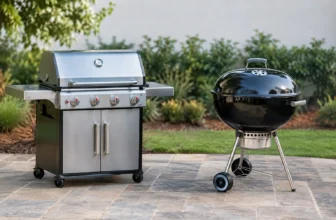
Not every accessory crosses over from one grill to another. Fire-management gear is where charcoal, gas, and pellet grill owners should spend differently.
Charcoal cooks benefit most from a chimney starter, charcoal basket or divider, and an ash tool. A chimney starter removes the need for lighter fluid, which can leave an unpleasant chemical smell and makes lighting less predictable. Choose a size that matches your usual cooking volume. A very large chimney is helpful for high-heat searing, but wasteful when you only need a small two-zone fire.
A charcoal basket or divider is useful when your grill does not naturally hold fuel in a controlled zone. It makes indirect cooking easier and helps concentrate heat for searing. It is less necessary on cookers already designed around baskets, ceramic fireboxes, or adjustable charcoal trays.
Gas grill owners should prioritize a spare propane tank, a dependable leak-checking routine, and heat-resistant tools for managing grates and flavorizer bars. A spare tank is not glamorous, but it prevents the most predictable failure in backyard cooking: running out of fuel halfway through dinner. Check the fuel level before a long cook, not after guests arrive.
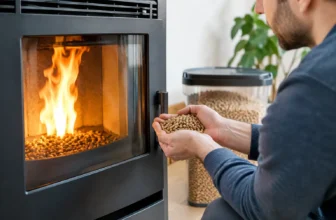
Pellet grill owners may get more value from pellet storage than from extra cooking gadgets. Pellets absorb moisture, swell, and can create feeding problems if left exposed. A sealed storage container protects fuel quality and keeps different wood blends organized. A small vacuum reserved for ash cleanup also makes regular maintenance much easier.
Accessories for Better Food, Not More Clutter
Once the basics are covered, choose cooking accessories based on the food you make repeatedly. This is where many buyers overspend because every tool looks useful in a product photo.
A grill basket is worthwhile if vegetables, shrimp, chopped chicken, or small sausages are regular parts of your menu. Buy one with rigid construction, a secure handle, and openings small enough to keep food from falling through. Flimsy baskets warp quickly and make tossing food frustrating.
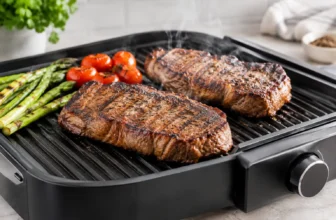
A flat-top griddle or cast-iron plancha is a better investment for many households than a collection of novelty racks. It expands what the grill can do: smash burgers, breakfast, fajitas, fried rice, delicate fish, and vegetables that would otherwise drop through the grates. The downside is weight, cleanup, and the need to season bare cast iron. Enameled options reduce seasoning work but may be less tolerant of extreme temperature changes.
Pizza stones and steel inserts can produce excellent results, but only if your grill can hold steady heat and you are willing to preheat properly. They are not a shortcut to restaurant-quality pizza. On a grill with poor heat retention or limited lid clearance, a pizza accessory can become an expensive baking sheet.
Skewers are useful for kebabs and smaller foods, but choose flat metal skewers rather than round ones. Flat skewers keep food from spinning when you turn them. Wood skewers are inexpensive and disposable, though they require soaking if exposed directly to high heat.
Protect the Grill You Already Own
A fitted grill cover is an ownership accessory, not a cooking accessory, but it can matter more than a new set of tools. Covers protect against rain, debris, and UV exposure. They do not eliminate maintenance, and a cover that traps moisture can be counterproductive in humid climates.
Choose a cover that fits reasonably well without sealing the grill like a plastic bag. Remove standing water, keep the grill clean before covering it, and allow the cooker to cool completely. In dry covered storage, a cover may be less critical. On an exposed patio, it is usually cheap insurance.
Do not overlook replacement parts, either. Fresh grates, burner tubes, grease trays, and gaskets can restore cooking performance at a fraction of the cost of a new grill. Before replacing parts, inspect the frame and firebox for serious rust. There is no sense rebuilding a grill whose main structure is already failing.
The best grill setup is not the one with the most gear. It is the one that helps you light the grill without hassle, cook food to the right temperature, clean up without putting it off, and come back next weekend ready to use it again.