 globalgrillguidecom
Why Grill Materials Matter More Than Most People Think
Walk into any grill store or scroll through product listings and you’ll notice one phrase doing a lot of heavy lifting – stainless steel. It’s slapped on lids, control panels, side shelves, and marketing copy like a magic spell that supposedly guarantees quality. The problem? Stainless steel doesn’t automatically mean better, and assuming it does is one of the fastest ways to overpay for a grill that doesn’t actually cook the way you expect.
Grill materials quietly control everything that matters once the lid closes – how heat moves, how stable temperatures stay, how food browns, how much work maintenance becomes, and how long the grill survives real outdoor life. This isn’t about brand loyalty or shiny surfaces. It’s about physics, chemistry, and honest trade-offs.
In this grill materials comparison, we’re going to break down what different materials actually do – not what brochures promise. You’ll see how materials affect heat, flavor, maintenance, and lifespan, and why some materials excel in one area while quietly failing in others. Most importantly, you’ll learn what marketing rarely explains: there is no perfect material, only the right match for how you grill.
By the end, you’ll understand which materials deserve your money, which ones deserve skepticism, and how to choose intelligently instead of emotionally.
How Grill Materials Affect Cooking Performance
Heat Transfer, Retention, and Recovery
Cooking performance starts with heat behavior. Some materials move heat quickly, others hold onto it like a savings account, and some lose it the moment the wind picks up. Understanding how grill material affects cooking begins with three concepts: conduction, retention, and recovery.
Conduction is how fast heat moves through a material. Retention is how well it stores heat once hot. Recovery is how quickly it returns to temperature after you open the lid or drop a cold steak on the grates. Thicker materials often improve retention, but thicker isn’t always better – slow conduction can mean uneven preheating and sluggish response.
Material choice directly impacts preheat time and temperature stability. Thin stainless steel heats quickly but sheds heat fast. Cast iron warms slowly but stays hot through lid openings. Inconsistent materials or uneven thickness create hot and cold zones, which explains why some grills scorch one burger while barely browning another.
Materials and Flavor Development
Flavor doesn’t come from the grill body – it comes from how heat meets food. Contact heat versus radiant heat is the real difference-maker. Contact heat comes from grates touching meat, while radiant heat comes from burners, coals, or heat plates below.
This is why grill grate materials explained matters more than lid construction. Grates control searing, browning, and fat caramelization. Surface chemistry also plays a role – how fats react with metal surfaces affects crust development. This is where materials quietly influence flavor quality without announcing themselves.
Stainless Steel – The Most Misunderstood Grill Material
What “Stainless Steel” Really Means
Stainless steel is not one thing. It’s a family of alloys with different properties. The most common grades in grills are 304 and 430. Grade 304 offers superior corrosion resistance and is non-magnetic. Grade 430 is magnetic, cheaper, and more prone to corrosion.
This matters because corrosion resistance and magnetic properties reflect composition. More chromium and nickel generally mean better resistance but higher cost. This is why not all stainless steel grill material behaves the same, despite identical appearances.
Performance Characteristics of Stainless Steel
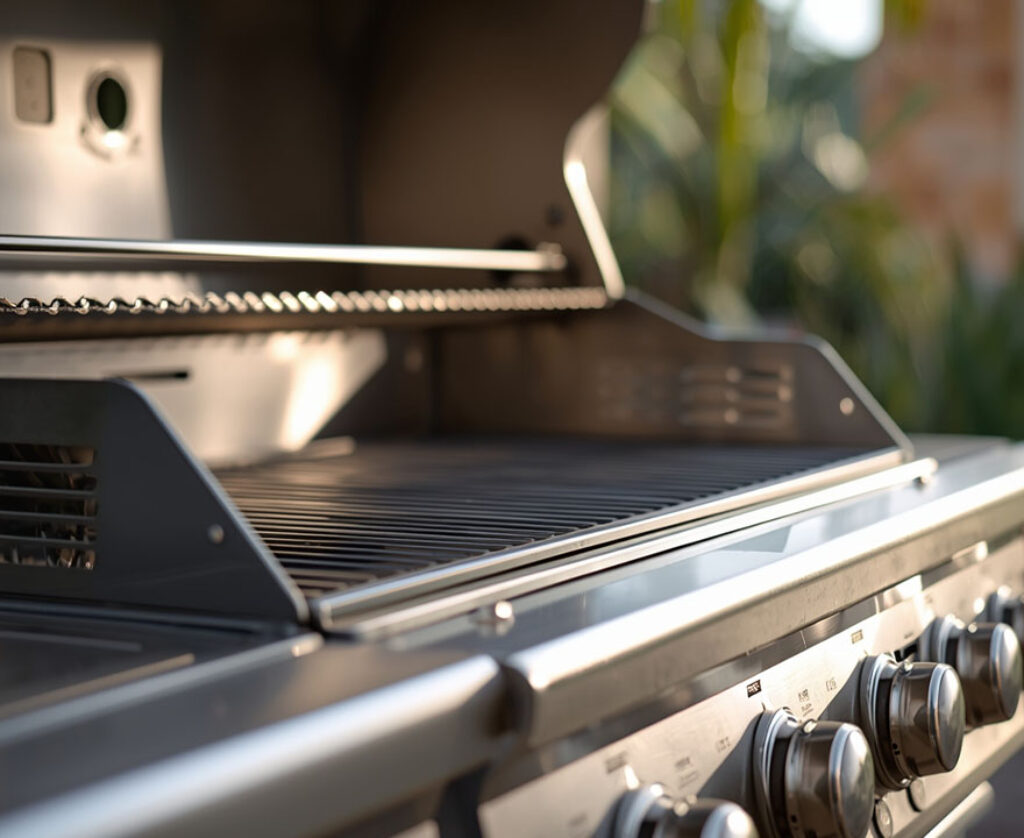
Stainless steel has limitations in heat retention. It heats fast but loses heat quickly, which makes it poor for searing compared to cast iron. Its real strength lies in rigidity and structural stability. Stainless doesn’t crack, warp easily, or degrade structurally under normal grill temperatures.
This is why stainless excels in grill bodies but struggles as a grate material. Thin stainless grates lack thermal mass, leading to weaker sear marks and inconsistent browning. Stainless is better as a frame than as a flavor surface.
Maintenance and Longevity
Cleaning stainless steel requires restraint. Abrasive brushes and harsh chemicals damage protective oxide layers. Discoloration and surface rust aren’t failures – they’re signs of neglect or misuse. Proper stainless steel grill maintenance focuses on gentle cleaning and periodic protection.
Realistically, stainless bodies can last decades if maintained, while stainless grates often need replacement sooner due to heat fatigue.
Best Use Cases for Stainless Steel
Stainless shines in high-end gas grills, coastal and humid climates, and for users prioritizing low maintenance over peak flavor. It’s a convenience material, not a flavor champion.
Cast Iron – The Flavor Champion with a Price
Why Cast Iron Excels at Heat Retention
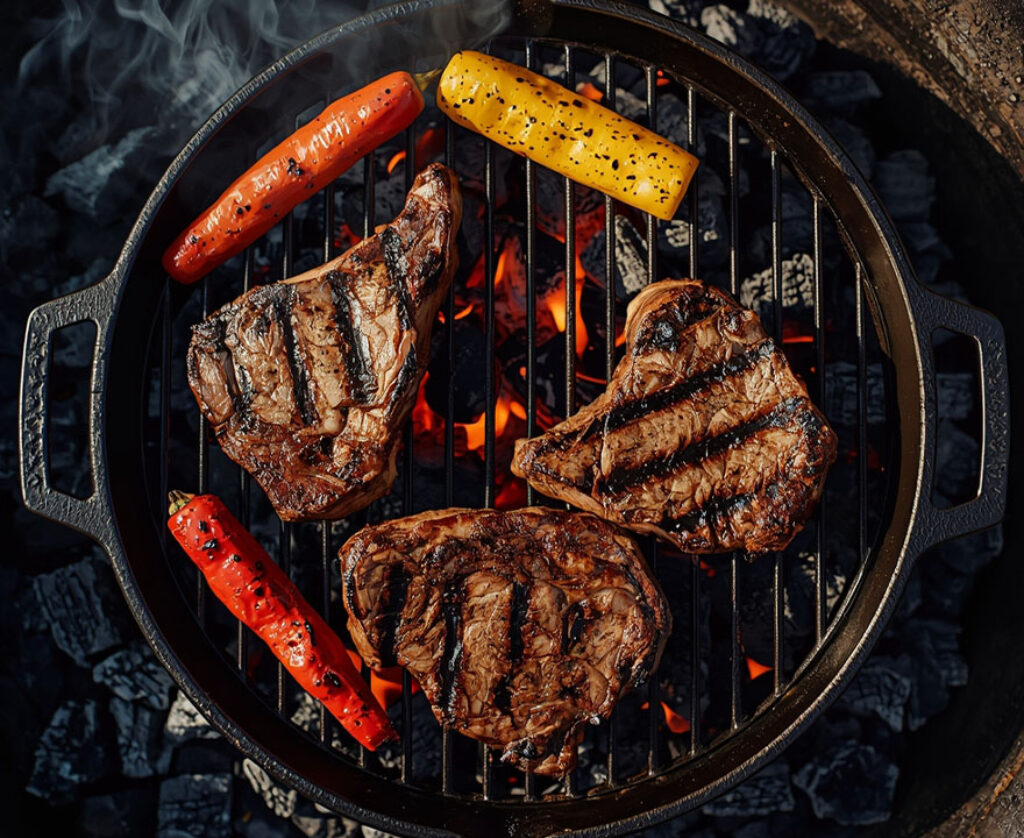
Cast iron is heavy for a reason. Its thermal mass allows it to absorb, store, and evenly release heat. Once hot, it resists temperature drops, which is why cast iron grill grates create superior sear marks.
Flavor and Cooking Results
Cast iron excels at fat caramelization and deep browning. It rewards patience – proper preheating is essential. When used correctly, it produces crusts stainless can’t match. When rushed, it underperforms.
Maintenance Reality Check
Seasoning isn’t optional. It’s survival. Cast iron grill care involves oiling, drying, and protection from moisture. Rust forms quickly when neglected, and common mistakes like soaking or scraping with steel tools ruin grates fast.
Who Should Choose Cast Iron
Cast iron suits flavor-driven grillers, charcoal and pellet users, and anyone willing to trade effort for results.
Porcelain-Coated Materials – A Compromise Solution
What Porcelain Coating Actually Is
Porcelain coating is glass fused to metal – not ceramic cookware. It can cover steel or cast iron, improving cleanup while protecting against corrosion.
Pros and Cons of Porcelain-Coated Grates
Porcelain coated grill grates offer easier maintenance but limited lifespan. Once chipped, corrosion begins. Performance declines gradually, not suddenly.
When Porcelain-Coated Materials Make Sense
They fit mid-range gas grills and casual routines where convenience outweighs longevity.
Aluminum and Die-Cast Alloys – Lightweight but Limited
Why Aluminum Is Used in Grill Bodies
An aluminum grill body resists corrosion, reduces weight, and controls costs. It’s practical, not premium.
Cooking and Heat Performance
Aluminum reflects heat rather than absorbing it, which limits cooking impact. Structural limits prevent direct food contact.
Durability and Long-Term Expectations
Warping and fatigue are risks, but aluminum outperforms steel in wet environments. Lifespan depends on usage intensity.
Carbon Steel – The Quiet Professional Option
How Carbon Steel Differs from Cast Iron
Carbon steel grill grates are thinner, faster to respond, and common in professional kitchens.
Performance and Maintenance
Excellent heat response comes with rust risk. Care requirements keep carbon steel niche in consumer grills.
Mixing Materials – Why Most Grills Are Hybrids
Why One Material Can’t Do Everything
Structural strength, cooking performance, and cost rarely align in one material. Engineering trade-offs are unavoidable.
Common Material Combinations Explained
Stainless bodies with cast iron grates, porcelain-coated cast iron, and aluminum fireboxes are common compromises balancing performance and durability.
Durability, Climate, and Environment
How Climate Affects Material Choice
Humidity, salt air, cold expansion, and UV exposure all influence grill material durability. Climate should guide material selection as much as cooking style.
Storage and Protection Considerations
Covers matter more for some materials than others. Moisture management extends lifespan significantly.
Maintenance Requirements by Material
Cleaning Frequency and Tools
Different materials demand different tools. Using the wrong brush damages surfaces and coatings.
Long-Term Care Checklist
Seasonal inspections and proactive replacement of grates beat full grill replacement.
Common Material Myths That Cost Grillers Money
Stainless steel does rust. Cast iron isn’t fragile when maintained. Heavier doesn’t always mean better. And no – all grates do not perform the same.
How to Choose the Right Grill Material for Your Cooking Style
Flavor vs Maintenance vs Longevity
Every material involves trade-offs. Understanding grill material pros and cons prevents disappointment.
Honest Recommendations by User Type
Convenience-first users benefit from stainless. Flavor chasers belong with cast iron or carbon steel. Long-term owners should prioritize replaceable components.
Conclusion – Materials Don’t Make a Grill Better, Choices Do
Materials don’t guarantee results – habits do. Informed buyers become happier grill owners by matching materials to reality, not hype. Smart care extends performance and lifespan far more than brand names ever will.
Add Your Heading Text Here
| Material | Heat Retention | Flavor Potential | Maintenance | Durability | Best For |
|---|---|---|---|---|---|
| Stainless Steel | Medium | Low–Medium | Very Low | High | Low-maintenance users, coastal climates |
| Cast Iron | Very High | Very High | High | Medium | Flavor-focused grillers |
| Porcelain-Coated | Medium | Medium | Medium | Medium–Low | Casual grilling |
| Carbon Steel | High | High | High | Medium | Experienced users |
| Aluminum (Body) | Low | N/A | Very Low | Medium | Lightweight, corrosion resistance |
No material wins in every category – the best choice depends on how you actually grill
FAQ – Grill Materials Explained
What is the best grill material for durability?
Stainless steel is generally the most durable grill material when quality grades are used (304 or 430). It resists corrosion, handles weather exposure well, and requires less intensive maintenance. Cast iron is also durable, but only with regular care – otherwise rust shortens its lifespan.
Is stainless steel better than cast iron for grills?
It depends on priorities. Stainless steel wins in longevity and low maintenance, while cast iron excels in heat retention and searing performance. Stainless steel suits everyday, year-round use. Cast iron is better for flavor-focused cooks who are willing to clean and season regularly.
Do cast iron grill grates rust easily?
Yes, cast iron rusts if neglected. Moisture, lack of seasoning, or improper storage can cause corrosion quickly. However, with regular oiling, proper drying after use, and covered storage, cast iron grates can last many years and perform exceptionally well.
Which grill material retains heat the best?
Cast iron retains heat better than stainless steel or aluminum. Its mass allows it to store and radiate heat evenly, making it ideal for searing. Stainless steel heats faster but loses heat more quickly, while aluminum prioritizes weight reduction over thermal performance.
Does grill material affect flavor?
Indirectly, yes. Cast iron creates stronger sear marks and promotes Maillard reactions, enhancing flavor. Stainless steel provides a cleaner, more neutral cooking surface. The material doesn’t add flavor itself, but it changes how heat interacts with food.
Are porcelain-coated grill grates worth it?
Porcelain-coated grates offer a balance between performance and maintenance. They resist rust better than bare cast iron and retain more heat than stainless steel. However, once the coating chips or cracks, rust can develop underneath, shortening their usable life.
What grill materials require the least maintenance?
Stainless steel and aluminum require the least maintenance. Stainless steel needs basic cleaning and occasional polishing. Aluminum doesn’t rust at all but sacrifices heat retention. Cast iron requires the most care due to seasoning and rust prevention needs.
How long do stainless steel grills last?
A well-built stainless steel grill can last 10–20 years or more, depending on material grade, exposure to weather, and maintenance habits. Thicker steel, welded seams, and proper covers significantly extend lifespan compared to thin, budget-grade constructions.
Is aluminum a good material for grills?
Aluminum is lightweight, rust-proof, and heats quickly, making it suitable for portable and compact grills. However, it lacks heat retention and structural rigidity compared to steel or cast iron. It’s practical, but not ideal for high-heat or flavor-driven grilling.
What grill material is best for home use?
For most home users, stainless steel offers the best balance of durability, ease of use, and low maintenance. Cast iron works well for enthusiasts focused on flavor. The “best” material ultimately depends on how often you grill and how much upkeep you’re willing to handle.