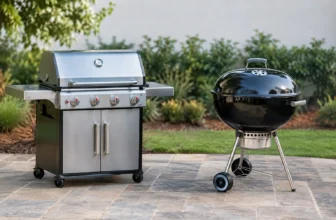

A gas grill’s cooking grates get the attention, but the hardware directly beneath them does much of the real work. In the ceramic briquettes vs flavorizer bars debate, the better choice is not simply the one that claims more flavor. It is the one that fits the grill’s design, your cleanup tolerance, and how you actually cook.
Ceramic briquettes and Flavorizer bars both sit between the burners and the food. Both protect burners from drippings and help turn burner heat into usable cooking heat. But they manage grease, recover heat, and age very differently. That matters far more after a full season of burgers, chicken thighs, and sauce-heavy ribs than it does on the showroom floor.
Ceramic Briquettes vs Flavorizer Bars: The Real Difference
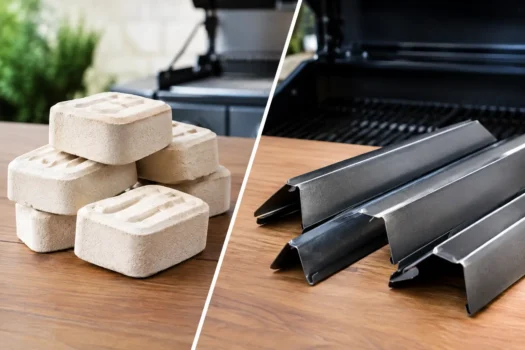
Ceramic briquettes are small heat-retaining blocks, usually arranged in a tray above the burners. Once hot, they act as a broad radiant surface. They absorb heat from the flame, spread it across the cook box, and radiate it upward toward the food.
Flavorizer bars are angled metal panels that run above the burners. The name is associated with Weber, although many gas grills use similar metal heat tents or burner shields. Their job is to shield burners, heat up quickly, vaporize a portion of the drippings, and direct excess grease away from the fire.
Neither system creates smoke-ring flavor or turns a gas grill into a charcoal cooker. That claim is mostly marketing. What either system can do is vaporize some food drippings on a hot surface, adding a modest grilled aroma while reducing the chance that grease lands directly on a burner.
The larger distinction is thermal mass. Ceramic briquettes store considerably more heat than metal bars. That can make a grill feel more stable once it is fully preheated, especially when cold food hits the grates. Metal bars respond faster, but they also have less stored energy to give back.
Heat Performance and Temperature Control
A well-designed ceramic briquette system can produce impressively even heat. Because the briquettes cover much of the area beneath the grates, they can reduce the sharp striping and gaps that sometimes occur above individual burners. This is useful for foods that need a broad, steady cooking zone: bone-in chicken, pork chops, vegetables, and thicker fish fillets.
The trade-off is warm-up time. Briquettes need time to heat through. If you turn the grill on and start cooking ten minutes later, they may not yet deliver the stability you paid for. Give them a proper preheat, commonly 15 to 20 minutes depending on weather and grill construction, and they become much more effective.
Flavorizer bars heat faster and are generally better suited to quick weeknight grilling. Turn on a quality gas grill, preheat it, and the bars quickly become hot enough to protect burners and handle normal drippings. They also allow the burners to respond more directly to control changes, which some cooks prefer when moving between searing and gentler cooking.
Do not assume ceramic automatically means higher temperatures. Maximum heat depends on burner output, firebox design, grate material, and airflow. A weak grill with briquettes is still a weak grill. Likewise, thick stainless or cast-iron bars in a well-built cook box can deliver excellent searing performance.
Flare-Ups: Better Control Depends on Grease
Both systems can flare up. Any grill will flare when enough fat hits a hot surface near an open flame. The real question is how predictably the grill manages normal drippings and whether it gives excess grease a clear route out of the cook box.
Flavorizer bars have an advantage in grease routing when they are clean and properly positioned. Their angled shape sends drippings toward the edges and into the grease-management system. A small amount of grease may vaporize on the bars, but the rest should drain away rather than collect over the burners.
Ceramic briquettes are more complicated. They can absorb grease over time. That absorbed grease may burn off gradually during high-heat cooking, but it can also create smoke, hot spots, and sudden flare-ups if the tray becomes heavily loaded. This is especially common with sugary marinades, skin-on chicken, fatty burgers, and neglected cleanup.
For frequent high-fat grilling, metal bars are usually the lower-drama option. For moderate grilling with regular burn-offs and periodic maintenance, briquettes can work very well. The difference is not whether you ever see a flare-up. It is how much maintenance it takes to keep one from becoming a recurring problem.
Cleanup and Long-Term Ownership
This is where many buyers change their mind about ceramic briquettes.
Briquettes are not difficult in the first few cooks. The trouble starts when grease and carbon build in the tray. Cleaning often means removing grates, lifting out dozens of individual pieces, scraping the tray, inspecting each briquette, and replacing any that are cracked, saturated, or falling apart. Some systems allow briquettes to be turned over and burned clean, but that is not a complete fix for long-term grease buildup.
Ceramic also does not handle rough treatment well. Briquettes can crack from drops, thermal shock, or repeated exposure to grease fires. They may last for years with careful use, but they are a wear item, not a permanent component.
Flavorizer bars are simpler. Remove the grates, lift out the bars, brush or scrape them, clean the cook box, and make sure the grease channel is open. Stainless bars can discolor and warp over time, while porcelain-coated steel can eventually chip and rust. But replacing a set of bars is generally less tedious than managing a full bed of briquettes.
Material quality matters. Thin, lightweight burner covers corrode and warp quickly, regardless of the label on the product page. Thick stainless steel bars cost more but tend to maintain their shape and provide more reliable coverage. For buyers focused on low-maintenance ownership, substantial metal bars are usually the safer bet.
Can You Swap Briquettes for Flavorizer Bars?
Usually, no. Do not treat these as universal accessories.
The grill’s burner placement, firebox depth, airflow, grate height, and grease-drain layout are designed around its original heat-management system. Installing briquettes in a grill made for bars can restrict airflow, trap grease, and create more flare-ups than it solves. Installing generic bars where a briquette tray belongs can leave burners exposed or create uneven heating.
If the original parts are unavailable, use replacement components made specifically for your grill model whenever possible. A conversion can work only when the manufacturer supports it or when the replacement system matches the original geometry closely. A cheap universal kit is rarely worth the risk of poor performance and grease-fire headaches.
Which System Fits Your Cooking Style?
Choose ceramic briquettes if you value broad radiant heat, cook longer meals, and are willing to maintain the grill beyond brushing the grates. They can be excellent on premium gas grills built around them, particularly for cooks who preheat thoroughly and keep the grease tray clean.
Choose Flavorizer bars, or a comparable metal-bar system, if you want a faster, simpler, more forgiving ownership experience. They are a strong fit for households grilling burgers, chicken, vegetables, and steaks several nights a week. They also make more sense for buyers who want straightforward cleaning and readily available replacement parts.
For most home cooks, the best answer is not to shop for briquettes or bars in isolation. Start with the grill’s overall build quality. Look for a deep cook box, burners with even flame coverage, a grease system that is easy to access, and heat shields made from material thick enough to last. Those details determine whether the system works after two years, not just during the first backyard cookout.
If you already own a grill, maintain the system it was designed to use instead of chasing a conversion for marginal gains. Clean grease before it becomes fuel, preheat long enough for the grill to stabilize, and replace worn parts before they compromise burner protection. That is how a gas grill stays predictable when dinner is waiting.