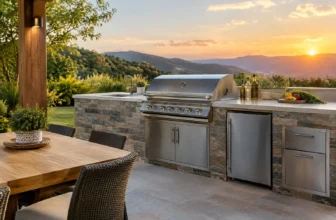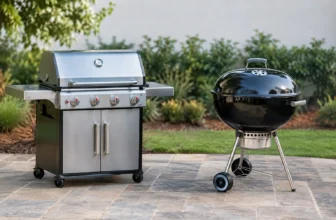

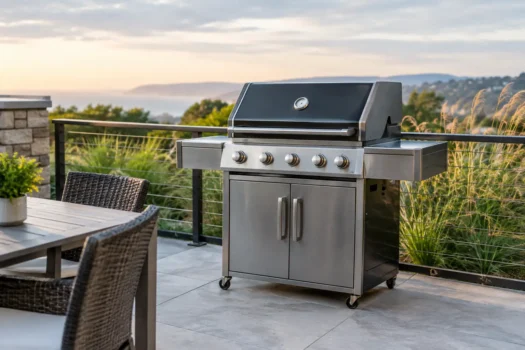
A patio that gets regular gusts changes the grill-buying equation. The best grills for windy patios are not necessarily the biggest, hottest, or most feature-packed models. They are the ones that hold a steady cooking temperature, keep flames where they belong, and do not turn every burger night into a fight with the weather.
Wind exposes weak points fast. Thin metal loses heat. Loose-fitting lids leak it. Lightweight carts move around. Burners struggle to stay lit, pellet grills burn through fuel faster, and grease flare-ups become less predictable. A grill can look impressive in a calm showroom and still be a poor choice for an exposed patio.
For most homeowners, a solidly built gas grill with a deep firebox, reliable ignition, heavy lid, and a protected burner layout is the practical answer. But that is not the only workable choice. Your cooking style, patio layout, and local wind conditions still matter.
What Makes a Grill Work in Wind?
The first requirement is heat retention. A grill does not need to be insulated like an oven, but it needs enough mass and a well-designed lid to avoid major temperature swings every time a gust hits. Heavier steel, cast aluminum, and ceramic construction generally perform better than thin stamped sheet metal.
The second is burner protection. On gas grills, burners should sit low enough in the firebox and behind heat deflectors or flavorizer bars that crosswinds cannot easily disrupt the flame. A grill with exposed burners may still work on a breezy day, but strong side gusts can cause uneven heat, delayed ignition, or burner outages.
Stability matters just as much. Large locking casters are useful for rolling a grill into storage, but they are not a substitute for a heavy base and a low center of gravity. A tall, lightweight cart grill on a narrow patio is a bad match for a windy location, especially if the patio is exposed on multiple sides.
Finally, look at lid fit and vent control. A lid that closes firmly reduces heat loss. On charcoal grills and smokers, adjustable vents let you manage airflow instead of letting the wind manage it for you.
Best Grills for Windy Patios by Fuel Type
There is no single best fuel type for every windy patio. Here is the real trade-off between the major options.
Gas grills are the best all-around choice
A well-built propane or natural gas grill is usually the easiest grill to run in moderate wind. It heats quickly, responds quickly when you adjust the burners, and does not require you to manage a live charcoal fire while gusts change direction.
Look for a model with a substantial firebox, solid side panels, a heavy lid, and burners protected by angled metal bars or ceramic briquettes. Multiple independently controlled burners are useful because wind rarely affects every part of the cooking surface equally. You can shut down a struggling side, cook over the more stable zone, and keep food moving without losing the entire session.
Avoid judging a gas grill by BTU output alone. High BTU numbers do not guarantee better performance in wind. Construction, burner placement, and lid design matter more than a large number printed on a product page.
Gas does have a limitation: it can be less forgiving in truly exposed locations where gusts repeatedly blow through the firebox. If the flames are lifting, sputtering, or going out, do not keep relighting it and hoping for better results. Move the grill to a safer location or wait for conditions to improve.
Kamado grills handle wind exceptionally well
For heat stability, a ceramic kamado grill is hard to beat. Its thick ceramic body holds heat far better than most metal grills, and the tightly controlled intake and exhaust vents allow for precise airflow management. Once it is settled at temperature, wind has less effect on the cooking chamber than it does with a lightweight charcoal kettle or thin-walled smoker.
That makes a kamado an excellent fit for homeowners who cook with charcoal often and want dependable low-and-slow performance on a breezy patio. It also works well for high-heat grilling, baking, and roasting.
The trade-off is weight and handling. Kamados are heavy, fragile if dropped, and slower to cool down. They are not the right choice if you need to wheel the grill around frequently or want a simple weeknight setup. They also require a stable stand and careful placement. Do not put one where it can be bumped, rolled, or exposed to falling objects.
Pellet grills can work, but placement is critical
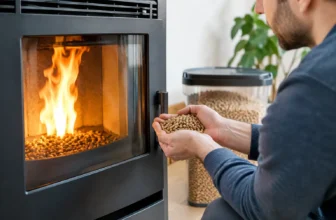
Pellet grills are convenient, but wind can make them work harder. The controller may feed more pellets to maintain temperature, which increases fuel use and can still leave you with wider swings than expected. Wind also carries smoke away quickly, which can reduce the smoke profile during shorter cooks.
A quality pellet grill with a well-sealed lid and a protected cooking chamber can perform well in a sheltered patio corner. On an open deck or a patio that catches sustained wind, it is less dependable than a heavy gas grill or kamado. Pellet grills also rely on electricity, so cord placement and weather protection need to be part of the setup.
If you mainly smoke ribs, pork shoulder, and brisket, a pellet grill may still be worth the compromise. Just do not expect it to perform exactly as it would on a calm day without using more pellets and paying closer attention to the cook.
Charcoal kettles are capable, but demand more attention
A classic charcoal kettle can produce excellent food in wind, especially with the lid closed and vents adjusted carefully. It is affordable, simple, and easier to maintain than many larger grills. But it is also more exposed to shifting airflow than a kamado.
Wind can accelerate combustion through the bottom vents, making charcoal burn hotter and faster. It can also push ash around when the lid is open. For direct grilling, that may be manageable. For longer cooks, it becomes a real temperature-control issue.
A kettle is a good fit for a patio with moderate breezes and some natural shelter. It is not the low-effort choice for a location that sees regular hard gusts.
Features Worth Paying For
When comparing grills for an exposed patio, put your money into the parts that affect real cooking. Thick lid construction, sturdy hinges, durable grates, protected burners, and a stable cart are worth more than built-in lights, oversized side shelves, or a long list of accessories.
A side burner is not a wind solution. Neither is a high-output sear burner. These features can be useful, but they do not improve control in gusty conditions.
A grill cover is worth owning, but it should not be used while the grill is operating. The same applies to improvised wind barriers made from fabric, plastic panels, or loose plywood. They can trap heat around the grill, create a fire hazard, interfere with ventilation, or blow into the cooking area.
Patio Setup Matters as Much as the Grill
Before buying a new grill, look at the space honestly. The best upgrade may be a better location on the patio, not a more expensive cooker. A spot near a solid exterior wall can reduce crosswinds, provided the grill still has the clearance required by its manufacturer. Never grill in a garage, under a low enclosed roof, or in a space where smoke and heat cannot escape.
A permanent masonry, metal, or properly designed outdoor-kitchen wind screen can help, but it must not box in the grill. The goal is to interrupt direct gusts, not create an enclosure around a live fire or gas appliance.
Keep the grill on level, noncombustible ground whenever possible. Lock the casters, keep propane hoses away from traffic paths, and do not leave the lid open while you step away to deal with wind-blown tools, plates, or furniture.
When Wind Means Do Not Grill
There is a point where equipment choice stops mattering. If gusts are strong enough to move patio furniture, blow ash across the cooking area, extinguish gas burners repeatedly, or make it difficult to keep the grill stable, postpone the cook.
This is especially true during dry conditions, wildfire warnings, or when nearby landscaping is full of leaves and debris. Outdoor cooking is supposed to be enjoyable. Fighting high wind around an open flame is not a test of skill. It is an unnecessary risk.
For most windy patios, buy a substantial gas grill if you want the simplest day-to-day answer, or a kamado if charcoal flavor and temperature stability are higher priorities. Then give that grill a protected, level place to work. Good equipment helps, but smart placement is what turns a windy patio from a constant problem into a usable cooking space.