
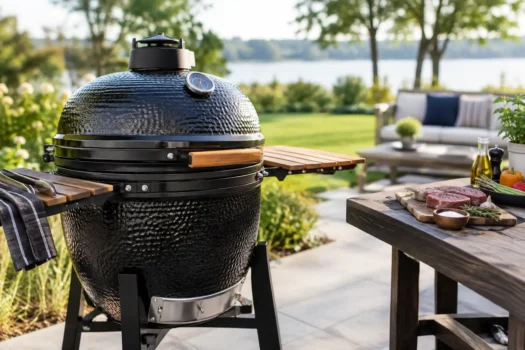
A kamado can turn out crisp-skinned chicken, steady overnight barbecue, and pizza with real char from the same cooker. That range is why kamado grills have earned a devoted following. But the sales pitch often skips the parts that matter after the first weekend: they are heavy, slow to cool down, awkward to clean in certain setups, and not especially convenient for every kind of backyard cook.
For the right owner, a kamado is one of the most capable charcoal cookers available. For someone who wants fast weeknight burgers, plenty of direct-grilling space, or push-button convenience, it can become an expensive object that gets used less than expected. The useful question is not whether kamados are good. It is whether their strengths match the way you actually cook.
What Kamado Grills Do Better
The defining feature is the insulated ceramic or insulated steel body. Once a kamado is heated and the vents are set, it holds temperature exceptionally well. That matters when smoking ribs at 250 degrees, roasting a turkey in cold weather, or baking bread with stored heat after the fire has settled.
A basic charcoal kettle can make excellent food, but it loses heat faster and usually needs more attention during a long cook. A kamado uses less charcoal for the same job and is less affected by wind or cool outdoor temperatures. Its tight lid and adjustable intake and exhaust vents also make low-and-slow cooking more predictable once you learn the controls.
High-heat cooking is the other major advantage. Many models can reach temperatures that are useful for pizza, flatbreads, and aggressive searing. With a heat deflector installed, the cooker behaves much like a compact outdoor oven. Remove the deflector and place the grate close enough to the coals, and it becomes a serious direct-heat grill.
That versatility has a real ownership benefit. A family that wants one charcoal-fired cooker for smoking, roasting, baking, and grilling may get more use from a kamado than from separate specialty equipment. The best versions are built to retain heat and survive years outdoors with basic care. Ceramic bodies do not rust, and quality metal components can usually be replaced when they eventually wear out.
The Trade-Offs That Marketing Leaves Out
Kamados are not magical, and their limitations are practical rather than minor. The first is weight. A medium ceramic unit can weigh well over 100 pounds, while a large model may require two or more people to move safely. The stand, locking casters, and patio surface matter. This is not the grill to drag out of a shed for occasional use.
The second is speed. A kamado does not need an hour to make dinner, but it is generally less convenient than a gas grill for a 20-minute meal. You need to light charcoal, let the fire establish, allow the ceramic to warm, and wait for the temperature to stabilize. If you overshoot your target, bringing a heat-soaked cooker back down takes time.
Cooking space can also be misleading. Kamado grates are often round, and a large diameter sounds generous until you try arranging several racks of ribs, a zone for vegetables, and a cooler area for finished food. Multi-level rack systems help, but they add cost and complexity. A rectangular pellet grill or large gas grill usually offers more usable room for big groups.
Then there is the learning curve. Vent control is simple in principle, but small changes can have a delayed effect. New owners often open the vents too far, chase temperatures repeatedly, or lift the lid too often. A digital temperature controller can reduce that work, but it adds another accessory and does not eliminate the need to understand airflow.
Ceramic vs. Steel Kamado Grills
Traditional ceramic kamados are excellent heat retainers. Their mass helps smooth out temperature swings, and many owners value the solid, oven-like cooking environment. The downside is obvious when moving one: ceramic is heavy and can crack if dropped or struck hard. A cracked firebox or dome is not a minor cosmetic issue.
Insulated steel kamados aim to deliver similar fuel efficiency with less weight and more impact resistance. They are often easier to move, heat up somewhat faster, and may be better suited to patios where the grill needs to be repositioned. Their long-term weak points are different. Check the quality of the coating, seams, hardware, gasket, and ash system, since steel models depend more on corrosion protection.
Neither material automatically produces better food. Build quality, airflow design, gasket fit, grate system, and owner technique matter more. Choose ceramic if you want maximum thermal mass and plan to keep the cooker in one place. Choose insulated steel if portability and lower breakage risk are higher priorities.
What to Check Before You Buy a Kamado
Start with the cooking system, not the exterior color or included side shelves. A flexible rack setup is worth paying for if you cook more than a few burgers at a time. Look for the ability to create direct and indirect zones, add a second level, and access the fire without dismantling the entire setup.
Pay close attention to ash removal. Some kamados require you to rake ash through a lower vent, while others use a removable drawer or pan. Neither approach is difficult, but easy ash access makes a real difference when the grill is used weekly. Ash buildup restricts airflow and makes temperature control less reliable.
The gasket deserves more attention than it gets. It seals the lid and helps the cooker control oxygen. Gaskets are wear items, especially after high-heat pizza sessions or frequent use, so replacement availability matters. The same goes for hinge hardware, fire grates, heat deflectors, cooking grates, and wheels. A grill that lasts 10 years is only valuable if common parts can still be obtained.
A sturdy cart is not an optional detail. Test whether the lid opens smoothly, whether the grill feels stable with the lid raised, and whether the wheels lock securely. If the cooker will sit in an outdoor kitchen, confirm ventilation clearances and installation requirements before buying. Do not assume a kamado can be enclosed like a built-in gas grill.
Who Should Buy One and Who Should Pass
A kamado makes sense for cooks who enjoy charcoal flavor, want dependable low-temperature performance, and regularly use more than one cooking style. It is especially strong for people who smoke meat on weekends but also want to roast chicken or make pizza without buying separate equipment. It rewards patience and repetition.
It is a weaker fit for households that primarily cook quick dinners, feed large groups often, or need the simplest possible cleanup. A gas grill is usually better for immediate heat and routine weeknight use. A pellet grill is often easier for long cooks when you want automated temperature management. A kettle grill remains hard to beat on value, direct-grilling space, and straightforward charcoal cooking.
Budget matters beyond the initial purchase. Plan for lump charcoal, a charcoal chimney or electric starter, heat-resistant gloves, an ash tool, and eventually replacement gaskets or grates. Useful accessories can improve the experience, but do not buy a cooker based on a bundle of gadgets you may not use.
Living With a Kamado Grill
The best way to keep a kamado working well is boring, regular maintenance. Remove ash before it blocks airflow, keep the lower vent clear, and inspect the gasket for compressed or burned sections. Run a hot burn occasionally to reduce grease and food residue, but avoid treating extreme heat as routine cleaning because it can shorten gasket life.
Keep the lid closed when possible during a cook. Opening it feeds oxygen to the fire and can cause a flare-up when the lid is lowered again. For low-and-slow cooking, make vent adjustments in small increments and wait several minutes before changing them again. Most temperature problems come from reacting too quickly, not from the cooker failing.
A cover can protect the cart and hardware, but it should be used on a fully cooled, dry grill. Moisture trapped under a cover is not helpful, particularly around steel hardware. If you live in a freeze-thaw climate, inspect ceramic components periodically and avoid letting standing water collect in the cooker.
Kamado grills are worth the cost when their deliberate, fuel-efficient style fits your cooking habits. Buy one for the meals you plan to make repeatedly, not for the idea that one grill should do everything.