
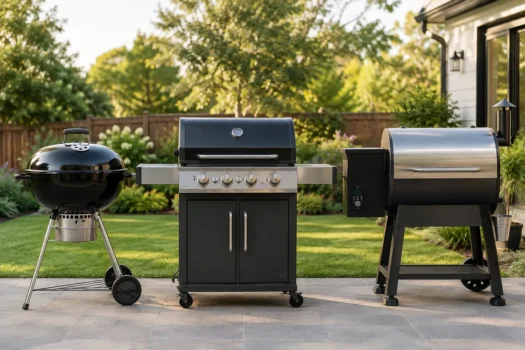
A grill that looks generous in a showroom can feel cramped the first time you are trying to cook burgers, chicken, and vegetables at the same time. When shoppers ask what grill size is needed, the useful answer is not a single number. It depends on how many people you regularly feed, what you cook, and whether you need room to manage different heat zones.
Ignore the lifestyle photos and start with the primary cooking grate. That is the space where most of your food will actually cook. A warming rack, side burner, or oversized cart may add convenience, but none of them fixes a grill that cannot hold dinner without crowding everything together.
What Grill Size Is Needed? Start With Cooking Area
Grill makers commonly list cooking space in square inches. This is a useful measurement, but only when you separate primary grate area from secondary warming-rack area. For most buyers, primary cooking area matters far more.
A small grill with 250 to 350 square inches of primary space is enough for one or two people cooking a few times a week. Think six to eight burgers, a couple of steaks with vegetables, or a modest rack of chicken pieces. It is also a sensible fit for a small patio, balcony where permitted, or anyone who values low fuel use and quick cleanup.
For a household of three to five people, 400 to 550 square inches of primary cooking area is the practical sweet spot. This size usually handles 12 to 16 burgers, several pounds of chicken, or a two-zone setup with direct heat on one side and gentler finishing heat on the other. It gives you breathing room without turning every ordinary Tuesday night into a full-scale grill-cleaning project.
If you regularly cook for six or more people, host family gatherings, or like to cook a main course and sides outdoors, look at 550 to 700 square inches of primary grate space. At that point, you can cook in batches less often and keep food away from flare-up zones. Larger grills are also more useful for indirect cooking, where part of the grate must stay empty beneath a roast, whole chicken, or larger cut.
More than 700 square inches makes sense for frequent entertaining, serious barbecue hobbyists, or households that cook outdoors as their main warm-weather kitchen. It does not make sense just because a bigger grill seems safer. Large cookboxes cost more, consume more fuel, take longer to clean, and can be frustrating to heat evenly when you are only cooking four burgers.
Match Grill Size to the Way You Cook
Head count is only part of the decision. Two people who grill a pair of steaks once a week need less space than two people who spend weekends smoking ribs, searing vegetables, and cooking for neighbors.
Weeknight grilling needs room, not excess
For basic weeknight meals, a medium grill is usually the right call. You need enough room to keep raw and cooked food separated, move pieces away from flare-ups, and cook over two temperatures. A 450-square-inch grill often works better in real use than a huge unit with weak burners or poor heat control.
Gas grills are especially easy to oversize because manufacturers count warming racks and side burners in their overall presentation. Look at the main grate and ask whether it will fit your most common meal in one pass. If the answer is yes, do not pay for capacity you will rarely use.
Smoking and indirect cooking require more usable space
Pellet grills, charcoal kettles, kamado cookers, and offset smokers use space differently. When you cook indirectly, you may lose part of the grate to a heat zone, drip pan, deflector, or charcoal bank. The listed cooking area can overstate what is actually usable for a large roast or multiple racks of ribs.
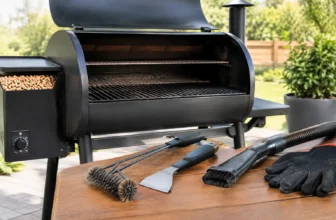
For a pellet grill, 500 to 600 square inches is a good baseline for a family that wants to smoke pork shoulders, ribs, or whole chickens without stacking food tightly. A second rack can help, but it often cooks differently than the main grate because it sits closer to the lid and farther from the heat source.
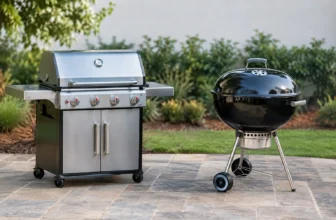
With a charcoal kettle, the diameter tells the story quickly. A 22-inch kettle is one of the most versatile sizes for a typical household. It has enough room for a two-zone fire and a full chicken or several burgers. An 18-inch kettle is compact and capable, but it becomes restrictive when you need both direct and indirect zones. A 26-inch kettle offers serious capacity, though it uses more charcoal and takes up considerably more patio space.
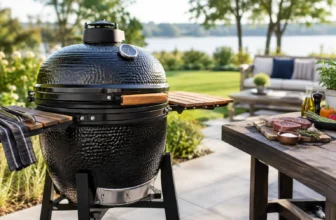
Kamado grills deserve the same scrutiny. Their round grates are excellent for heat retention and indirect cooking, but the shape can limit how efficiently you arrange rectangular food such as rib racks or sheet-pan-style vegetables. Do not compare their square-inch claims directly with a wide gas grill without considering grate shape and accessory needs.
Entertaining changes the calculation
Buying for occasional guests does not always mean buying the biggest grill. If you host a few larger cookouts each year, a medium grill plus a plan for batches is often cheaper and easier to live with. Burgers, sausages, vegetables, and chicken thighs can be held briefly in a covered pan or warm oven without ruining dinner.
Buy larger capacity when entertaining is frequent or when the menu demands it. Cooking 24 burgers is manageable in batches. Cooking 24 bone-in chicken pieces, kebabs, corn, and vegetables while managing flare-ups is where extra primary grate space becomes genuinely useful.
Do Not Confuse Grill Size With Grill Performance
A large grill with thin grates, uneven burners, or poor lid fit is not better than a smaller grill built to hold steady temperatures. Cooking area tells you capacity. It does not tell you whether the grill will sear properly, recover heat after the lid opens, or avoid scorching food along the back edge.
BTU ratings are equally easy to misuse. More BTUs do not automatically mean more heat at the grate. Grill design, burner layout, firebox depth, lid construction, and airflow all affect real-world performance. A well-built 450-square-inch gas grill can be more satisfying than a 700-square-inch model that runs hot in one corner and weak everywhere else.
Also consider grate depth. A grill that is wide but shallow can fit plenty of burgers while struggling with larger cuts, two-zone cooking, or a full rack of ribs. Measure the grate dimensions when possible, not just the total square-inch figure.
Make Sure the Grill Fits Your Space and Routine
The grill itself is not the full footprint. You need safe clearance from siding, railings, overhead structures, and anything combustible, following the manufacturer’s instructions and local rules. You also need room to stand at the grill, open the lid, remove grease trays, access the propane tank or ash catcher, and move food from the kitchen.
A large cart-style gas grill can occupy far more space with its side shelves open than its product dimensions suggest. Pellet grills need room for the hopper and a clear path to pull out internal components for cleaning. Charcoal grills need a safe place to deal with ash and hot tools. If the grill barely fits, maintenance gets skipped, and neglected maintenance shortens its useful life.
Weight matters, too. A heavy pellet grill or ceramic kamado may be difficult to move once assembled. If you rent, rearrange your patio often, or store equipment seasonally, a smaller and more mobile grill may serve you better than a permanent-looking unit that becomes a burden.
A Practical Size Recommendation
For most US households, a grill with 400 to 550 square inches of primary cooking area is the safest recommendation. It handles normal family meals, gives you room to manage heat, and remains easier to clean and fuel than oversized options.
Choose 250 to 350 square inches if you mostly cook for one or two. Move to 550 to 700 square inches if you routinely feed six or more, cook full meals outdoors, or want real indirect-cooking flexibility. Go beyond that only when frequent large gatherings justify the cost, fuel use, cleaning, and patio footprint.
The right grill should make your normal cooking easier, not merely make the biggest cookout possible. Buy for the meals you make most often, then leave enough room for heat management. That extra bit of usable space is what keeps a grill from feeling too small after the first busy weekend.