
A pellet grill can turn out steady, wood-fired food with less fire management than charcoal, but it does not clean itself. Ash collects around the burn pot. Grease travels into the drip system. Carbon builds on grates and heat deflectors. Ignore those jobs long enough and you get flare-ups, uneven heat, failed ignitions, and food that starts tasting like last month’s ribs.
The best pellet grill cleaning tools are not necessarily specialty gadgets with a grill logo stamped on the handle. They are durable, heat-safe tools that handle ash, grease, and cooked-on residue without damaging coated surfaces or making a basic maintenance job take an hour.
What a Pellet Grill Cleaning Kit Actually Needs
Most owners need fewer tools than retailers suggest. The useful setup covers four jobs: removing cold ash, cleaning cooking grates, managing grease, and scraping loose debris from the interior. The right tool for one job can be the wrong tool for another. A stiff wire brush may be fine for bare stainless grates, for example, but it is a poor choice for porcelain-coated grates or painted interior surfaces.
Build around the materials on your particular grill. Check whether your grates are stainless steel, cast iron, or porcelain-coated steel. Also check the manual before using cleaners on painted lids, powder-coated shelves, or nonstick surfaces. The goal is clean metal and clear airflow, not a showroom shine.
A shop vacuum is the most useful tool
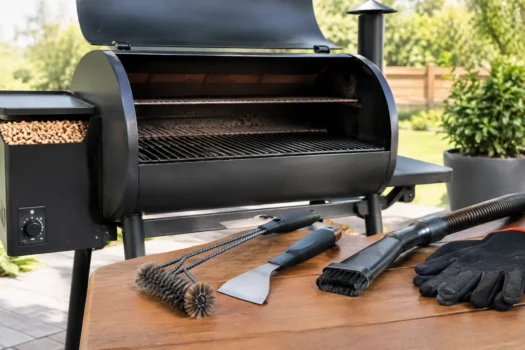
For most pellet grill owners, a compact wet/dry shop vacuum is the tool that makes cleaning realistic. It removes fine ash from the fire pot, the bottom of the cook chamber, and the space around internal components far more effectively than a hand brush or rag.
Choose a vacuum with a narrow crevice attachment and a filter suited to fine dust. A small unit is usually enough because pellet grills do not produce the volume of ash associated with a large wood stove. What matters more is portability. If it is light enough to grab for a five-minute cleanup, you will use it.
There is one non-negotiable rule: vacuum only completely cold ash. Pellet embers can remain hot longer than they appear, and a standard shop vacuum is not designed to handle live coals. Let the grill cool fully after shutdown, then empty the vacuum outside when you are done.
Use a grate brush that matches your cooking grates
A grill brush earns its place when it removes residue without shedding wire bristles or stripping the grate finish. For stainless-steel grates, a bristle-free coil brush, scraper-style brush, or heavy-duty nylon brush used on a warm grate is a sensible choice. For porcelain-coated grates, use a nylon brush or a non-abrasive scrub pad. Aggressive metal scraping can chip the coating, which creates a path for rust.
Cast-iron grates deserve a different approach. Use a stiff brush or scraper, dry the grate thoroughly, then apply a thin coat of cooking oil if the seasoning looks dry. Leaving cast iron wet after cleaning is a reliable way to find surface rust before the next cook.
Skip cheap wire brushes with loose bristles. This is not just a durability complaint. Detached bristles can stick to food, and no backyard cook needs that risk. A solid stainless scraper or bristle-free brush costs more upfront but tends to last longer and is easier to trust.
Best Pellet Grill Cleaning Tools by Job
A plastic putty knife for grease and carbon
A plastic putty knife or plastic scraper is one of the least glamorous tools in the kit and one of the most effective. Use it on the grease tray, underside of the lid, interior walls, and heat deflector after the grill has cooled. It lifts flaky carbon and thick grease without gouging painted metal or damaging a porcelain finish.
Keep a separate scraper for grill maintenance. Do not borrow the one covered in dried drywall compound from the garage. A two- to three-inch flexible blade is usually the most useful size because it reaches around corners and drain channels.
For bare stainless heat deflectors or grease trays, a metal scraper can work faster on stubborn deposits. The trade-off is that it can scratch softer finishes and leave sharp edges if used carelessly. Start with plastic unless the surface clearly calls for metal.
Heavy-duty grill wipes and microfiber cloths
Cloths are for the final pass, not for removing a season’s worth of grease. A damp microfiber cloth works well on exterior stainless, control panels, handles, and side shelves. It picks up dust and grease film without leaving lint behind.
For greasy surfaces, use warm water with a mild degreaser formulated for grills, then wipe again with clean water. Avoid soaking the controller area, pellet hopper, electrical connections, or temperature probe. Pellet grills contain electronics that do not benefit from an enthusiastic hose-down.
Disposable grill wipes can be convenient for quick cleanup after cooking, especially for side shelves and handles. They are not necessary, though. A stack of microfiber towels is less wasteful and does the same work when paired with a basic cleaner.
A non-abrasive scrub pad for detail work
A non-scratch scrub pad is useful for the residue that a brush will not reach: grease channels, grate corners, drip-bucket hooks, and the lip around the lid. It also handles the gummy film that develops around a pellet grill’s exhaust area.
Use it with warm, soapy water or a mild grill cleaner. Do not use a harsh abrasive pad on polished stainless, porcelain enamel, or powder-coated surfaces unless you are willing to accept scratches. A cleaner grill is good. A clean grill with damaged coating is not an upgrade.
A dedicated grease-bucket system
Many pellet grills use an external grease bucket. A disposable liner can make emptying it easier, but it is not essential. What matters is checking the bucket and grease chute before every long cook. A full bucket, blocked drain, or thick grease buildup can turn a routine brisket session into a flare-up problem.
A small metal pail, disposable foil liners, and a roll of paper towels are enough for most owners. If you use liners, do not let them become an excuse to ignore the drain channel. Grease has to travel through that channel before it reaches the bucket.
Tools That Sound Useful but Usually Are Not
Steam cleaners, high-pressure washers, and aggressive oven cleaners create more risk than value for most pellet grills. Pressure can force water into the controller, fan housing, auger tube, and insulation. Steam can loosen grease, but it also adds moisture around parts that need to stay dry. Strong oven cleaner can discolor finishes and damage coatings.
Grill-cleaning stones are another mixed bag. They can remove heavy carbon from bare metal grates, but they crumble, make a mess, and are too abrasive for many coated grates. They are a niche solution, not a first purchase.
The same goes for expensive branded cleaning kits. Some include decent tools, but many bundle a brush, scraper, and cleaner at a price that exceeds buying better individual pieces. Judge the materials, not the logo.
A Cleaning Routine That Prevents Bigger Problems
Clean grates after each cook while they are still warm but no longer dangerously hot. This is when residue releases most easily. Wipe side shelves and empty the grease bucket as needed, especially after fatty cooks like chicken thighs, burgers, or pork shoulder.
Every three to five cooks, or more often during heavy use, let the grill cool and vacuum the burn pot and cook chamber. If your grill has an ash-cleanout feature, use it, but do not assume it replaces periodic vacuuming. Fine ash still migrates into corners and around the heat deflector.
For a deeper clean every few months, remove the grates, drip tray, and heat deflector. Scrape accumulated grease, clear the grease channel, inspect the temperature probe, and look for pellet dust in the hopper. Pellet dust can interfere with consistent feeding, particularly if the grill sits unused in humid weather.
How often you need this deeper service depends on what you cook. A homeowner who makes burgers twice a month can go longer than someone running weekend briskets and weekly chicken cooks. Grease-heavy food and long smoke sessions create the most cleanup.
Buying Advice: Spend on the Tools You Will Actually Use
If you are starting from nothing, buy a compact shop vacuum, a grate-safe brush, a plastic scraper, non-scratch scrub pads, microfiber cloths, and a mild grill cleaner. That is the core kit. It handles nearly every routine pellet grill cleaning task without filling a cabinet with gimmicks.
Spend more on the vacuum and brush than on specialty cleaners. Those are the tools you will use repeatedly, and cheap versions tend to be frustrating: weak suction, clogged filters, bent handles, loose bristles, or attachments that do not reach the burn pot. The scraper and cloths can be simple, inexpensive items.
A clean pellet grill is not about chasing spotless metal. It is about keeping ash away from the fire pot, grease moving where it should, and airflow consistent. Set up a small cleaning kit near the grill, use it while each job is still easy, and your cooker will stay more reliable when dinner is waiting.