 globalgrillguidecom
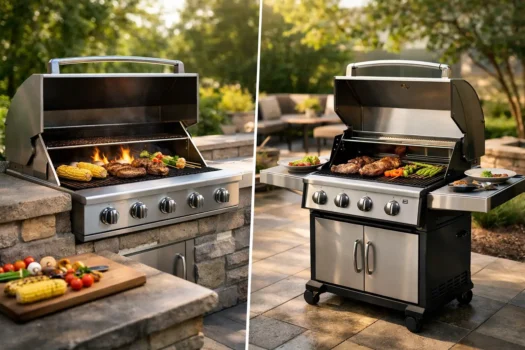
A grill is easy to replace. An outdoor kitchen cutout is not. That is the real starting point for the built in vs freestanding grill decision, and it matters more than most product specs.
A lot of buyers treat this like a style choice. It is not. Built-in and freestanding grills can cook equally well if the burner design, heat control, and build quality are there. The difference shows up in installation, service access, mobility, total cost, and how locked in you want to be for the next several years.
Built in vs freestanding grill: the real difference
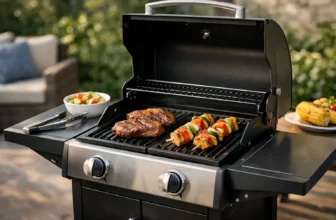
A freestanding grill is a self-contained unit on a cart. It usually includes shelves, storage, and wheels, and it is designed to work on its own without any custom structure around it. For most households, that makes it the simpler and lower-risk option.
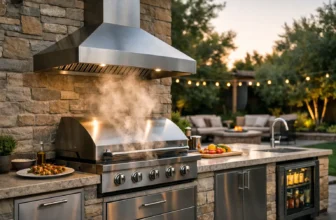
A built-in grill is made to be installed into a non-combustible island or outdoor kitchen structure. It does not come with a cart because the surrounding structure becomes part of the setup. That changes ownership in a big way. You are no longer just buying a grill. You are buying a grill plus ventilation planning, utility routing, access openings, and a long-term layout decision.
If you strip away the marketing, that is the real trade-off. Freestanding grills are easier to buy, easier to place, easier to service, and easier to replace. Built-ins can create a cleaner permanent cooking area, but they demand more planning and make mistakes more expensive.
When a built-in grill makes sense
A built-in grill makes sense when you already know your outdoor layout works, you plan to stay in the home, and you want a fixed cooking station rather than a movable appliance.
The strongest case for built-in is not appearance alone. It is workflow. If you are building a real outdoor kitchen with dedicated prep space, utility drawers, trash storage, refrigeration, and weather-resistant counters, a built-in grill can create a better cooking environment than a cart model parked on a patio. Everything has a place. Prep is easier. The space feels intentional rather than improvised.
There can also be a build-quality advantage in some product lines. Certain manufacturers put their heavier, more premium fireboxes and burner systems into built-in versions meant for permanent installation. That does not mean built-in automatically cooks better, but at the high end, many serious outdoor kitchen systems are designed around that format.
Still, built-in ownership only works if the install is done correctly. Ventilation clearances, gas line routing, and service access are not optional details. If a grill needs repair and the technician cannot safely reach key components, your expensive setup becomes a headache fast. This is where glossy showroom planning often falls apart.
When a freestanding grill is the smarter buy
For most buyers, freestanding is the smarter default.
That is not because it is cheap or basic. It is because it keeps your options open. You can move it for cleaning, reposition it for wind, roll it under cover, or replace it later without rebuilding a structure around it. If your cooking habits change, the grill can change with you.
Freestanding models are also easier to compare on total value. You are paying for the grill and cart as one package, and setup is usually straightforward. With built-ins, the true cost often gets buried under separate line items for island materials, labor, cutout adjustments, ventilation, utility hookups, and finishing work.
There is also a maintenance advantage. Grease management is simpler when you can pull a drip tray without crouching into an access panel or working around cabinetry. Cleaning behind and under the grill is easier too. Those things sound minor on day one, but they matter over years of ownership.
If you are a first-time buyer, a seasonal griller, or someone still figuring out what fuel type and cooking style you actually prefer, freestanding is the safer call.
Cost is not close once installation enters the picture
This is where many buyers get surprised.
A built-in grill head can sometimes look reasonably priced compared with a premium freestanding model. Then the rest of the project shows up. You may need masonry or metal framing, countertop material, ventilation panels, utility work, storage components, and professional installation. Even a modest outdoor kitchen adds up quickly.
A freestanding grill has a much lower all-in cost in most cases. Even if you buy a strong mid-range or premium cart model, you are usually done once it is assembled and connected.
That does not mean built-in is bad value. It means you should judge it as part of an outdoor kitchen project, not as a simple appliance purchase. If the island and surrounding setup improve how you cook and entertain every week, the expense may be justified. But if your real goal is just to grill better food, that extra budget often goes further when spent on a better grill, a quality thermometer, and fuel or accessories you will actually use.
Performance depends more on grill design than format
One of the most common mistakes in the built in vs freestanding grill debate is assuming built-in grills perform better by default.
They do not.
Cooking performance comes from burner design, heat retention, grate quality, hotspot control, preheat behavior, and how well the grill maintains temperature during real use. A poorly designed built-in grill will still cook poorly. A strong freestanding grill with good burners and a solid firebox can outperform a more expensive built-in model.
The cart or island around the grill does not sear a steak. The grill head does.
This matters because some buyers stretch their budget to afford the built-in format, then compromise on grill quality to make the project fit. That usually leads to the wrong outcome. If performance is the priority, buy the better cooking system first. The installation style comes second.
Built-in ownership is less forgiving
Permanent setups reward confidence. They punish uncertainty.
If you build around a built-in gas grill and later decide you wanted a pellet grill, griddle, charcoal cooker, or a different size, changing direction can be expensive. Cutout dimensions, ventilation requirements, and utility placement all limit flexibility.
Freestanding ownership is more forgiving because your setup can evolve. You can add a separate smoker later. You can swap a four-burner gas grill for a griddle or pellet model without redesigning the patio. That flexibility matters more than people think, especially for buyers who are still learning what kind of outdoor cooking they enjoy most.
There is also the replacement issue. Grills are not forever, even expensive ones. Burners wear out. Ignition systems fail. Parts availability changes. If your built-in grill is discontinued and the replacement model does not fit the existing cutout cleanly, you now have a construction problem instead of a simple appliance upgrade.
Which type fits your space and habits?
Small patios, changing layouts, and mixed-use outdoor spaces usually favor freestanding grills. You can shift them around, store them more easily, and avoid committing your entire yard design to one appliance.
Built-ins make more sense in larger spaces where the cooking zone is permanent and the surrounding features are part of how you use the yard. If you host often, prep outside regularly, and want your grill integrated into a full station, the format can be worth it.
Be honest about frequency too. If you grill once a week in good weather, a freestanding model will handle that just fine. If you cook outdoors several times a week and already know your routine benefits from dedicated counters and storage, built-in starts to look more practical.
So which should you buy?
If you want the blunt answer, most people should buy a freestanding grill.
It costs less, carries less installation risk, gives you more flexibility, and is easier to clean, service, and replace. For buyers focused on cooking performance and long-term value, that is a strong combination.
A built-in grill is the right choice when you are not just buying a grill. You are building a permanent outdoor kitchen, you have the budget to do it properly, and you are confident the layout and fuel setup will still make sense years from now.
The best choice is not the one that looks more premium in a showroom. It is the one that still feels practical after the first repair, the first deep cleaning, and the first time your needs change. Buy for ownership, not appearance. That usually leads to the right answer.
Built-In vs Freestanding Grill Comparison
| Feature | Built-In Grill | Freestanding Grill | Best For |
|---|---|---|---|
| Installation | Permanent installation in an outdoor kitchen | Ready to assemble and use | Freestanding for easy setup |
| Upfront Cost | High (grill + island + utilities + labor) | Lower all-in cost | Freestanding for better value |
| Cooking Performance | Depends on grill quality, not installation type | Depends on grill quality, not cart | Tie |
| Mobility | Fixed in place | Wheels allow easy relocation | Freestanding |
| Outdoor Kitchen Integration | Seamlessly integrates into custom islands | Standalone appliance | Built-In |
| Maintenance & Cleaning | Access may be limited by cabinetry | Easy to access drip tray and clean underneath | Freestanding |
| Repairs & Service | More difficult if access panels are limited | Simple access to components | Freestanding |
| Replacement Flexibility | Replacement must fit existing cutout | Replace with almost any comparable grill | Freestanding |
| Customization | Allows full outdoor kitchen workflow with storage and prep space | Limited to shelves and cart storage | Built-In |
| Long-Term Commitment | Best if staying in the home for many years | Ideal if needs may change | Depends on homeowner |
| Space Requirements | Requires permanent outdoor kitchen | Works on patios, decks, and small yards | Freestanding |
| Best For | Dedicated outdoor kitchens and frequent entertainers | Most homeowners, first-time buyers, flexible outdoor spaces | Depends on lifestyle |
FAQ
Is a built-in grill better than a freestanding grill?
Not necessarily. Cooking performance depends on the grill’s burners, heat control, and construction—not whether it’s built into an island. Built-in grills mainly offer a permanent outdoor kitchen setup.
Are built-in grills worth the extra cost?
They can be if you’re building a complete outdoor kitchen and plan to stay in your home for years. For most homeowners, a high-quality freestanding grill offers better overall value and flexibility.
Can a freestanding grill be converted into a built-in grill?
Generally, no. Most freestanding grills require airflow around the cart and are not designed for enclosed installations. Only grills specifically labeled as built-in models should be installed in outdoor kitchen islands.
Which is easier to maintain: built-in or freestanding grills?
Freestanding grills are usually easier to maintain because drip trays, burners, and grease systems are more accessible. Built-in grills require properly designed access panels for servicing and cleaning.
Which grill type is best for an outdoor kitchen?
If you’re designing a permanent outdoor kitchen with countertops, storage, refrigeration, and utilities, a built-in grill is the best fit. If you want flexibility, easier upgrades, and lower costs, a freestanding grill is usually the smarter choice.