 globalgrillguidecom
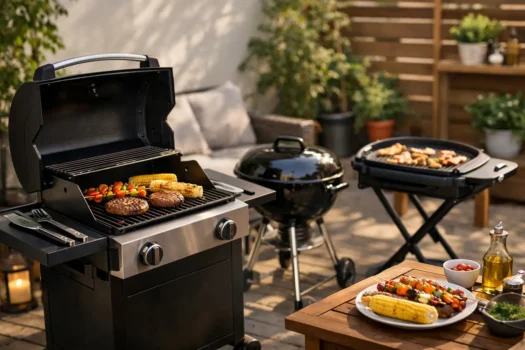
A small patio changes how a grill feels to own. A model that looks compact in a showroom can become awkward fast once you add a propane tank, open the lid, and try to move around it with a tray of food. If you’re trying to find the best grill for small patio use, the real question is not just which grill cooks well. It’s which one fits your space, your routine, and the amount of cleanup and maintenance you’re actually willing to deal with.
What makes the best grill for small patio spaces?
For tight outdoor spaces, footprint matters, but usable space matters more. A grill can have a narrow body and still be a poor fit if the side shelves don’t fold, the lid needs extra rear clearance, or the cart is too flimsy to move when you need to reclaim patio space.
The best small-patio grill usually gets four things right. It heats evenly enough to cook dinner without constant babysitting, it gives you enough grate space for realistic weeknight use, it cleans up without turning into a project, and it stores without dominating the patio. That sounds basic, but a lot of grills fail on one of those points.
This is where marketing gets noisy. “Portable,” “apartment-friendly,” and “space-saving” are often used loosely. What actually matters is how the grill behaves after a few months of cooking burgers, chicken, vegetables, and the occasional larger meal. Heat retention, flare-up control, grease management, and rust resistance matter more than clever product labels.
Start with fuel type, not brand
If you’re shopping for the best grill for small patio cooking, fuel type will narrow the field faster than brand reputation. Each option has clear trade-offs.
Gas grills
For most homeowners with limited space, a small gas grill is the easiest answer. It starts quickly, handles weeknight cooking well, and usually offers the best balance of cooking area and convenience. Two-burner models are the sweet spot for many patios because they allow basic two-zone cooking without taking up as much room as a full three- or four-burner cart.
The downside is bulk. Even compact gas grills need room for the lid to open and, if they use a full-size propane tank, the cart can be larger than expected. Cheaper models also tend to cut corners in the firebox, burners, and grease system, which shows up later as hot spots, corrosion, or messy cleanup.
Charcoal grills
A small charcoal grill can work very well on a patio if you care more about flavor and heat character than convenience. Kettle-style grills are often a better fit for tight spaces than people expect because they have a compact footprint and fewer parts to fail over time.
But charcoal comes with a maintenance reality. You need ash management, fuel storage, and more patience. On a small patio, that extra mess and setup can be the reason the grill sits unused. If you love charcoal, it can be worth it. If you mostly want quick dinners after work, it often isn’t.
Electric grills
Electric grills deserve more attention for small patios, especially where open-flame restrictions apply. They are usually the easiest to store, easy to clean, and simple to use. For condos, townhomes, and spaces with strict HOA or building rules, they may be the only practical option.
The limitation is cooking performance. Even good electric grills generally don’t match the heat output and recovery of a decent gas grill. That doesn’t make them bad. It just means they fit a narrower use case: smaller meals, simpler cooking, and buyers who prioritize convenience and compliance over maximum searing power.
Pellet grills
For a truly small patio, pellet grills are usually a tougher sell. They often take up more room than expected once you factor in hopper size, cord placement, and clearance. They also bring more complexity than most small-space buyers need.
If low-and-slow smoking is your main goal, a compact pellet model can work. If you want one grill for everyday patio use, it usually isn’t the most efficient choice in this category.
The size problem most buyers miss
Many buyers focus on cooking grate measurements and ignore operating clearance. That’s a mistake. A grill that technically fits your patio may still be annoying to live with if the lid blocks a walkway, the shelves stay fixed, or the wheels are too small to roll over patio joints.
Measure the space with the grill in use, not just stored against a wall. Open-lid depth matters. Side-to-side clearance matters. If the grill will sit near a door, railing, or seating area, that matters too. The best grill for small patio use should leave enough room for you to cook without feeling pinned in.
You should also think about meal size honestly. Many people buy too big because they imagine entertaining more than they actually do. If you usually cook for two to four people, a quality compact grill with better heat control is more useful than a larger cheap grill with uneven burners and thin metal.
Features worth paying for
In this category, extra features are only useful if they improve ownership. A small patio grill doesn’t need gimmicks. It needs smart design.
Folding side shelves are genuinely valuable because they change how much space the grill takes up when not in use. Solid wheels or locking casters matter if you need to move the grill often. A well-designed grease tray matters because cramped spaces make messy cleanup more annoying, not less.
Build quality matters more than feature count. Better materials, tighter assembly, and heavier grates usually translate to more stable temperatures and fewer headaches over time. Thin stainless panels can look impressive online and still age badly. Painted steel can be perfectly acceptable if the underlying construction is good and the grill is protected properly.
A thermometer in the lid is fine, but not something to chase. Side burners are rarely useful on truly compact grills. Sear burners can be helpful, but only if the core grill is already solid. Don’t pay for extras that increase footprint without improving your everyday cooking.
What to avoid in a small patio grill
The first thing to avoid is false compactness. Some grills look slim from the front but become oversized once assembled. Always check full dimensions with shelves out and lid open.
The second is poor cleanup design. On a larger deck, a messy grease system is annoying. On a small patio, it’s worse because drips, splatter, and overflow are harder to ignore and harder to contain. If the grease tray is flimsy or awkward to access, you’ll feel it every time you cook.
The third is underpowered burners paired with a large grate. That combination sounds manageable on paper but often leads to weak preheat times and disappointing searing. A smaller grill with stronger, more even heat is almost always the better buy.
Finally, avoid buying for occasional edge cases. If once a year you cook for ten people, that should not drive the purchase. Buy for your normal use, not your most ambitious barbecue fantasy.
Which type fits which buyer?
If you want the simplest path to reliable outdoor cooking, a compact two-burner gas grill is usually the best fit. It’s the most balanced option for homeowners who want real grilling performance without giving up half the patio.
If your space has fire restrictions or you want the least complicated setup, electric is the practical answer. You give up some heat performance, but for many buyers that trade-off is better than owning a gas or charcoal grill they can’t use comfortably.
If flavor and live-fire cooking matter more than speed, a small charcoal kettle still makes sense. It’s not the most convenient option, but it can be the right one for buyers who enjoy the process and don’t mind extra cleanup.
If you’re tempted by a very cheap compact grill, pause there. In small grills, poor construction shows up quickly because there is less margin for error in heat control and durability. Spending a little more for better burners, sturdier grates, and a cleaner grease system usually pays off.
The real buying standard
At Global Grill Guide, we put more weight on ownership than first impressions. For a small patio, that means asking a few blunt questions. Can you move it easily? Can you clean it without cursing at it? Can it cook a normal dinner evenly? Will it still feel like a good purchase after one season, not just on delivery day?
That’s the standard that matters. The best grill for small patio spaces is not the one with the most features or the boldest marketing. It’s the one that earns its footprint every time you use it.
If you’re stuck between two options, choose the grill that fits your actual space, has simpler maintenance, and feels built for repeat use rather than showroom appeal. On a small patio, every compromise is more noticeable. So is every good design decision. Buy the grill you’ll still want to roll out on a Tuesday night, not the one that only looks good in the product photos.