 globalgrillguidecom
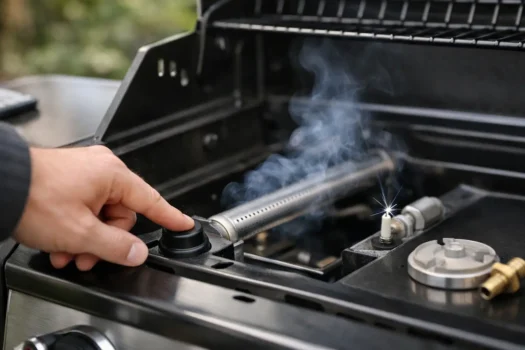
You press the igniter, hear a weak click – or nothing at all – and suddenly a simple weeknight cook turns into a troubleshooting session. Gas grill ignition problems are common, and most of them are less dramatic than they seem. In real-world ownership, the culprit is usually a dead battery, a dirty electrode, a loose wire, or burner ports that are not feeding gas correctly.
That matters because ignition issues are easy to misread. A grill that will not light is not automatically a bad grill, and a grill that lights poorly is not always dealing with a failed igniter. Sometimes the ignition system is fine and the gas flow is the real problem. Other times the spark is there, but it is landing in the wrong spot or getting blocked by grease, rust, or moisture.
What gas grill ignition problems usually mean
On most gas grills, the ignition system is pretty simple. You press a button or turn a control, the igniter sends power to an electrode, and that electrode creates a spark near the burner. If gas is flowing and the spark is in the right place, the burner lights.
When that chain breaks, you get one of a few common symptoms. There may be no click and no spark at all. You may hear clicking but get no flame. The burner may light with a match but not with the igniter. Or one burner lights easily while another refuses to catch.
Those symptoms point to different failure points. No click often means a battery or igniter module problem. A click with no ignition often points to electrode alignment, cracked ceramic insulation, wet components, bad grounding, or weak gas flow. If one burner works and another does not, the issue is often local to that burner rather than the whole grill.
Start with the simplest checks first
The fastest way to waste time is to assume the hardest repair. Start with the basics.
Make sure the propane tank has fuel if you are using a propane grill. It sounds obvious, but low tanks and partially closed valves cause a lot of false alarms. If you recently changed the tank, verify the connection is tight and the valve is fully open.
If your grill uses a battery-powered igniter, replace the battery before doing anything else. On many grills, a weak battery still produces clicking, but not enough energy for a strong reliable spark. That can fool owners into chasing wires and electrodes when the battery is the whole problem.
Then check whether the grill lights manually with a long match or lighter. If it lights manually, gas is reaching the burner and the ignition system is the likely issue. If it does not light manually, focus on gas flow, burner blockage, or regulator problems before blaming the igniter.
Battery, module, and switch failures
A lot of ignition complaints start and end with the battery compartment. Corrosion on the battery terminals can interrupt power even if the battery itself is fresh. If you see white or green residue, clean the contacts gently and install a new battery.
If the battery is good and there is still no click, the igniter module or switch may have failed. This is more common on older grills that live outdoors year-round. Heat, moisture, and grease exposure wear these parts down. Replacement is usually straightforward, but the exact fit matters. Universal parts sometimes work, but not always well.
This is one area where cheaper grills often show their long-term weakness. Ignition systems are not expensive to build, but lower-grade modules and thin wiring tend to fail earlier. That does not mean every premium grill has a flawless igniter, only that better component quality usually buys you fewer headaches over time.
Electrode and wire issues are extremely common
If you hear clicking but do not get ignition, inspect the electrode near the burner. The metal tip should be close enough to the burner to create a spark where gas is present. If the gap is too wide, bent out of place, or coated in grime, the spark may be weak or misplaced.
Look closely at the ceramic insulator around the electrode too. If it is cracked, the spark may short out before it reaches the tip. That often leads to clicking with no visible spark where you need it.
The wire connecting the igniter module to the electrode can also loosen or degrade. Rodents, heat, and repeated movement during cleaning all take a toll. If a connector has slipped off or the wire jacket is damaged, the ignition circuit may fail intermittently. Intermittent failure is one of the more annoying patterns because the grill may light one day and not the next.
Burner condition affects ignition more than many owners realize
Not every ignition problem starts with the igniter. Burners need clean, open ports so gas can travel evenly toward the ignition point. If those ports are clogged with grease, carbon, rust flakes, spider webs, or insect nests, the gas may not reach the spark correctly.
This is especially common on grills that sit unused for long stretches. Small obstructions inside the burner tube can disrupt both ignition and flame quality. A burner may eventually light with a delayed whoosh, or only light on one side. Neither is a great sign.
Cleaning the burner carefully can solve a surprising number of gas grill ignition problems. Remove the burner if your grill design allows it, brush the exterior ports gently, and clear internal debris without enlarging the openings. If the burner is heavily rusted through, replacement is usually smarter than trying to save it.
Regulator and gas flow problems can look like ignition failure
A weak flame can masquerade as an ignition issue. If the spark is present but the burner will not catch, the grill may not be getting enough gas.
On propane grills, the regulator can enter a low-flow safety mode if the tank valve is opened too quickly. When that happens, the grill may click normally but refuse to light properly or produce a tiny weak flame. Resetting the regulator often fixes it. Turn everything off, close the tank valve, disconnect the tank, wait a few minutes, reconnect, then slowly reopen the valve before trying again.
If that does not help, inspect the hose for kinks and obvious wear. A failing regulator is not rare, especially after years of sun exposure and seasonal storage. Natural gas grills can have their own flow issues too, usually tied to supply pressure, shutoff valves, or connection problems.
Moisture, grease, and neglect make ignition systems unreliable
Outdoor cooking equipment lives a hard life. Rain, humidity, grease vapor, winter storage, and inconsistent cleaning all add up. Even a good grill becomes finicky when moisture gets into the igniter housing or grease builds around the electrode and burner crossover points.
That is why ignition reliability is partly a maintenance issue, not just a parts issue. Owners often judge grills by BTU numbers and cooking area, but long-term usability comes down to boring things like protected wiring, easy burner access, and how well the grill sheds water. Those details matter more after year three than they do on day one.
When to repair it and when to stop chasing it
If the grill lights manually and the problem is limited to a battery, electrode, wire, or igniter module, repair is usually worth it. Those are normal wear items, and most fixes are inexpensive.
If the burner is rusted out, the firebox is corroding, the regulator is failing, and the ignition system is also dead, that is different. At that point, you are not fixing one problem. You are propping up an aging grill with multiple end-of-life parts. For homeowners comparing whether to repair or replace, this is where build quality starts to separate decent long-term value from cheap short-term value.
A grill with replacement parts available and solid core construction can justify repair. A low-end model with thin burners, poor parts support, and spreading corrosion usually does not. No hype. Just math.
A safe way to diagnose gas grill ignition problems
Work with the gas off when inspecting wires, electrodes, and connections. If you are testing for spark, keep the lid open. If you smell gas strongly and the grill is not lighting, stop and let the area clear before trying again. Delayed ignition is not something to shrug off.
It also helps to test one variable at a time. Replace the battery, then test. Clean the electrode, then test. Reset the regulator, then test. If you change five things at once, you will not know what actually solved the issue, which makes the next failure harder to diagnose.
Most ignition problems are fixable without much drama. The trick is staying methodical and not assuming the loudest symptom is the root cause. A grill that will not light is frustrating, but it is also giving you clues. Read them carefully, fix what is actually failing, and you will usually get back to cooking without throwing money at parts you did not need.
Troubleshooting Summary
| Problem / Symptom | Most Likely Cause | How to Check | Recommended Fix |
|---|---|---|---|
| No click, no spark | Dead battery, corroded battery terminals, failed igniter module or switch | Replace battery and inspect battery compartment for corrosion | Install a fresh battery, clean contacts, replace igniter module if needed |
| Clicking but no flame | Dirty or misaligned electrode, cracked ceramic insulator, loose wire | Look for a visible spark at the burner and inspect the electrode | Clean or reposition the electrode, replace damaged ceramic or wiring |
| Lights with a match but not the igniter | Ignition system failure | Test manual lighting with the gas flowing normally | Repair or replace the electrode, igniter wire, or ignition module |
| Only one burner won’t ignite | Clogged burner ports, faulty electrode, damaged crossover channel | Compare burner performance with the working burners | Clean burner ports or replace the faulty burner/electrode |
| Weak flame or delayed ignition | Regulator in low-flow mode, restricted gas supply | Check flame size and reset the regulator | Reset the regulator, inspect hose, verify propane tank valve is fully open |
| Burner won’t light manually | Gas flow problem, empty propane tank, blocked burner tube | Confirm fuel supply and inspect burner for obstructions | Refill propane, clear burner blockage, replace damaged regulator if necessary |
| Intermittent ignition | Loose wire connection, moisture, heat-damaged wiring | Inspect ignition wires and connectors | Secure or replace wiring and allow components to dry completely |
| Delayed “whoosh” ignition | Burner ports blocked by grease, rust, spider webs, or insects | Remove burner and inspect internal passages | Thoroughly clean burner without enlarging gas ports |
| Repeated ignition failures on older grills | Multiple worn components (burners, regulator, ignition system) | Evaluate overall grill condition | Repair if the grill has solid construction; replace if multiple major parts have failed |
| Best troubleshooting approach | Eliminate one possible cause at a time | Test after every step instead of replacing multiple parts at once | Follow a systematic diagnostic process for faster, less expensive repairs |
FAQ
Why is my gas grill clicking but not lighting?
The most common causes are a dirty or misaligned electrode, weak spark, clogged burner ports, cracked ceramic insulation, or insufficient gas reaching the ignition point. If the grill lights with a match, the ignition system is usually the problem.
Why won’t my gas grill igniter click at all?
A dead battery is the most common cause on battery-powered igniters. If replacing the battery doesn’t help, inspect the battery terminals for corrosion and consider a faulty igniter module or switch.
Why does my gas grill light with a lighter but not with the ignition button?
This usually indicates that gas is flowing correctly but the ignition system is failing. Common issues include a dirty electrode, damaged ignition wire, poor grounding, or a failed igniter module.
How do I reset a gas grill regulator?
Turn off all burner controls, close the propane tank valve, disconnect the tank, wait a few minutes, reconnect it, then slowly reopen the propane valve before lighting the grill. This often clears the regulator’s low-flow safety mode.
Should I repair or replace a gas grill with ignition problems?
If the issue is limited to the battery, electrode, igniter module, or wiring, repair is usually inexpensive and worthwhile. If the grill also has severe rust, failing burners, regulator problems, and widespread corrosion, replacement is often the more practical long-term investment.