 globalgrillguidecom
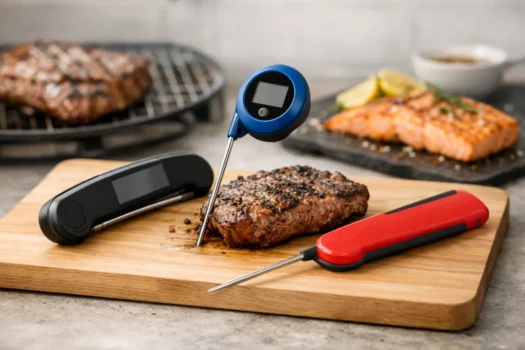
A bad thermometer can ruin good meat faster than a bad rub. If you are trying to find the best instant read thermometer, the real question is not which one has the most marketing behind it. It is which one gives fast, trustworthy readings, holds up around heat and grease, and stays easy to use after a full season of backyard cooking.
That matters more than most buyers expect. A grill lid thermometer tells you the air in the cooker, not the temperature at the center of a chicken breast or the thickest part of a pork chop. If you want repeatable results, especially on mixed cooks where one zone runs hotter than another, an instant read thermometer stops guesswork before it starts.
Table of Contents
What makes the best instant read thermometer
Speed gets the attention, but speed alone is not enough. A thermometer that flashes a number in one second but drifts several degrees from reality is not helping you. For grilling and smoking, accuracy and consistency matter first, then read time, then day-to-day usability.
A good instant read thermometer should settle quickly and stay stable when you leave the probe in place for a moment. Cheap models often jump around, especially when the tip is not fully inserted or when the probe quality is poor. That leads people to second-guess the reading, re-probe the meat multiple times, and lose juices in the process.
Build quality matters more than it looks on a product page. This tool gets handled with greasy hands, dropped on a patio, shoved into drawers, and used near flare-ups. A flimsy hinge, weak battery door, or poorly sealed body usually shows up long before the first replacement battery does.
The best models also do the simple things right. The display should be easy to read outdoors. The probe should be thin enough to minimize damage to meat. The body should feel balanced in the hand, not awkward or toy-like. If a thermometer is annoying to unfold, slow to wake, or hard to read in bright sunlight, you will use it less.
Check out our selection Best Instant-Read Digital Thermometers for Grilling & BBQ – Complete Buyer’s Guide.
Best instant read thermometer buying criteria
Accuracy beats extra features
A rotating display, magnetic back, calibration mode, and motion wake are all nice to have. None of them matter if the readings are off. For most home grillers, a thermometer that stays within about 1 degree of target and repeats that performance over time is worth paying for.
That is also where the low-end market falls apart. Many budget thermometers work fine out of the box, then start drifting after repeated heat exposure, moisture, or battery changes. If you grill often, replacing a cheap thermometer every year is not better value than buying one solid unit once.
Read time matters, but not in the way ads claim
The difference between two seconds and four seconds sounds dramatic in marketing. At the grill, it usually is not. The bigger issue is whether the reading gets there cleanly. A thermometer that stabilizes in three seconds is more useful than one that throws fast, shifting numbers and forces you to wait anyway.
For high-heat grilling, quicker read times do help because you spend less time standing over open heat and less time with the lid up. Still, once you get under about four seconds, the practical gains start to narrow.
Probe design is easy to overlook
The tip should be responsive, but the full probe design matters too. A thin tip helps with precision and leaves a smaller hole in steaks, burgers, and chicken breasts. Probe length matters when reaching into larger roasts or working over a hot charcoal fire. Too short, and your knuckles get closer to the heat than they should. Too long, and the unit can feel awkward for smaller foods.
Water resistance is not optional for many buyers
If you cook outdoors, this matters. Rain, steam, splatter, rinse-offs, and damp prep tables are part of normal use. A water-resistant thermometer is easier to clean and less likely to fail early. Full waterproofing is better if you know you are rough on gear or want the option to rinse the unit under the tap.
The three tiers of instant read thermometers
There is no single best instant read thermometer for every buyer. Most people should think in tiers.
Premium tier
This is where you find the thermometers that combine fast response, excellent accuracy, durable construction, and small details that improve real use. These are usually the best fit for frequent grillers, people who smoke meat regularly, and anyone tired of replacing cheap tools. You pay more upfront, but you usually get better consistency, stronger weather resistance, and a longer service life.
Mid-range tier
This is the sweet spot for a lot of homeowners. A good mid-range thermometer can be more than enough for weekly grilling, occasional holiday cooks, and basic smoking sessions. The trade-off is usually a slight step down in speed, durability, or refinement. That is not automatically a problem if the core performance is sound.
Budget tier
Budget models can work, but this is where buyer disappointment is common. You may get decent performance for casual use, especially if you grill only now and then. What you often give up is long-term consistency, hinge quality, screen visibility, and confidence in the reading. If you cook expensive cuts or host often, this is where saving money can cost you more.
Who needs the best instant read thermometer
If you mostly cook hot dogs and pre-formed burgers until they are obviously done, you can get by with almost anything. If you cook chicken thighs, thick pork chops, reverse-seared steaks, whole birds, or mixed-zone meals, a better thermometer earns its keep fast.
It also matters more if you are using a grill with uneven heat. Many backyard grills run hotter at the back, cooler at the front, and inconsistent side to side. In that situation, time and visual cues only get you so far. A reliable instant read thermometer closes the gap between what the grill is doing and what the food actually needs.
For beginners, it removes a lot of anxiety. For experienced grillers, it tightens consistency. Either way, it is one of the few accessories that improves results immediately.
What to avoid when shopping
The first red flag is vague accuracy claims. If a brand talks endlessly about speed but barely mentions tolerance, calibration, or testing confidence, be cautious. Fast is easy to advertise. Reliable is harder to prove.
The second is feature overload at a suspiciously low price. A folding probe, backlight, rotating screen, magnets, bottle opener, and claimed one-second reads for the price of a couple steaks usually means corners were cut somewhere.
The third is poor ergonomics. If the button layout is cramped, the display is dim, or the probe feels loose at the hinge, that annoyance does not go away. It gets worse when your hands are greasy and the grill is running hot.
How to get accurate readings every time
Even the best instant read thermometer can give bad information if you use it badly. Insert the probe into the thickest part of the meat and avoid touching bone, large pockets of fat, or the cooking grate. On thinner cuts, probe from the side instead of from the top so you can place the sensor tip more precisely in the center.
Give the reading a moment to settle. This is especially true on dense cuts like pork loin or chicken breast, where a few millimeters can change the number. If the temperature seems off, check a second spot before assuming the thermometer is wrong.
It also pays to verify your thermometer occasionally. Ice water and boiling water checks are simple ways to catch drift before it affects dinner. Some models allow calibration. Some do not. That does not make non-calibratable thermometers useless, but it does affect long-term ownership.
So which kind should you buy?
If you grill a couple times a month and want solid performance without overspending, buy a mid-range model with proven accuracy, a clear display, and water resistance. That covers most households.
If you cook year-round, smoke meat regularly, or care about repeatable doneness on expensive proteins, spend more for a premium thermometer. That is where the best instant read thermometer options separate themselves. Not through hype, but through fewer bad reads, better durability, and less daily friction.
If your budget is tight, buy a simpler unit from a brand with a decent track record rather than chasing a bargain-bin feature list. Fancy claims are cheap. Reliable readings are not.
At Global Grill Guide, we tend to favor tools that stay useful after the newness wears off. A good instant read thermometer is not exciting, and that is the point. It should quietly do its job every cook, whether you are checking chicken on a weeknight or pulling a roast for a weekend crowd. Buy for trust, not for gimmicks, and you will notice the difference every time you slice into the meat.
Summary Table
| Buying Factor | Why It Matters | Best Choice | Watch Out For |
|---|---|---|---|
| Accuracy | The most important factor for safe, consistent cooking. | ±1°F (±0.5°C) accuracy with consistent readings. | Fast readings that are inaccurate or inconsistent. |
| Read Speed | Faster readings reduce heat loss and lid-open time. | Stable reading in 2–4 seconds. | Numbers that fluctuate before stabilizing. |
| Build Quality | Determines long-term durability in outdoor conditions. | Rugged body, strong hinge, quality battery compartment. | Loose hinges, flimsy plastic, poor sealing. |
| Probe Design | Affects precision and ease of use. | Thin, responsive probe with enough length for large cuts. | Thick or short probes that damage meat or expose hands to heat. |
| Display | Easy readability improves usability outdoors. | Large, bright backlit screen with high contrast. | Dim screens that are difficult to read in sunlight. |
| Water Resistance | Protects against rain, grease, steam, and cleaning. | Waterproof or highly water-resistant construction. | Electronics easily damaged by moisture. |
| Calibration | Helps maintain long-term accuracy. | User-calibratable models or proven long-term stability. | Thermometers that drift over time with no calibration option. |
| Price Tier | Different users have different needs. | Mid-range for most households; premium for frequent grillers. | Extremely cheap models overloaded with questionable features. |
| Best For | Match the thermometer to your cooking habits. | Chicken, steaks, pork, whole birds, smoking, and reverse searing. | Assuming grill lid thermometers can replace meat thermometers. |
| Buying Advice | Focus on performance rather than marketing. | Buy proven accuracy and durability first; extra features second. | One-second speed claims without documented accuracy. |
FAQ
What is the best instant-read thermometer for grilling?
The best instant-read thermometer delivers fast, accurate, and consistent readings while being durable enough for outdoor cooking. Prioritize accuracy, response time, water resistance, and build quality over extra features.
How accurate should an instant-read meat thermometer be?
A quality instant-read thermometer should be accurate within about ±1°F (±0.5°C) and maintain that accuracy over time. Consistency is often more important than the absolute fastest read speed.
Is a premium instant-read thermometer worth the extra cost?
If you grill or smoke food regularly, yes. Premium models typically offer better accuracy, faster response, stronger construction, improved weather resistance, and longer service life than inexpensive alternatives.
How do I test if my instant-read thermometer is accurate?
Use an ice-water test (approximately 32°F / 0°C) or a boiling-water test (about 212°F / 100°C at sea level). If your thermometer supports calibration, adjust it as needed after testing.
Can an instant-read thermometer replace a wireless meat thermometer?
No. An instant-read thermometer is designed for quick spot checks, while wireless thermometers continuously monitor food throughout the cook. Many grillers use both: a wireless thermometer during cooking and an instant-read thermometer to verify final doneness before serving.