 globalgrillguidecom
Table of Contents
Introduction
Clean grates cook better. Period. That statement is not marketing fluff, not tradition, and definitely not something invented by grill manufacturers to sell more accessories. It is simple physics, simple chemistry, and simple cooking logic working together. When you keep your grill grates clean, food releases properly, heat distributes evenly, and flavors stay exactly where they belong – on the food, not burned into yesterday’s grease. A reliable grill brush is not a luxury item. It is the difference between predictable cooking and constant frustration.
Proper grill cleaning directly affects flavor in ways that many people underestimate. Residual grease and carbon create hot spots, smoke unpredictably, and produce bitter compounds that overpower seasoning. If burgers stick, chicken tears, or steaks develop strange black patches, the culprit is often not the grill itself but neglected grill grate care. Clean metal transfers heat efficiently. Dirty metal behaves like insulation. That single detail explains why two identical grills can cook completely differently depending on maintenance habits.
Using the wrong cleaning tool can create more problems than it solves. A tool that is too aggressive can scratch porcelain coatings, strip seasoning from cast iron, or weaken protective finishes. On the other hand, a weak brush will glide across hardened carbon without removing anything meaningful. Worse, low-quality wire brushes can shed bristles that become a safety hazard. That is why understanding grill brush safety matters just as much as choosing the right grill.
Most importantly, stiff brushes and scrapers are not interchangeable tools. They serve different mechanical functions. A stiff grill brush removes surface debris and loosens grease. A grill scraper tool cuts through hardened carbon that brushes cannot handle. When used together, they reduce effort, shorten cleaning time, and significantly extend grill life. When used incorrectly, they increase frustration and damage equipment.
This guide is not about making your grill shine like a showroom model. It is about efficient maintenance that keeps cooking consistent, predictable, and enjoyable. We will walk through real tools, real workflows, and real decisions – the same ones experienced grillers make every weekend.
Why Proper Grill Cleaning Matters More Than People Think
Cleaning a grill is often treated like a cosmetic task, something done occasionally to keep things looking respectable. In reality, it is mechanical maintenance. Just like changing oil in a car or sharpening a kitchen knife, cleaning grill grates directly affects performance, safety, and durability. Ignoring that reality leads to poor cooking results long before equipment actually fails.
Performance
Dirty grates are the leading cause of sticking. When grease and carbon accumulate, they create a rough, uneven surface that traps proteins. Instead of releasing cleanly, food bonds to the metal. That is why properly maintained grills consistently prevent food sticking, even without excessive oil. It is not magic. It is surface physics.
Carbon buildup also blocks heat transfer. A thick layer of residue acts like insulation, forcing burners or charcoal to work harder to reach the same temperature. That inefficiency leads to uneven heat zones, longer preheating times, and unpredictable cooking behavior. In practical terms, it means steaks cook unevenly and vegetables burn before they soften.
Safety
Grease buildup dramatically increases flare-ups. When fat accumulates in corners and on grates, it ignites suddenly under high heat. These bursts of flame can scorch food, damage coatings, and create dangerous situations. Regular deep cleaning grill maintenance reduces this risk significantly.
Loose bristles from worn brushes present another safety concern. While rare, swallowed bristles have caused injuries serious enough to prompt hospital visits. That is why replacing worn brushes and choosing reliable barbecue cleaning equipment is not optional.
Longevity
Different materials require different care. Stainless steel is resilient but still benefits from routine cleaning to prevent corrosion. Cast iron requires careful seasoning and controlled moisture exposure. Porcelain-coated grates demand gentle handling to avoid chipping. Proper outdoor cooking maintenance ensures each material performs as designed for years instead of months.
Cleaning is not cosmetic. It is mechanical maintenance that protects equipment, improves performance, and reduces risk.
Understanding the Main Types of Grill Cleaning Tools
Before choosing the best grill brush or scraper, it helps to understand the mechanical differences between tool categories. Each type addresses a specific cleaning challenge, and no single tool does everything perfectly. The smartest approach is not choosing one tool, but building a small, efficient toolkit.
Wire Grill Brushes
Wire brushes remain the most traditional and widely used grill cleaning tools. Their popularity comes from simplicity, availability, and speed. A well-made wire brush can remove grease quickly and handle routine cleaning without complicated techniques. That practicality explains why they continue to dominate sales across both residential and commercial grilling markets.
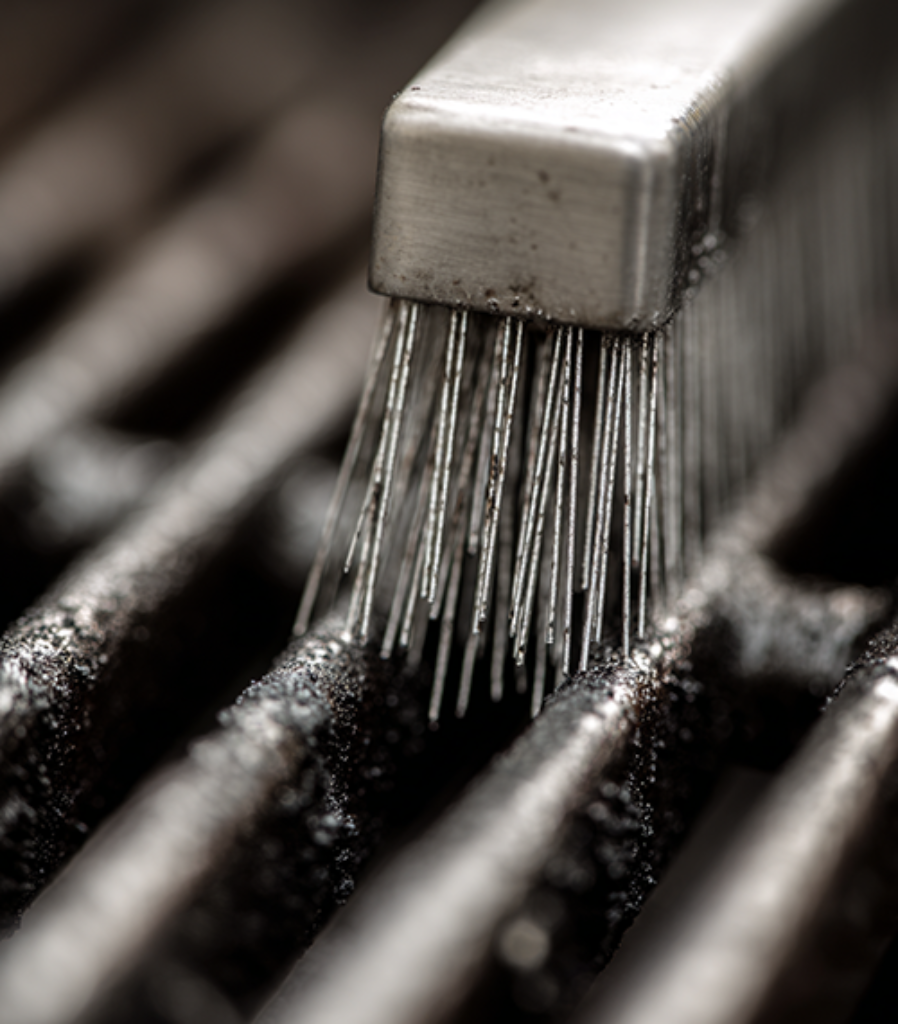
However, quality varies dramatically. Stiffness determines cleaning power. Handle length determines safety and leverage. Bristle quality determines durability and reliability. Cheap brushes often wear out quickly, bend under pressure, or shed bristles prematurely. Replacing them regularly is part of responsible grill maintenance tools ownership.
Wire brushes work best for routine maintenance on stainless steel and cast iron grates. They are less suitable for delicate coatings or deep carbon removal.
Bristle-Free Grill Brushes
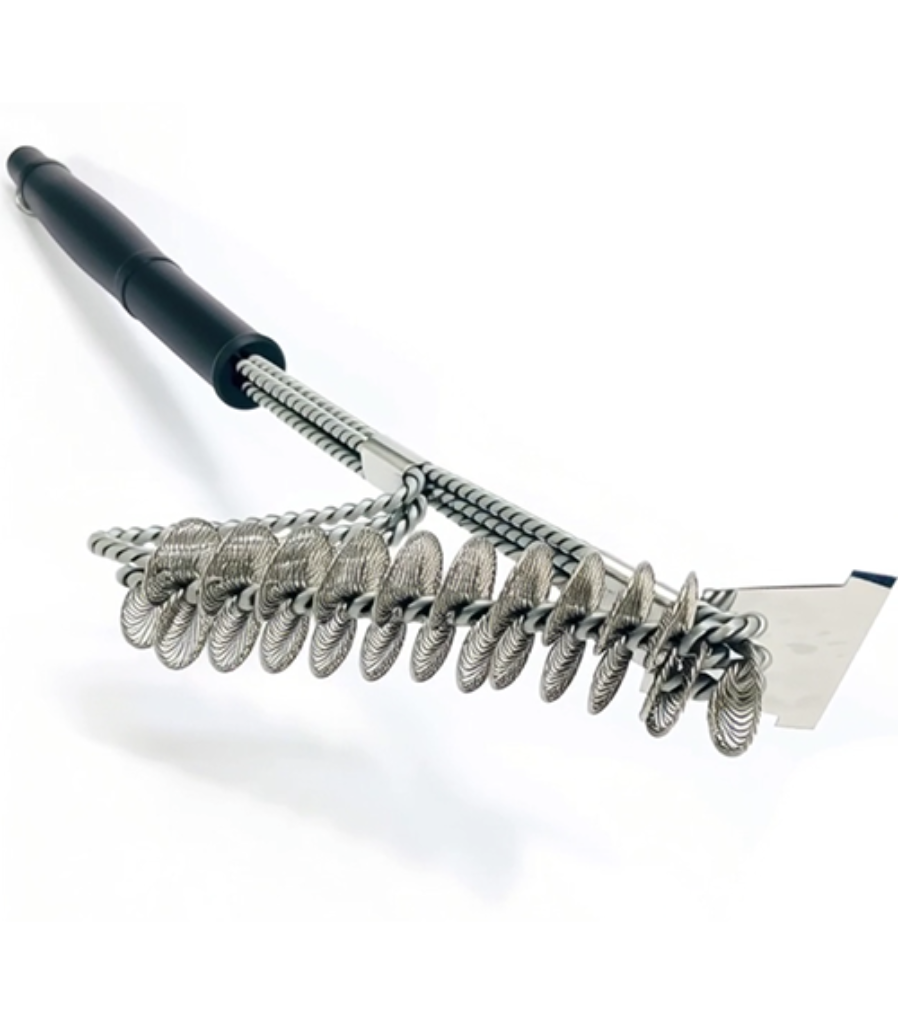
The rise of the bristle free grill brush reflects growing awareness of safety concerns. Instead of sharp wires, these brushes use coiled metal, mesh pads, or abrasive surfaces to remove debris. They are considered safer because they eliminate the risk of loose bristles.
However, they clean differently. Rather than scraping aggressively, they rely on friction and repeated passes. That means they sometimes require more time and pressure. They are safer, but not always faster. For many users, the trade-off is worth it.
Steam Cleaning Grill Brushes
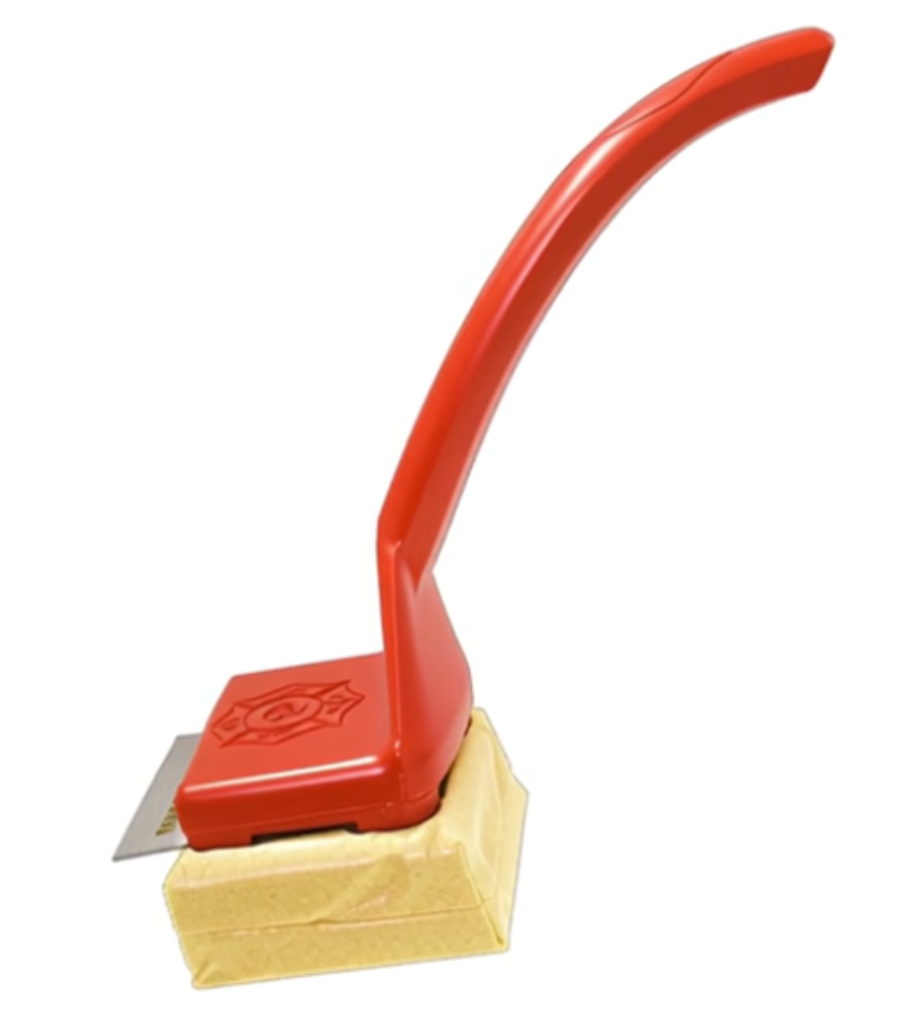
Steam-assisted brushes represent a hybrid approach to safe grill cleaning methods. When exposed to heat, moisture turns into steam that softens grease and loosens carbon. This process reduces the force required to remove buildup and minimizes damage to surfaces.
Temperature plays a critical role. Steam cleaning works best on hot grates. On cold metal, it behaves like a regular brush. Used correctly, it is one of the most effective ways to remove grease from grill surfaces without harsh scraping.
Heavy-Duty Grill Scrapers
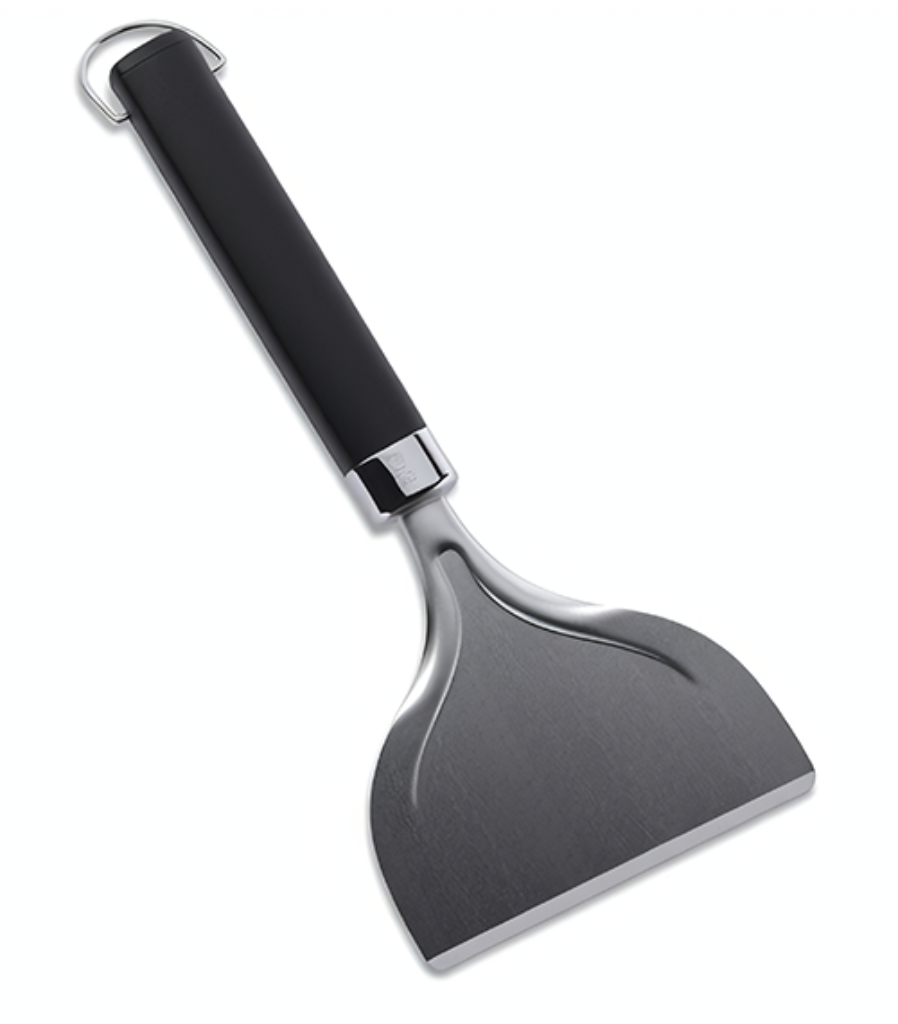
A grill grate scraper is the tool that removes what brushes cannot. Hardened carbon behaves like cement. Brushes polish it. Scrapers cut through it. This difference becomes obvious when dealing with neglected grills or flat-top griddles.
Scrapers are essential for periodic deep cleaning, especially on flat cooking surfaces where grease accumulates quickly. They are not everyday tools, but every grill owner eventually needs one.
Wooden Grill Scrapers
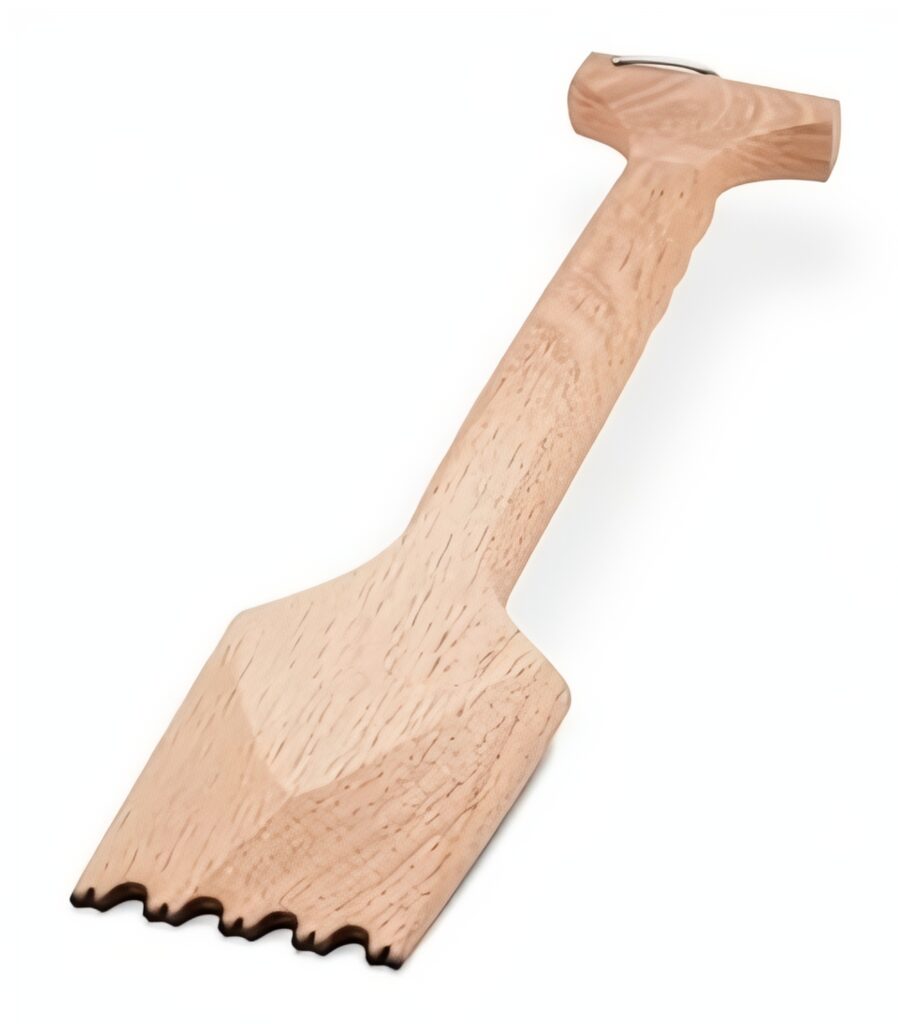
Wooden scrapers are a niche category that continues to gain popularity among experienced grillers. Instead of cutting into metal, they gradually shape themselves to match grate patterns. Over time, they create custom grooves that improve cleaning efficiency.
They require patience and consistent use. The first few sessions may feel awkward, but once formed, they become reliable tools for non damaging grill cleaning.
Classic Stiff Wire Brush
Traditional Power and Everyday Reliability
Weber 18″ Bamboo Grill Brush
The Weber 18″ Bamboo Grill Brush is one of the most recognizable tools in the grilling world, and its dominance is not accidental. It combines simplicity, durability, and balanced performance in a way that fits both beginners and experienced grillers. Among traditional BBQ grill brush options, it consistently ranks near the top because it performs exactly as expected without unnecessary complexity.
Build quality is immediately noticeable. The bamboo handle feels solid without being heavy, and its length provides safe distance from heat. That detail matters during routine grill cleaning routine sessions when grates are still warm. A comfortable grip reduces fatigue and improves control, especially during repeated passes.
Bristle stiffness is carefully balanced. They are firm enough to remove grease efficiently but flexible enough to avoid excessive scratching. This balance makes the brush suitable for stainless steel and cast iron surfaces. Users frequently mention that it removes residue quickly without requiring excessive pressure.
Cleaning efficiency is where this brush truly shines. Real-world feedback consistently highlights how quickly it restores grates to cooking condition. Instead of struggling with stubborn buildup, users report smooth, predictable cleaning performance. That reliability explains why many grill owners continue buying the same model year after year.
Durability is another strength. With proper care, the brush lasts several seasons before replacement becomes necessary. That longevity makes it a dependable part of any grill maintenance routine.
Strengths include reliability, simplicity, and strong everyday performance. Limitations include reduced effectiveness on heavy carbon buildup and potential wear over time. It is not a deep-cleaning tool, but it is one of the most practical options for routine maintenance.
Who should buy it? Anyone looking for a dependable daily cleaning tool that works without surprises.
Check Price: Weber 18″ Bamboo Grill Brush
Enders Colsman BBQ Brush
The Enders Colsman BBQ Brush represents a slightly different design philosophy rooted in European engineering standards. Instead of focusing purely on stiffness, it emphasizes durability and consistent performance across long-term use. This approach makes it a strong candidate for routine grill grate care.
Construction quality is immediately apparent. The stainless steel body resists corrosion and maintains structural integrity under repeated use. Many users highlight how the brush retains its shape even after months of heavy cleaning sessions. That durability makes it suitable for frequent grilling schedules.
Daily maintenance performance is particularly strong. Instead of aggressive scraping, it delivers steady, controlled cleaning action. That consistency reduces the risk of damaging coatings while still removing grease effectively.
This brush performs best as part of a regular maintenance routine rather than occasional deep cleaning. Used consistently, it keeps grates in optimal condition and prevents buildup from becoming difficult to remove.
Check Price: Enders Colsman BBQ Brush
Bristle-Free Grill Brushes
The Safety-First Upgrade
The shift toward bristle free grill brush designs reflects a broader trend in consumer safety awareness. Many grill owners prefer eliminating even the small risk associated with loose bristles. Manufacturers responded by developing alternative cleaning mechanisms that rely on friction and pressure instead of sharp wires.
Performance depends heavily on technique. Instead of quick scraping motions, these brushes work best with slow, steady passes across hot grates. Once users adjust to that method, cleaning efficiency improves dramatically.
GRILLART Bristle-Free Grill Brush
The GRILLART Bristle-Free Grill Brush is widely recognized as one of the most reliable modern grill cleaning accessories. Its coil-based design distributes pressure evenly across grates, reducing the risk of scratches while maintaining strong cleaning power.
Durability is a standout feature. The heavy-duty coils resist bending and maintain consistent contact with the surface. That stability improves efficiency and reduces the number of passes required to achieve clean grates.
Heat resistance is another advantage. The brush performs well on hot surfaces, allowing users to clean immediately after cooking. This timing prevents grease from hardening and simplifies maintenance.
Ease of use remains high despite the absence of traditional bristles. Once technique improves, cleaning becomes smooth and predictable. Many users describe the transition as surprisingly easy.
Check Price: GRILLART Bristle-Free Grill Brush
Kona Safe/Clean Grill Brush
The Kona Safe/Clean Grill Brush introduces a three-coil system designed to increase coverage area and reduce cleaning time. Instead of focusing pressure in a single line, it distributes force across multiple contact points.
Coverage area is significantly larger than traditional brushes. That design allows users to clean wider sections of grates in fewer passes. For large grills, this efficiency becomes especially valuable.
Pressure distribution is carefully balanced. Instead of digging into metal, the coils glide across surfaces while maintaining strong contact. This approach reduces wear on coatings and improves long-term durability.
Many users consider this brush a long-term investment because it combines safety, performance, and reliability.
Check Price: Kona Safe/Clean Grill Brush
Steam Cleaning Brushes
When Heat Becomes Part of the Cleaning Process
Steam cleaning works because moisture softens grease. When water contacts hot metal, it transforms into steam that penetrates hardened residue. This process reduces friction and makes cleaning easier. Timing is critical. Steam cleaning is most effective immediately after cooking while grates remain hot.
TENNEKER by Scrub Daddy Grill Brush
The TENNEKER by Scrub Daddy Grill Brush feels modern from the moment it touches the grill. Instead of relying purely on force, it uses temperature and moisture to break down grease. This approach aligns perfectly with modern safe grill cleaning methods.
Steam activation happens automatically when the cleaning head contacts hot grates. The moisture softens residue, allowing the brush to remove buildup with minimal pressure. Users frequently mention how effortless cleaning feels compared to traditional brushes.
Replaceable cleaning heads extend lifespan and reduce long-term costs. Instead of discarding the entire tool, users simply swap the cleaning pad. That sustainability makes it appealing to environmentally conscious grill owners.
Check Price: TENNEKER by Scrub Daddy Grill Brush
GRILLART Grill Brush Bristle Free
This steam-assisted version of the GRILLART Grill Brush Bristle Free combines coil-based friction with moisture-driven cleaning power. The result is a hybrid tool capable of handling heavy grease without aggressive scraping.
Pressure control remains excellent. The brush maintains consistent contact with grates while allowing smooth movement across surfaces. That balance reduces fatigue and improves efficiency during extended cleaning sessions.
Performance on greasy grates is particularly strong. Users who cook frequently report noticeable reductions in cleaning time compared to standard brushes.
Check Price: GRILLART Grill Brush Bristle Free
Heavy-Duty Scrapers
The Tool That Removes What Brushes Cannot
Eventually, every grill accumulates carbon that brushes cannot remove. At that point, a grill scraper tool becomes essential. Scrapers cut through hardened residue quickly, restoring smooth cooking surfaces and improving heat transfer.
Weber Stainless Steel Griddle Scraper
The Weber Stainless Steel Griddle Scraper is specifically designed for flat cooking surfaces where grease spreads evenly across the entire area. Its rigid blade removes residue efficiently without bending or flexing.
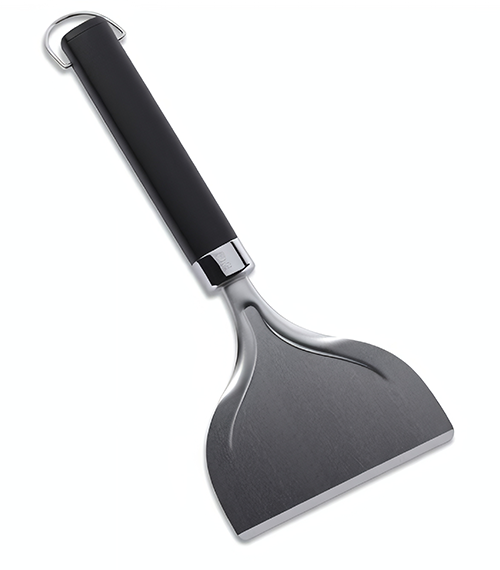
Control is excellent thanks to a balanced handle and stable grip. This stability allows precise movements and reduces the risk of accidental scratches. For owners of flat-top grills, this scraper becomes a daily tool rather than an occasional accessory.
Durability is another strength. The stainless steel blade resists corrosion and maintains sharp edges over extended use.
Check Price: Weber Stainless Steel Griddle Scraper
AWEASROY Heavy Duty Grill Scraper
The AWEASROY Heavy Duty Grill Scraper stands out because of its multi-slot design. Instead of using a single flat edge, it features multiple grooves that match different grate patterns. This compatibility makes it one of the most versatile heavy duty cleaning tools available.
Heavy-duty construction ensures long-term reliability. Users frequently describe it as a tool that feels industrial rather than disposable. That durability makes it particularly useful for deep cleaning grill sessions.
Check Price: AWEASROY Heavy Duty Grill Scraper
Wooden Grill Scrapers
The Simple Tool That Gets Better Over Time
Wooden scrapers are gaining popularity because they combine safety and durability. Unlike metal tools, they do not scratch coatings or produce loose fragments. Instead, they gradually shape themselves to match the grill surface.
EASY FUNCTION Wood Grill Scraper
The EASY FUNCTION Wood Grill Scraper represents the core philosophy behind wooden cleaning tools – simplicity and longevity. Made from dense hardwood, it resists cracking and maintains structural integrity under repeated use.
Customization is its defining feature. Over time, the edge forms grooves that align perfectly with grate spacing. This natural shaping improves cleaning efficiency and reduces effort. Many long-term grill owners appreciate this gradual improvement.
Safety advantages are significant. Without metal edges or bristles, the risk of damage or injury decreases dramatically. That reliability makes it appealing to users who prioritize non damaging grill cleaning.
Check Price: EASY FUNCTION Wood Grill Scraper
How to Choose the Right Brush or Scraper for Your Grill
Choosing between a grill brush or scraper becomes easier when decisions follow practical logic instead of marketing claims.
Choose Based on Grill Type
Gas grills benefit from stiff brushes that handle routine grease removal efficiently. Charcoal grills often require scrapers because carbon buildup forms more quickly. Pellet grills typically need moderate cleaning intensity due to steady heat levels.
Flat-top griddles demand scrapers because grease spreads evenly across the surface. Cast iron requires controlled pressure and regular seasoning. Porcelain-coated grates demand gentle tools to avoid damage.
Choose Based on Cleaning Frequency
Occasional cooking requires basic maintenance tools. Weekend grilling benefits from durable brushes that handle consistent use. Heavy cooking schedules demand a combination of brush and scraper.
Commercial-level cooking requires professional-grade equipment designed for daily maintenance.
Choose Based on Safety Priorities
Some users prioritize speed. Others prioritize durability or safety. The right tool depends on personal comfort and cooking habits.
Common Grill Cleaning Mistakes
Mistakes during cleaning cause more damage than neglect itself. Understanding these errors helps prevent unnecessary repairs and frustration.
Using the Wrong Tool
Using a wire brush on porcelain coatings can cause scratches that lead to rust. Using a soft brush on heavy carbon wastes time. Using a scraper on delicate surfaces removes protective finishes.
Matching tools to surfaces is the foundation of effective grill maintenance routine planning.
Cleaning at the Wrong Temperature
Cleaning when grates are too hot increases risk of burns and damage. Cleaning when they are too cold makes residue harder to remove. Warm surfaces provide the ideal balance between safety and efficiency.
Applying Too Much Force
Excessive pressure damages coatings and bends metal. Effective cleaning relies on technique rather than brute strength.
Ignoring Maintenance
Dirty brushes spread grease instead of removing it. Worn bristles reduce efficiency. Rust buildup weakens tools and shortens lifespan.
Cleaning Workflow That Actually Works
The 60-Second Cleaning Routine
Preheat the grill for several minutes. This step loosens grease and prepares surfaces for cleaning. Use a brush to remove debris quickly. Inspect grates for stubborn residue. Apply a light layer of oil to protect the surface. Begin cooking.
This routine takes less than a minute but dramatically improves performance.
The Deep Cleaning Routine
Heat the grill thoroughly. Use a scraper to remove hardened carbon. Follow with a brush to eliminate remaining debris. Wipe surfaces with a damp cloth. Apply seasoning oil to protect metal.
This process restores grates to near-new condition and supports long-term outdoor cooking maintenance.
When to Replace Your Grill Brush
Visible wear signals reduced effectiveness. Loose bristles indicate potential safety risks. Declining cleaning performance means replacement is overdue.
Brush and Scraper Maintenance
Cleaning tools require maintenance just like grills themselves. A neglected brush becomes less effective and less safe over time.
Rinse tools after each use to remove grease. Allow them to dry completely before storage. Store them in a dry location to prevent rust. Inspect regularly for damage or wear.
These simple habits dramatically extend lifespan and maintain performance.
Safety Considerations
Safety begins with awareness. Loose bristles, sharp edges, and hot surfaces all present potential hazards. Using proper grip techniques reduces risk and improves control.
Protective gloves provide additional safety when handling hot equipment. Maintaining stable footing prevents accidents during cleaning.
Safety is not optional. It is part of responsible grill ownership.
When You Need More Than One Cleaning Tool
Experienced grillers rarely rely on a single tool. Instead, they use a combination of brush, scraper, and backup option. This layered approach improves efficiency and reduces wear on equipment.
A brush handles routine cleaning. A scraper handles stubborn carbon. A secondary tool provides flexibility when conditions change.
This strategy reflects real-world behavior observed across thousands of customer reviews and professional kitchens.
FAQ
Is a grill brush or scraper better for cleaning grill grates?
Both tools serve different purposes. A grill brush is ideal for daily cleaning and removing loose debris, while a scraper is better for stubborn grease and carbon buildup. Most experienced grill owners use both tools as part of a regular cleaning routine.
Are wire grill brushes safe to use?
Wire brushes are safe when used properly and replaced regularly. The main risk comes from worn or loose bristles. Inspect the brush before each use and replace it if the bristles are bent, damaged, or falling out.
What is the safest way to clean grill grates?
The safest method is to clean the grill while it is warm, not hot. Use a sturdy brush or scraper, apply moderate pressure, and inspect the grates before cooking. This reduces grease buildup and prevents damage to the surface.
How often should you clean grill grates?
Grill grates should be cleaned after every cooking session. A deeper cleaning should be done every few weeks, depending on how often the grill is used.
Can a grill scraper damage grill grates?
A properly designed scraper will not damage grates when used correctly. Problems usually occur when excessive force is applied or when the wrong scraper is used on delicate surfaces like porcelain-coated grates.
Conclusion – Clean Grates Are a Performance Upgrade
Good grill cleaning tools save time, protect equipment, improve cooking results, and reduce frustration. They transform maintenance from a chore into a simple routine that supports consistent performance.
A grill brush is not an accessory.
It is maintenance equipment.