
A grill can have a strong burner system, a tight lid, and plenty of cooking space, then still disappoint because the grate is thin, damaged, hard to clean, or poorly matched to how you cook. This grill grate materials guide cuts through the marketing language and focuses on the ownership realities: heat retention, searing, stick resistance, cleaning, rust, and how long the grate is likely to last.
The best material is not the same for every grill owner. A cast iron grate can put a better crust on a steak than a lightweight stainless grate, but it asks more of you after every cook. Stainless is easier to live with, but not all stainless is equally thick or durable. Porcelain-coated grates can be a sensible middle ground, until the coating chips.
What a Grill Grate Actually Changes
Grates do more than hold food above the fire. Their mass and material determine how quickly they heat up, how much heat they store, and how well they recover after a cold burger or chicken thigh hits the surface. That recovery matters most when you are cooking several portions at once.
The grate also affects cleanup and maintenance. Grease, carbonized food, sauce, moisture, and aggressive grill brushes all take a toll. A grate that looks good in a showroom can become a rust problem after one wet winter if it is not maintained properly.
When comparing materials, judge them on five practical questions: Does it sear well? Does food release reasonably well? How much cleaning and seasoning does it require? Can it tolerate weather and neglect? Is replacement cost realistic if it fails? Those answers are more useful than a claim that a grate delivers “restaurant-quality grill marks.”
Grill Grate Materials Guide: The Main Choices
Cast iron: best for heat retention, highest maintenance
Bare cast iron is the traditional choice for hard searing. It is heavy, dense, and slow to cool down. Preheat it properly and it holds enough energy to brown steaks, burgers, chops, and vegetables better than most thin grates. That same stored heat helps when you load the grill with food.
The trade-off is maintenance. Bare cast iron needs a dry environment, regular seasoning, and prompt attention after cooking. Leaving it wet, storing it without a cover in a humid climate, or letting acidic sauces sit on it can lead to rust. A wire brush is fine in moderation, but scraping off the seasoning aggressively means you will need to rebuild it.
Cast iron is a good fit for charcoal cooks, serious steak fans, and owners willing to maintain their equipment. It is a poor fit for someone who wants to shut down the grill, walk away, and deal with cleanup next weekend. It can also be inconvenient for older users or anyone who does not want to lift heavy grates during cleaning.
A practical note: not every cast iron grate is equally good. Thick, well-cast grates heat more evenly and resist warping better. Cheap cast iron can have rough surfaces, uneven bars, and weak porcelain coatings that fail early.
Porcelain-coated cast iron: strong performance with a weak point
Porcelain-coated cast iron aims to give you cast iron’s heat retention without the constant seasoning routine. When the coating is intact, it resists sticking better than bare iron and is easier to clean. It also reduces the risk of surface rust.
The problem is that porcelain is a coating, not a permanent solution. It can crack or chip when dropped, struck with metal tools, attacked with overly aggressive brushes, or repeatedly exposed to very high heat. Once bare iron is exposed, rust can start underneath the surrounding coating. At that point, the grate may still be usable, but it requires more attention and often deteriorates faster.
For many gas grill buyers, porcelain-coated cast iron is a reasonable compromise. It delivers solid searing and feels more substantial than a thin stainless grate. Just treat it carefully. Use a grill brush with softer bristles or a grill scraper, avoid slamming the grate into hard surfaces, and replace it when widespread chips appear.
Stainless steel: easiest long-term ownership choice
Stainless steel grates are common for a reason. They resist rust well, do not need seasoning, tolerate routine cleaning, and are usually the least demanding option for year-round owners. For a homeowner who grills several nights a week and does not want a maintenance project, good stainless steel is hard to beat.
The phrase “stainless steel” does not tell you enough by itself. Thick stainless rods or heavy stainless bars hold heat better and resist warping. Thin plated-looking rods heat quickly but lose heat fast when food goes on. They can still cook perfectly acceptable burgers and chicken, but they are less capable of producing a deep sear across a crowded grill.
Stainless also tends to release food more easily after it is properly preheated and lightly oiled. That does not mean it is nonstick. Fish, delicate vegetables, and sugary marinades can still grab if the grate is dirty or not hot enough.
Look for solid stainless rods, preferably with enough diameter that they do not flex easily. Heavy stainless grates cost more upfront, but they often outlast coated options and remain easy to maintain. This is usually the safest recommendation for buyers who prioritize durability and low effort over maximum searing performance.
Porcelain-coated steel: affordable, but watch for wear
Porcelain-coated steel grates are usually found on entry-level gas grills and smaller charcoal units. They are light, inexpensive, and reasonably easy to clean while the enamel remains intact. They also warm up faster than cast iron, which can be useful for quick weeknight cooking.
Their limits show up over time. The steel underneath is less rust-resistant than stainless, and the grate itself has less mass for searing. Chips in the coating are more consequential because exposed steel can rust quickly. Repeated high-heat cooking, harsh brushes, and outdoor storage accelerate the process.
That does not make porcelain-coated steel a bad choice. It is a sensible option if the grill is inexpensive, used occasionally, and stored under cover. Just do not expect it to perform or last like a heavy cast iron or quality stainless grate. If replacement grates are readily available and reasonably priced, the downside is easier to accept.
Carbon steel: capable, but uncommon on standard grills
Carbon steel grates and flat-top inserts can hold and transfer heat very well. Like cast iron, carbon steel needs seasoning and can rust if neglected. It is often somewhat lighter and more responsive than cast iron, which makes it appealing for griddles, plancha-style cooking, and custom grate setups.
For a conventional backyard grill, carbon steel is less common than cast iron or stainless. If you find it, treat it much like cast iron: keep it dry, maintain its oil-based seasoning, and avoid leaving acidic food or standing water on the surface. It is best for cooks who enjoy the maintenance because they value the cooking results.
Shape and Thickness Matter as Much as Material
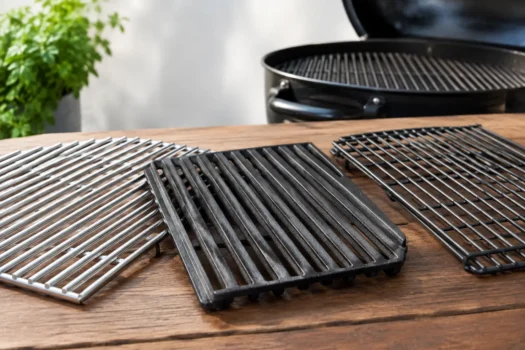
A heavy stainless rod grate may outperform a lightweight coated cast iron grate that has begun to chip. Likewise, wide flat bars put more food in contact with hot metal, while round rods are often easier to clean and move food across. Neither shape is automatically better.
Wide bars are useful for pronounced searing and support, especially with larger cuts. Round rods tend to be practical for everyday grilling and can be easier to brush. Closely spaced grates help with asparagus, shrimp, and smaller foods, but may restrict access to the fire on some charcoal grills.
Check how the grate sits in the grill, too. A grate that rocks, flexes, or has poorly finished edges will become annoying long before the grill body wears out. Build quality is not a minor detail here. It directly affects safe handling, heat consistency, and cleaning.
Cleaning Without Ruining the Grate
The right cleaning method depends on the surface. For stainless, preheat the grill to burn off residue, then use a scraper or brush suited to the grate. Wipe with a lightly oiled paper towel after cleaning if food tends to stick. Stainless can discolor from heat, but discoloration is cosmetic and does not mean the grate has failed.
For bare cast iron and carbon steel, clean while the grate is warm, remove debris, dry it fully, and apply a very thin coat of cooking oil. The goal is not to leave it greasy. Excess oil turns sticky and can create smoke on the next cook.
For porcelain-coated grates, skip harsh scraping and avoid metal brushes that can damage the enamel. A nylon brush used on a cooled grate, a wood scraper, or a softer grill-cleaning tool is usually safer. If the coating is badly chipped, replacement is generally more practical than trying to repair it.
Which Grill Grate Material Should You Buy?
Choose heavy stainless steel if you want the least maintenance and the best odds of long-term durability. Choose bare cast iron if high-heat searing matters enough that you will maintain the surface. Choose porcelain-coated cast iron when you want stronger heat retention with somewhat easier cleanup, while accepting that the coating may eventually wear out.
Porcelain-coated steel makes sense for budget grills and occasional use, especially when replacement parts are inexpensive. Carbon steel is best viewed as a specialty option for cooks who want seasoned-steel performance and do not mind the care it requires.
Before spending extra on an upgraded grate, consider how you actually cook. A family making chicken, vegetables, and burgers twice a week may get more value from thick stainless than from cast iron that rusts between uses. A charcoal enthusiast cooking steaks over a hot fire may see the opposite result. Buy the grate you will maintain, not the one that sounds best on the box.