 globalgrillguidecom
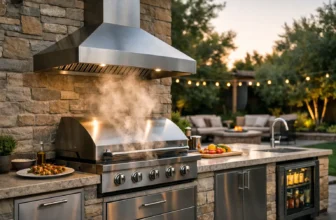
A lot of outdoor kitchens look great in photos and get annoying fast in real use. The grill is too far from prep space, storage swells after one wet season, or the layout forces you to carry trays back and forth like a shuttle run. The best modular outdoor kitchen ideas solve those ownership problems first and worry about the showroom look second.
That is the real appeal of modular setups. You can build in stages, fit the space you actually have, and avoid paying for a giant custom island that locks you into decisions you may regret. But modular does not automatically mean better. Some systems are durable and flexible. Others are just expensive boxes with weak storage, awkward clearances, and finish materials that age badly outdoors.
Table of Contents
Why modular outdoor kitchen ideas make sense
For most homeowners, modular is the practical middle ground between a freestanding grill cart and a fully custom masonry project. You get a more finished cooking area, better storage, and a cleaner layout without the cost, permanence, and installation complexity of a built-from-scratch kitchen.
It also gives you room to adjust over time. You might start with a grill base, a prep cabinet, and one storage unit, then add a sink, side burner, or refrigeration later. That flexibility matters if you are still figuring out how you cook outside. A person who grills burgers twice a week needs a different setup than someone running long brisket cooks, hosting ten people, and storing tools outdoors year-round.
The trade-off is that modular systems vary widely in quality. The useful question is not whether a setup looks custom from ten feet away. It is whether the materials, layout, and cabinet design hold up through heat, grease, moisture, and routine cleaning.
11 modular outdoor kitchen ideas worth considering
1. Start with a grill plus one real prep zone
If budget is tight, do not spread it across too many modules. A grill with a dedicated prep cabinet or countertop section is more useful than a grill flanked by narrow decorative fillers. You need enough landing space for raw food, trays, and tools without balancing everything on the grill shelves.
For most home cooks, 24 to 36 inches of usable prep space changes the experience more than an extra accessory cabinet. It cuts down on back-and-forth trips and keeps the cook zone organized.
2. Use an L-shape when you want better workflow
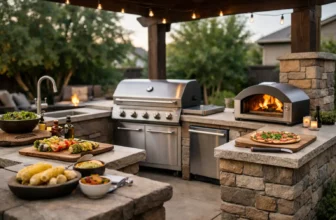
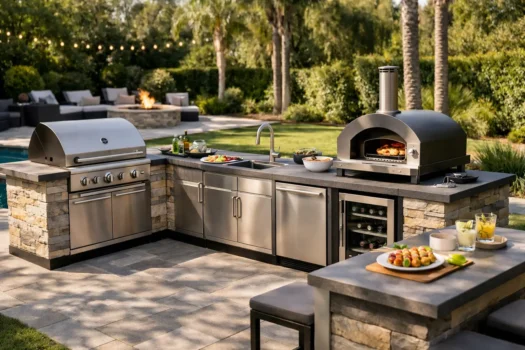
Straight-line modular kitchens are simpler and usually cheaper, but an L-shape often works better if space allows. It creates a natural split between cooking and prep, which helps when multiple people are outside. One person can handle food prep while the other manages the grill without constantly crossing paths.
The caution here is corner space. Some modular systems waste the corner badly or make it hard to reach stored items. If the corner cabinet is poorly designed, you may be paying for square footage you barely use.
3. Build around your actual fuel type
This sounds obvious, but plenty of buyers choose layout first and fuel second. That can create headaches later. Gas grills are easiest to integrate into modular cabinetry, especially if you want fast weeknight cooking. Pellet grills need thought around hopper access, power, and smoke flow. Charcoal setups create different ash, airflow, and heat-management demands.
Good modular outdoor kitchen ideas are fuel-specific. A gas-first kitchen benefits from side burner integration and enclosed storage for tools. A charcoal-focused setup often needs more open prep space and better ash-cleaning access. Pellet users should think carefully about weather exposure and where the controller sits relative to nearby cabinetry.
4. Add drawers instead of deep single-door cabinets
Big empty cabinets sound versatile, but they tend to become black holes for grill brushes, gloves, foil pans, and half-used fuel accessories. Drawers usually cost more, yet they are often the better ownership choice because they make tools easier to organize and easier to reach.
This is especially true if you cook often. The more small items you use, the more frustrating poor storage becomes. Soft-close hardware is nice, but weather resistance and smooth operation after a few seasons matter more.
5. Keep a trash pullout near prep, not near the grill face
A trash module is one of the least glamorous add-ons and one of the most useful. Put it near the prep area where you are trimming meat, opening packaging, and clearing scraps. If it sits too close to the grill, it can interfere with foot traffic right where people are already moving most.
Also consider cleaning. Trash pullouts collect drips and debris. If the insert is hard to remove or the bottom is poorly sealed, it gets unpleasant fast.
6. Leave room for a standalone smoker or griddle
One of the smarter modular kitchen ideas is not forcing every cooking tool into the same built-in footprint. If you already know you want a pellet smoker, flat-top griddle, or pizza oven later, leave breathing room nearby instead of overspending on modules today.
This keeps your setup more adaptable. It also avoids the common mistake of cramming multiple hot appliances too close together and losing practical prep space.
7. Choose countertop materials for abuse, not just appearance
Countertops take more punishment than buyers expect. They deal with greasy trays, hot tools, weather swings, and frequent wipe-downs. Sintered stone, granite, and quality stainless steel all have strengths, but they behave differently over time.
Granite can look excellent and hold up well, but some finishes show grease and water spots more than others. Stainless is easy to sanitize and suits serious grillers, though it shows scratches and fingerprints. Tile can be budget-friendly but introduces grout maintenance that many homeowners get tired of.
The right answer depends on how often you cook and how much maintenance you will tolerate. Low-maintenance usually beats photo-friendly.
8. Add refrigeration only if you will truly use it
An outdoor refrigerator sounds like an automatic upgrade. Sometimes it is. If you entertain often or keep a stocked outdoor cooking station, it can be genuinely useful. But in colder climates or casual-use setups, it may become an expensive appliance you baby through weather shifts and seasonal maintenance.
If your kitchen is ten steps from the house, refrigeration may not be the best use of budget. That money might be better spent on better cabinetry, more prep space, or a higher-performing grill.
9. Use open shelving carefully
Open shelves can work for towels, serving trays, or frequently used gear in covered spaces. They can also become dust, pollen, and spider collection zones. In exposed backyards, enclosed storage is usually the better choice.
This is a good example of where showroom logic and real ownership split apart. Open shelving looks airy. Closed storage usually works better.
10. Plan for cleaning access from day one
Grease splatter, windblown debris, and pooled water do not care how premium the setup was. A modular kitchen is easier to live with when toe kicks, corners, and appliance surrounds are easy to reach and wipe down.
Avoid layouts where the grill is jammed too tightly between modules or where narrow gaps trap grime. Removable panels, sensible clearances, and non-porous surfaces make a bigger difference after year two than many buyers expect.
11. Build in stages if you are still learning your habits
The smartest move for a lot of homeowners is to stop after phase one. Install the grill, prep surface, and storage. Use it for a season. Then decide what is actually missing.
That approach may not feel exciting, but it prevents expensive guessing. You may realize you need better utensil storage, not a sink. Or that a side burner sounded useful but never would have earned its space.
How to judge modular outdoor kitchen ideas before you buy
Start with the grill and work outward. The grill is the anchor for heat, clearance, fuel, and workflow. Once that is set, decide what needs to happen immediately to the left and right of it. Usually that means landing space on one side and either prep or tool storage on the other.
Then think about climate. A modular setup in Arizona deals with different problems than one on the Gulf Coast or in the Midwest. Humidity, freeze-thaw cycles, salt exposure, and direct sun all affect materials, finishes, hinges, and countertop behavior. Marketing photos rarely tell you how cabinetry handles those conditions after three summers.
You should also be honest about entertaining. Many people buy for the two big parties they host each year instead of the fifty regular cooks in between. If your real pattern is weeknight grilling for four, prioritize convenience, quick cleanup, and durable work surfaces over oversized seating walls and specialty add-ons.
At Global Grill Guide, that is usually where the best setups separate themselves from the expensive disappointments. Better modular kitchens are not just attractive. They make cooking easier, cleaning simpler, and maintenance less annoying over time.
The common mistakes that cost the most
The biggest one is overbuilding too early. A second is choosing modules for symmetry rather than function. Outdoor kitchens do not need to look perfectly balanced if one side actually does the work. Another mistake is underestimating storage. Tools, fuel accessories, thermometers, covers, pans, and cleaning supplies add up quickly.
The last mistake is ignoring service access. Burners, gas lines, electrical components, and refrigeration all need practical access if something fails. A kitchen that looks tidy but turns every repair into a teardown is not a smart long-term buy.
A good modular outdoor kitchen should feel easier to use after six months than it did on day one. If an idea helps you cook, move, store, and clean with less hassle, it is probably worth your money. If it mostly improves the photo, keep shopping.
Tricks & Tips
| Trick | Why It Works |
|---|---|
| Build in phases instead of all at once | You’ll discover what you actually need before spending more money. |
| Prioritize prep space over extra cabinets | A 24–36 inch prep area improves workflow more than decorative storage. |
| Match the layout to your grill type | Gas, pellet, and charcoal grills all require different clearances and storage. |
| Choose weather-resistant drawers | Drawers keep tools organized and are easier to access than deep cabinets. |
| Buy for everyday cooking—not party days | Design for your weekly routine rather than the few large gatherings each year. |
FAQ
What is a modular outdoor kitchen?
A modular outdoor kitchen is a system of pre-built cabinets and cooking modules that can be combined into a custom layout. Unlike fully custom masonry kitchens, modular systems are easier to install, expand, and rearrange over time.
Are modular outdoor kitchens worth it?
Yes. For most homeowners, modular outdoor kitchens offer the best balance of price, flexibility, and functionality. They provide better storage and workspace than standalone grills while costing significantly less than fully custom outdoor kitchens.
What is the best layout for a modular outdoor kitchen?
The best layout depends on your available space. Straight-line layouts work well for smaller patios, while L-shaped designs create separate cooking and prep zones that improve workflow and make entertaining easier.
What materials last longest in an outdoor kitchen?
Marine-grade stainless steel, powder-coated aluminum, granite, and sintered stone are among the most durable materials. They resist moisture, heat, UV exposure, and everyday wear better than wood or low-quality composites.
Can you expand a modular outdoor kitchen later?
Yes. One of the biggest advantages of modular outdoor kitchens is that you can add components over time, such as storage cabinets, side burners, refrigerators, sinks, or additional prep space as your needs and budget grow.