
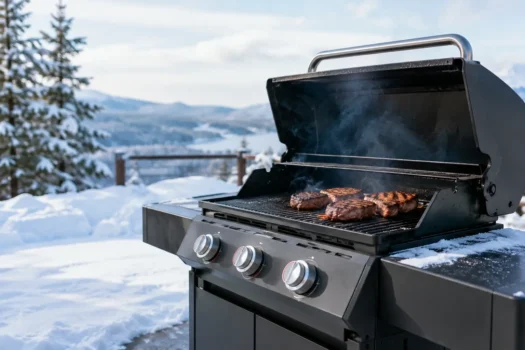
A grill that handles burgers well on a 75-degree afternoon can feel like a different machine when the temperature drops below freezing. Lid temperatures fall faster, fuel use climbs, preheat takes longer, and thin metal exposes every weak point in the design. Winter grill performance is not a marketing claim or a single specification. It is the combined result of insulation, fire control, recovery time, fuel delivery, and how well the grill protects its working parts from wind and moisture.
For buyers who cook outside year-round, cold-weather behavior should be part of the purchase decision. That does not mean every backyard needs an expensive insulated cooker. It means understanding where each grill type struggles, what features genuinely help, and which compromises you are willing to manage.
What Winter Grill Performance Really Measures
The obvious test is whether a grill can reach a target temperature in cold air. That matters, but it is only the starting point. A grill that reaches 450°F after 25 minutes but loses 100 degrees every time you open the lid is frustrating for actual cooking. The better question is whether it can hold and recover heat while food is going on and coming off.
In practical terms, winter performance comes down to five things: preheat time, temperature stability, recovery after opening the lid, fuel consumption, and reliability of ignition and controls. Build quality affects all five. A heavier lid, tighter body panels, better door seals, and fewer exposed gaps do more for cold-weather cooking than a big BTU number printed on a product page.
Wind is often more damaging than ambient temperature. A steady crosswind strips heat from the cook box, disrupts burner flames, and can force a pellet grill to burn more fuel just to maintain its setting. A grill in a sheltered location at 20°F may cook better than the same model sitting in an open, windy yard at 35°F.
How Fuel Types Handle Cold Weather
Gas grills: fast, but dependent on heat retention
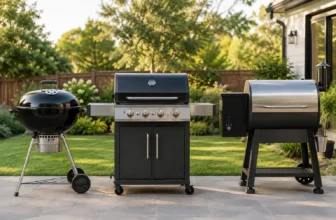
A good gas grill remains one of the easiest options for winter weeknight cooking. Turn it on, preheat it thoroughly, and it can produce dependable direct heat with little cleanup. The limitation is that many entry-level gas grills use thin lids and shallow fireboxes. They lose heat quickly, especially when the lid opens.
BTU ratings alone do not settle the issue. High output can help a grill recover, but it also means little if the cooking chamber leaks heat through thin metal and wide gaps. Look at the full system: burner coverage, hood weight, grate mass, firebox depth, and how well the lid closes. Heavy cast-iron or thick stainless grates also store heat, which matters when cold food hits the surface.
Propane adds another winter variable. As a propane tank gets cold and empties, its ability to vaporize fuel declines. A nearly empty 20-pound tank can cause weak flames in freezing weather even when the grill itself is working correctly. Keep a spare tank, avoid running one to the last few minutes, and do not assume a flame problem is always a regulator failure.
Natural gas avoids the tank-vaporization issue, but it does not make a lightly built grill immune to heat loss. It is still worth preheating longer and cooking with the lid closed whenever the food allows it.
Pellet grills: steady when insulated, slower when exposed
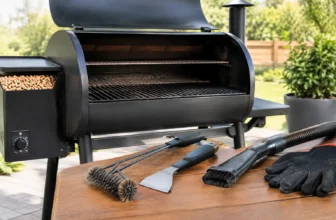
Pellet grills can maintain low-and-slow temperatures well in winter because their controllers actively feed fuel to meet the set point. The trade-off is fuel use. In cold, windy conditions, the grill may burn substantially more pellets to offset heat escaping through the body and lid.
Insulated or double-wall pellet grills have a real advantage here. They generally reach temperature faster, use fewer pellets, and recover more predictably after the lid opens. That advantage is meaningful for long cooks such as pork shoulder, brisket, and ribs. It matters less if you only use the grill for short, hot cooks a few times each winter.
Pellet quality and storage are not minor details. Pellets that absorb moisture can swell, crumble, or feed inconsistently. Keep bags sealed and off a damp garage floor. Also keep the hopper covered during snow or rain. A pellet grill cannot regulate cleanly if damp fuel bridges in the hopper or breaks apart in the auger.
A thermal blanket can reduce fuel consumption on compatible pellet grills, but only use one approved for that specific cooker. An improvised blanket, moving pad, or cover over an operating grill is a fire risk. There is no performance gain worth that mistake.
Charcoal grills: adaptable, but more hands-on
Charcoal performs well in cold weather when the cooker has good airflow control and enough fuel capacity. Cold air is dense and contains plenty of oxygen, so a charcoal fire can burn vigorously. The challenge is maintaining a stable fire while the cooker sheds heat to the environment.
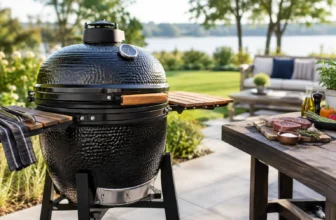
Ceramic kamado grills are especially capable in winter because thick walls retain heat and limit fuel consumption. Their downside is recovery. Open the lid for too long, and the cooker can take time to return to its previous temperature. A well-built insulated charcoal kettle or drum cooker can also work very well, though it usually needs more charcoal and more active vent adjustments than mild-weather cooking.
For charcoal, start with more lit fuel than you think you need for a short high-heat cook, but do not overdo it for low-and-slow barbecue. The right approach depends on the cooker and target temperature. Overloading a kamado with lit charcoal can make it difficult to bring back down. With a standard kettle, a larger fire may be necessary just to maintain usable indirect heat.
Electric grills: practical only in the right setting
Electric grills are usually the least convincing option for open-air winter cooking. Their maximum heat output is limited, and cold wind works against them immediately. On a covered porch or enclosed outdoor space with proper electrical safety, they can still be useful for smaller meals. In an exposed backyard, expect longer preheats and weaker searing.
This is less a criticism of electric grills than a limitation of available power. If winter grilling means steakhouse-style searing or large-capacity cooking, gas, charcoal, or a capable pellet grill is generally the better fit.
Features That Improve Winter Grill Performance
The best cold-weather features are not glamorous. They are the details that reduce heat loss and prevent small operating problems from becoming failed cooks.
A tight-fitting lid and solid body construction come first. Double-wall construction, insulated panels, and substantial grates help, but they do not need to be present everywhere to be useful. A well-designed lid is often more valuable than decorative stainless trim.
Reliable ignition matters more in winter because relighting a cold grill wastes time and fuel. For gas models, protected igniters and easy burner access are worth paying for. For pellet models, a clean fire pot, functioning hot rod, and dry pellets are basic requirements, not maintenance extras.
A real temperature probe system can help, but treat built-in lid thermometers with caution. They measure air near one point in the cooking chamber, not grate-level conditions across the whole surface. An independent grate probe and a dependable instant-read thermometer give more useful information, especially when cold conditions create hot and cool zones.
Operating Habits Matter as Much as the Grill
Even a well-built grill needs a different routine in January. Preheat longer than you would in summer, usually until the grates are fully hot rather than merely when the display reaches the set temperature. For many gas grills, that may mean 15 to 20 minutes. Pellet and charcoal cookers can take longer depending on the target temperature and weather.
Keep the lid closed. This sounds obvious, but it is the most common winter mistake. Each opening exchanges hot chamber air for cold air, and recovery can take several minutes. Set up trays, tools, seasoning, and food before lighting the grill so you are not standing outside with the lid open while looking for tongs.
Clear snow and standing water from the area around the grill, and keep the grill on a stable, noncombustible surface. Never use a grill inside a garage, under a low overhang, or in any enclosed space. A windy location is inconvenient; carbon monoxide exposure and fire hazards are far worse.
After cooking, do not put a cover over a grill that is still hot. Let it cool, brush off snow or moisture, and use a properly fitted cover once the surfaces are safe to touch. Winter moisture accelerates corrosion, particularly around burner tubes, fasteners, grease trays, and pellet-grill electronics.
What to Buy for Year-Round Cooking
If winter use is occasional, do not overbuy for conditions you will face three weekends a year. A solid midrange gas grill with a heavy lid, good burner coverage, and a spare propane tank is enough for many households. A quality charcoal kettle can also remain highly capable with sensible fire management and a wind-protected location.
If you regularly smoke food through the winter, spend more on insulation, controller quality, and weather protection. A heavier pellet grill or insulated charcoal cooker can repay its higher price through steadier temperatures, lower fuel use, and fewer ruined long cooks. The right choice depends on whether you value set-it-and-check-it convenience, high-heat searing, smoke flavor, or simple mechanical reliability.
Do not mistake a grill cover, a large BTU number, or a stainless finish for proof of cold-weather capability. Look for evidence in the parts that do the work: lid fit, wall construction, burner or fire-pot design, grease management, probe accuracy, and access for cleaning. Those are the details you will notice after the first cold front, not the details that look impressive in a showroom.
Winter cooking rewards preparation more than heroics. Put the grill in a sensible location, keep fuel dry and available, give the cooker time to heat up, and choose equipment built to hold heat instead of merely claiming it.