 globalgrillguidecom
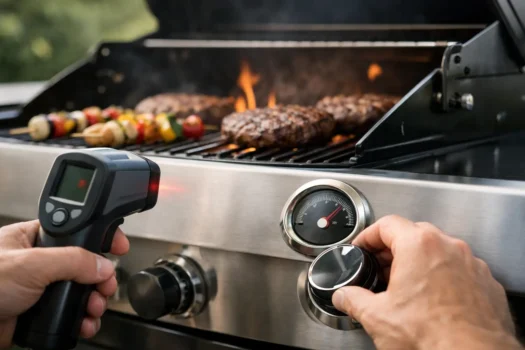
You notice bad gas grill temperature control when dinner starts cooking unevenly. One side burns burgers while the other barely browns vegetables, or the grill races past 500 degrees when you wanted a steady medium heat. That is usually not a mystery and it is rarely just operator error. Most temperature problems come from a handful of predictable causes – burner layout, lid habits, weather, dirty parts, and relying on the wrong temperature reading.
This is where buyers get misled by marketing. More BTUs do not automatically mean better control, and a huge temperature range on the box does not mean the grill will hold stable heat in real cooking. Good control is about how consistently the grill responds when you make an adjustment and how evenly it maintains that setting over time.
Table of Contents
What gas grill temperature control really means
For home cooking, temperature control is not just about hitting the highest number possible. It is about reaching the heat level you want, keeping it there, and creating usable zones across the cooking surface. A grill with good control lets you sear on one side, roast on the other, and make small burner changes without wild swings.
That matters more than people think. If your grill overshoots every time you close the lid, chicken cooks too fast on the outside. If it drops hard when you add food and takes forever to recover, you lose browning and timing gets sloppy. A grill can have decent top-end heat and still be frustrating to cook on if it cannot settle into a repeatable medium or medium-low range.
The basic hardware plays a big role here. Burner spacing, grate material, firebox design, and lid shape all affect how heat moves and holds. Heavy grates and a solid cook box tend to smooth out fluctuations. Thin materials often heat fast but lose stability just as fast, especially in wind or cold weather.
The biggest mistakes people make with gas grill temperature control
The first mistake is trusting the lid thermometer as if it tells the whole story. It does not. A hood-mounted gauge measures air temperature in one spot, usually higher than grate level and often away from where food is actually sitting. It can be useful for trends, but it is not precise enough for serious control.
The second mistake is preheating for too little time or too long with all burners blasting. If you light every burner on high and walk away for 20 minutes, many grills will oversaturate with heat and then take longer to calm down. On the other hand, if you start cooking after five minutes, the grates and firebox may still be unevenly heated. For most gas grills, 10 to 15 minutes of preheat is a better starting point, then adjust from there based on weather and grill size.
Another common problem is cooking with the lid open too often. On a gas grill, closing the lid is part of the heat system. It helps circulate heat, stabilize the chamber, and recover after food goes on. Constant checking causes bigger swings than most people realize.
Cleaning also gets ignored until performance drops. Grease buildup, clogged burner ports, and blocked heat tents can create hot spots and weak spots that look like temperature control problems but are really maintenance problems. If the flame pattern is uneven, control will be uneven too.
How to set a gas grill for low, medium, and high heat
The easiest way to improve results is to stop treating burner knobs like exact temperature settings. Knob labels are rough guides, not precision controls. The same medium setting can behave differently on a calm 75-degree evening than on a windy 45-degree day.
For high heat cooking, preheat with the lid closed and use all burners if you need full-surface searing. Once the grill reaches your target zone, give the grates another minute or two to store heat. That extra time helps with crust and reduces sticking.
For medium heat, start with a full preheat, then back the burners down before adding food. Many owners make the adjustment after the food is already on, which creates an unnecessary swing. It is better to stabilize first, then cook.
For low heat or roasting, use indirect setup whenever possible. On a three-burner grill, leave one burner off and run the other two low or medium-low. On a four-burner grill, the center or one side can become your indirect zone. This setup gives you more control than trying to hold the entire grill at a very low direct temperature.
Use zones instead of chasing one perfect number
A lot of backyard frustration comes from trying to make every inch of the grill identical. That is not how most gas grills behave, especially mid-priced models. Even good units have warmer and cooler sections. Instead of fighting that, use it.
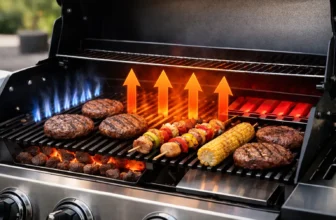
Create a hot zone for searing, a moderate zone for finishing, and a cooler area for holding food or managing flare-ups. That gives you options when chicken skin darkens too quickly or sausages need more time without burning. It also makes weeknight cooking easier because you can move food instead of constantly adjusting knobs.
This is one area where burner count matters. More burners usually give you better heat zoning, not just more total output. A two-burner grill can still cook well, but it offers less flexibility when you want direct and indirect heat at the same time.
Why your grill runs too hot or too cool
If a gas grill always runs hot, the most likely causes are an aggressive regulator, too much preheat on high, hot ambient conditions, or a burner design that simply has poor low-end control. Some grills are built to push heat and never become especially gentle. That can be fine for steaks but annoying for fish, vegetables, and slower cooks.
If it runs too cool, start with the basics. A partially opened propane tank valve, a regulator issue, dirty burners, low fuel, or strong wind can all cut performance. So can a bad habit of opening the lid every minute. If the grill used to heat properly and no longer does, maintenance or fuel delivery is the first place to look.
Wind deserves more attention than it gets. Even a well-built gas grill can struggle in exposed setups. Wind steals heat and disrupts flame behavior, which leads to slow recovery and uneven cooking. If your patio is breezy, grill placement matters almost as much as grill specs.
The thermometer that helps most
If you want better gas grill temperature control, the best upgrade is usually not a new grill. It is a reliable digital thermometer. An instant-read probe tells you what is happening inside the food, and a grate-level probe shows what the cooking environment is actually doing near the surface.
That second number is often eye-opening. You may think you are cooking at 350 because the lid says so, while grate level over the active burner is much hotter. Once you see the real cooking temperature, burner adjustments start making more sense.
For buyers comparing grills, this is also why showroom impressions can be misleading. A grill can feel premium and still have mediocre temperature management. Build quality matters, but so does the way the burners modulate and how the firebox handles real-world heat retention.
What buyers should look for in a grill
If temperature control is a priority, pay attention to design details that affect daily use. Burners should adjust smoothly without feeling touchy. The grill should offer enough burner separation to create usable zones. Heavier grates and a solid lid help hold steady heat, while flimsy parts tend to exaggerate swings.
It also helps to be realistic about size. Oversized grills can be harder to run gently when you are cooking for two, especially if they are built around high-output burners with broad heat coverage. Bigger is not always better if your real goal is predictable weeknight cooking.
This is where Global Grill Guide takes a harder line than most review sites. Control is not a luxury feature. It is one of the clearest signs of whether a grill will still be enjoyable after the first few weekends. If a grill cannot hold a stable medium temperature or create a believable indirect zone, the ownership experience gets old fast.
Getting better results without buying anything new
If your current grill is basically sound, a few habit changes can improve it immediately. Preheat with intention instead of habit. Keep the lid closed more often. Clean burners and heat diffusers before performance drops off. Use a grate-level probe at least a few times so you understand your grill’s real hot and cool areas.
Most of all, learn how your specific grill responds. Some models need tiny burner changes and a few minutes to settle. Others recover slowly after cold food goes on. Once you know those patterns, temperature control stops feeling random.
The best gas grills are not the ones that post the biggest numbers. They are the ones that behave predictably when dinner is on the line, and that is what makes them worth owning.
Summary Table
| Topic | Key Takeaway | Practical Recommendation |
|---|---|---|
| What Temperature Control Really Means | Good temperature control is about maintaining stable, predictable heat rather than reaching the highest temperature. | Choose a grill that responds smoothly to burner adjustments and maintains consistent cooking temperatures. |
| Why Temperature Becomes Unstable | Uneven cooking is usually caused by burner design, weather, dirty components, or poor heat retention—not user error. | Inspect grill maintenance, burner condition, and cooking habits before blaming the grill itself. |
| BTU Ratings | High BTU output does not guarantee better temperature control. | Focus on heat consistency, burner responsiveness, and even heat distribution instead of maximum BTUs. |
| Grill Construction | Heavy materials store and distribute heat more evenly. | Look for heavy cooking grates, a solid lid, and a well-designed firebox. |
| Lid Thermometer | Hood thermometers measure air temperature, not cooking surface temperature. | Treat the built-in thermometer as a general guide rather than an accurate cooking reference. |
| Preheating | Both underheating and overheating reduce cooking consistency. | Preheat for 10–15 minutes, then adjust burners before placing food on the grill. |
| Cooking with the Lid | Frequently opening the lid causes large temperature swings. | Keep the lid closed whenever possible to stabilize heat and speed recovery. |
| Cleaning & Maintenance | Dirty burners and grease buildup create hot spots and uneven flames. | Regularly clean burner ports, heat diffusers, grease trays, and cooking grates. |
| Using Burner Knobs | Burner labels are approximate, not precise temperature settings. | Adjust burners gradually and allow time for temperatures to stabilize after each change. |
| High Heat Cooking | Maximum heat requires more than simply turning every burner to High. | Fully preheat the grill and allow the grates to absorb heat before cooking. |
| Medium Heat Cooking | Many users reduce burner settings too late. | Lower the burners before placing food on the grill for more stable cooking. |
| Low Heat & Roasting | Indirect cooking provides better control than lowering every burner. | Create an indirect zone by leaving one burner off or using one side of the grill. |
| Heat Zones | Uniform heat across the entire grill is unrealistic. | Use separate hot, medium, and cool zones instead of chasing one perfect temperature. |
| Why Grills Run Too Hot | Excessive preheating, hot weather, aggressive regulators, or burner design are common causes. | Reduce preheat time, lower burner settings earlier, and monitor grate temperature. |
| Why Grills Run Too Cool | Fuel supply issues, clogged burners, wind, or low propane often reduce heat. | Check propane, regulators, burner cleanliness, and grill placement before assuming equipment failure. |
| Weather Effects | Wind significantly disrupts burner performance and heat retention. | Place the grill in a sheltered location whenever possible. |
| Best Temperature Upgrade | Food temperature matters more than grill temperature alone. | Invest in a quality digital instant-read thermometer and a grate-level probe thermometer. |
| Buying Advice | Temperature control depends more on design than appearance. | Look for smooth burner adjustment, solid construction, and enough burners to create cooking zones. |
| Improve Without Buying a New Grill | Better habits often solve temperature issues. | Learn your grill’s heat patterns, preheat properly, clean regularly, and cook using heat zones. |
FAQ: Gas Grill Temperature Control That Actually Works
How do I control the temperature on a gas grill more accurately?
Preheat the grill for about 10–15 minutes, adjust the burner settings before adding food, and cook with the lid closed. Instead of relying solely on the built-in thermometer, use a digital grate-level thermometer to monitor the actual cooking temperature.
Why is my gas grill getting too hot?
Common causes include excessive preheating, hot weather, an overly aggressive gas regulator, or burners designed with limited low-temperature control. Opening the lid less often and reducing burner settings earlier can help maintain more stable temperatures.
Why does my gas grill cook unevenly?
Uneven cooking is usually caused by burner spacing, grease buildup, clogged burner ports, wind exposure, or natural hot and cool zones within the grill. Regular cleaning and cooking with multiple heat zones can significantly improve consistency.
Is the lid thermometer on a gas grill accurate?
Not completely. A lid thermometer measures the air temperature near the top of the grill, which can differ substantially from the cooking surface where the food sits. For more accurate cooking, use a digital probe thermometer at grate level.
What is the best way to create heat zones on a gas grill?
Turn on only part of the burners to create separate cooking areas. On a two-burner grill, leave one burner off. On three- or four-burner models, dedicate one side to direct heat and the opposite side to indirect cooking. This setup provides greater flexibility and helps prevent overcooking or flare-ups.