 biara
biara
If your food keeps sticking, your grill grates are telling you something. Most of the time, the problem is not the grill itself. It is a layer of old grease, carbon, sauce residue, and ash that has built up over time. Knowing how to clean grill grates properly makes a real difference in how your grill cooks, how long the grates last, and how much frustration you deal with on a weeknight cook.
A lot of cleaning advice is either too aggressive or too soft to matter. Burn it off and scrape everything is only part of the job. Soak them in every chemical under the sink is not smart either. The right method depends on what your grates are made of, how dirty they are, and whether you are doing a quick post-cook cleanup or a deeper maintenance session.
How to clean grill grates without damaging them
The first thing to get right is the grate material. This is where people make expensive mistakes.
Porcelain-coated cast iron grates need a lighter touch than bare cast iron or stainless steel. The coating helps resist rust and sticking, but once it chips, moisture can get underneath and the grate starts going downhill fast. That means no aggressive metal scraping with sharp edges and no banging the grates around on concrete or a driveway.
Bare cast iron grates are durable, but they need protection from moisture. Clean them too harshly or leave them wet, and they can rust quickly. Stainless steel grates are generally the most forgiving. They can handle more scrubbing, they resist corrosion better, and they are usually easier to maintain over the long haul.
If you are not sure what you have, check your grill manual before you start. Cleaning the wrong way can shorten grate life more than years of normal cooking.
The best time to clean grill grates
For routine cleaning, right after cooking is usually best. The grates are still warm, which softens residue and makes brushing easier. You do not want them red-hot, and you do not want to handle removable grates until they are safe to touch, but warm metal cleans faster than cold metal.
For deeper cleaning, wait until the grill is fully cool and remove the grates. That gives you better access and lets you inspect for rust, flaking coating, or heavy carbon buildup.
A good ownership habit is simple. Do a light clean after every cook, then a deeper clean every few weeks during heavy grilling season. If you cook with sugary sauces, marinades, or fatty meats often, you may need to deep clean more often because residue builds faster.
For a quick after-cook cleaning
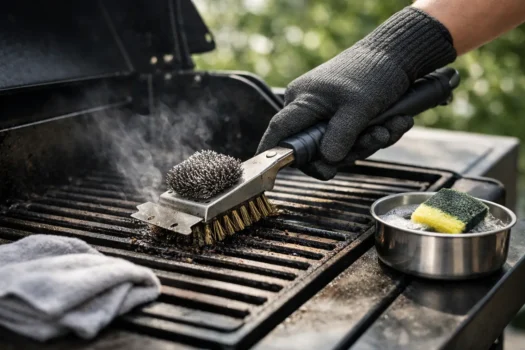
Run the grill for a few minutes after the food comes off with the lid closed. This helps loosen fresh debris, but do not confuse that with a full cleaning. Then use a grill brush or scraper that matches your grate material.
For stainless steel, a quality bristle-free brush or coiled scraper works well. For porcelain-coated grates, softer tools are safer. Nylon grill brushes can work on warm surfaces if the product is rated for the heat. A wad of paper towels held with tongs and lightly oiled can also wipe down loosened residue after brushing.
This quick pass will not remove every bit of buildup, and it does not need to. The goal is to prevent thick layers from forming.
Deep cleaning grill grates step by step
When the grates are visibly greasy, sticky, or flaky, routine brushing is not enough. Here is the practical way to handle it.
Start by removing the grates and knocking off loose debris over a trash can or a patch of yard you do not care about. Then soak them in warm water with dish soap. If your sink is not big enough, a plastic storage bin works fine. Let them sit for 15 to 30 minutes.
After soaking, scrub with a non-abrasive pad, a grill-safe brush, or a sponge with some bite to it. For stainless steel, you can be more assertive. For porcelain-coated cast iron, stay controlled and avoid anything that can gouge the finish. On bare cast iron, scrub enough to remove grime, but do not leave the metal sitting in water longer than necessary.
If soap and water are not cutting through the grease, a paste of baking soda and water can help. It adds mild abrasion without being overly harsh. Spread it over problem spots, let it sit for several minutes, then scrub again.
Rinse thoroughly and dry completely. This part matters more than people think. Water left on the grate can lead to rust on cast iron and corrosion at damaged spots on coated grates.
For bare cast iron grates, finish with a very thin coat of high-heat cooking oil after drying. Then place them back on the grill and heat them for a short cycle to help protect the surface.
When heavy carbon buildup will not come off
Sometimes grates go too long without proper cleaning and develop thick, black crust that feels welded on. At that point, soaking alone may not be enough.
A grill grate cleaner designed for cooking surfaces can help, but read the label and make sure it is safe for your grate type. Strong degreasers can be useful on stainless steel, but they are not always the best choice for coated or seasoned surfaces. If you use any dedicated cleaner, rinse thoroughly and run the grill hot for a short burn-off before cooking again.
There is also a trade-off here. Chasing a like-new appearance can do more harm than good if you get overly aggressive with scraping. Your goal is a clean cooking surface, not showroom polish.
What not to do
A few common cleaning habits cause more problems than they solve.
Do not use a wire brush that sheds bristles. Loose metal bristles on a cooking grate are a real safety issue. If you use a traditional grill brush, inspect it often and replace it at the first sign of wear. Many owners are better off with a bristle-free option.
Do not soak cast iron overnight unless you are prepared to deal with rust. Do not use oven cleaner unless the manufacturer specifically says it is safe. Do not pressure wash coated grates or attack them with heavy-duty metal tools. And do not put greasy grill grates in a dishwasher unless you enjoy clogged filters and disappointing results.
Another bad move is cleaning only the top side. Grease and carbon collect underneath too, and that residue can smoke, smell bad, and affect flavor.
Different grills, slightly different cleaning realities
Gas grill owners usually deal with more grease management because of frequent cooking and easier weeknight use. That means grates can look fine on top while the underside gets sticky fast. Charcoal grills tend to create more ash and carbon dust, so buildup may feel drier but still needs attention. Pellet grills often leave a mix of grease and fine soot that can coat grates in a stubborn film.
The cleaning method is mostly the same, but the maintenance rhythm changes. A gas grill used three times a week may need more frequent grate cleaning than a charcoal grill used twice a month. If your grill runs hot and even, residues also burn off more effectively than on underpowered models that struggle to get the grates properly heated.
That is one reason grate material and grill design matter so much in long-term ownership. Easy cleaning is not a small feature. It affects whether you actually enjoy using the grill six months from now.
How often should you deep clean grill grates?
It depends on what and how often you cook. If you grill burgers, chicken thighs, steaks, and vegetables once or twice a week, a deeper clean once a month is usually enough. If you cook heavily marinated meats, use sugary sauces, or grill several times a week, every two to three weeks is more realistic.
If you notice sticking, bitter smoke, uneven browning, or flakes coming off onto food, you waited too long.
At Global Grill Guide, we look at cleaning and maintenance the same way we look at build quality. It is not separate from performance. A grill that is easy to clean is easier to keep cooking well.
The simplest routine that works
You do not need a complicated process. Brush the grates while they are still warm after each cook. Wipe off loosened residue if needed. Every few weeks, remove the grates, soak, scrub, rinse, and dry them fully. Add a light oil coat for bare cast iron.
That routine is enough for most home grill owners, and it does more for cooking performance than people expect. Clean grates release food better, heat more evenly, and give you one less excuse when dinner goes sideways.
If your grill has been neglected for a season or two, start with one thorough cleaning session and reset from there. It is easier to maintain decent grates than to rescue ruined ones.