 globalgrillguidecom
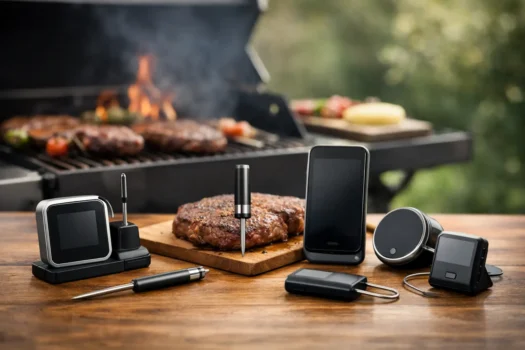
Pulling a brisket at the right moment is hard enough. Doing it while juggling flare-ups, side dishes, and guests is where the best wireless meat thermometers actually earn their keep. A good one lets you watch internal temp without hovering over the grill, but the gap between “works on the box” and “works in your backyard” is wider than most rankings admit.
That is the problem with this category. Wireless thermometers sound simple, yet real ownership depends on things that rarely get explained well: probe durability, app stability, charging reliability, ambient sensor accuracy, and whether the connection still holds once your smoker lid, patio walls, and kitchen fridge get involved. If you are shopping for one, the right pick depends less on hype and more on how you cook.
What actually makes the best wireless meat thermometers
For most buyers, accuracy is the first filter, but it is not the whole story. A thermometer that reads correctly and drops connection every fifteen minutes is still a bad tool. The same goes for a probe that works great for six cooks and then stops charging properly.
The better units balance four things well: stable connectivity, dependable probe readings, an app that does not fight you, and hardware that survives grease, heat, and repeated cleaning. Battery design matters too. Fully wireless probe systems are convenient, but they introduce more charging points and more failure risk than a traditional wired probe paired with a wireless base unit.
That is why this category usually splits into two camps. There are truly wireless probes you place directly in the meat with no cable leaving the cooker, and there are remote thermometers with wired probes connected to a transmitter. Both are “wireless” from the user’s standpoint, but they are not equal in durability or convenience.
The 8 best wireless meat thermometers for real backyard use
1. ThermoWorks Smoke Remote BBQ Alarm Thermometer
If you care more about reliability than app tricks, this is still one of the safest buys. It uses wired probes connected to a transmitter and a dedicated receiver, which sounds old-school until you realize how much that design avoids. No flaky Bluetooth pairing. No tiny probe batteries. No wondering whether the charging dock made proper contact.
It fits people running long smokes on pellet grills, offset smokers, or charcoal setups where consistency matters more than novelty. The trade-off is obvious: it is not a clean, cable-free experience. But for buyers who want fewer points of failure, that trade is often worth it.
2. ThermoPro TempSpike
The TempSpike makes sense for buyers who want the convenience of a fully wireless probe without paying top-tier pricing. It is easy to use, setup is usually straightforward, and it removes the annoyance of routing a cable through the lid.
Where it falls short is the same place many midrange wireless probes do: long-term confidence. If you cook every weekend, charging consistency and connection stability matter more over time than they do on day one. This is a good fit for casual grillers, less so for people doing frequent overnight cooks.
3. MEATER Plus
MEATER Plus helped make this category popular because it delivers the feature set people actually want. The app is approachable, the guided cook experience is beginner-friendly, and the cable-free design is genuinely convenient for rotisserie cooking, reverse searing, and standard grilling.
It is a strong choice for newer buyers who want help more than raw data. The limitation is that convenience comes with a few compromises. Ambient readings can be less trustworthy than a dedicated grate probe, and wireless range depends heavily on your setup. In open space it can work well. Through thick cooker walls and into the house, results vary.
4. MEATER Block
If you like the MEATER idea but cook multiple proteins at once, the Block is the more practical version. Four probes make it far more useful for holiday cooks, larger families, or anyone running a brisket and pork shoulder side by side.
It still carries the same core trade-offs as the rest of the line. You are buying into convenience and app-driven guidance, not the most bulletproof signal path on the market. For many home users that is fine. For obsessive pit control, there are stronger options.
5. ThermoPro Signals
This is one of the better choices for serious backyard cooks who want app monitoring but do not want to bet everything on fully wireless probes. Signals uses wired channels with modern connectivity, giving you a setup that is more dependable during longer cooks while still offering remote monitoring from your phone.
It works especially well for pellet grill owners, kamado users, and anyone who wants to monitor both meat and cooker temperature at the same time. The downside is setup complexity. It is more tool than toy, which is great if you will use the features and unnecessary if you just grill steaks on Saturdays.
6. FireBoard 2 Drive
This is getting into enthusiast territory, but it earns its place because it does more than basic temperature tracking. FireBoard’s app is strong, data logging is useful, and the hardware is well suited for people who want to monitor cooks closely over time.
For some users, this is overkill. If you want a simple answer to “when is my chicken done,” there are cheaper and easier options. But if you run overnight smokes, care about graphing temperature behavior, or plan to add fan control for a charcoal setup, this becomes a smart long-term buy instead of an expensive gadget.
7. Inkbird IBBQ series
Inkbird sits in the value segment, and that matters because not everyone needs premium-level refinement. These units can be a sensible budget pick for buyers who want multi-probe monitoring and app control without spending top dollar.
You should also go in with realistic expectations. Budget models can be perfectly usable, but app polish, build quality, and probe longevity often lag behind more established premium competitors. If price is the main driver, Inkbird deserves a look. If you hate troubleshooting, spend more.
8. Typhur Sync
Typhur has gotten attention by pushing the premium wireless probe idea further, especially around range and charging design. It appeals to buyers who want a cleaner, more refined fully wireless experience than lower-cost options usually provide.
The question is whether the premium price actually matches your cooking habits. If you grill often, entertain a lot, and value cable-free convenience, it can make sense. If you cook burgers, chicken thighs, and the occasional roast, a less expensive system will probably get you 90 percent of the benefit.
How to choose between the best wireless meat thermometers
The biggest decision is not brand. It is whether you want fully wireless probes or a wired probe system with wireless monitoring.
Fully wireless probes are cleaner and more convenient. They are especially useful for rotisserie setups, high-heat searing transitions, and cooks where a dangling cable is genuinely annoying. They also tend to be more limited by battery design, charging contact issues, and signal quirks. That does not make them bad. It just means convenience is the main reason to buy them.
Wired systems with remote monitoring are usually less elegant but more dependable. If you are cooking brisket overnight or running a pork shoulder for twelve hours, reliability usually matters more than a cable passing under the lid. This is the better path for people who smoke more than they grill.
You should also look hard at probe count. One probe works for a steak or chicken breast. It gets limiting fast if you cook multiple cuts, want to track grill temp separately, or feed a family regularly. Two to four channels is a more practical range for most backyard setups.
App quality matters more than spec sheets suggest. A bad app turns a good thermometer into a frustrating one. Delayed notifications, awkward graph displays, or fussy reconnection behavior will bother you every cook. If you are comparing two models that seem close on paper, the better app often wins in real use.
Who should buy what
If you are a first-time buyer and mostly want easier weeknight grilling, a user-friendly wireless probe model like MEATER Plus or TempSpike makes sense. The lower friction is the whole point.
If you are more serious about barbecue and run longer cooks, a wired remote system like ThermoWorks Smoke or a connected multi-channel unit like Signals is the safer investment. They are less flashy and usually more trustworthy.
If you are the kind of owner who tracks pit behavior, fine-tunes airflow, and actually uses cook data, FireBoard is worth your attention. Most people do not need that level of control, but the ones who do usually know it.
The best thermometer is the one that fits the way you cook now, not the one with the most marketing around it. Buy for reliability first, convenience second, and extra features only if you know you will use them. That approach is less exciting at checkout, but it usually feels a lot better six months later when the thermometer still works and dinner is still on schedule.