 globalgrillguidecom
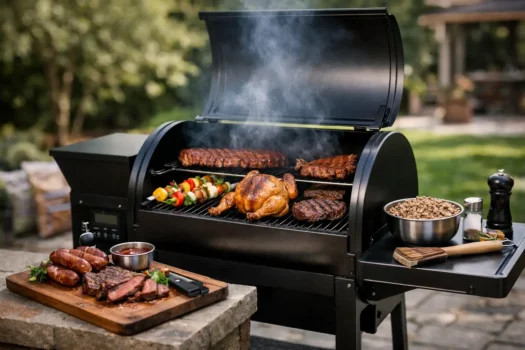
A pellet smoker looks simple from the outside – pour in pellets, set a temperature, and let it work. That is exactly why so many buyers get burned by the wrong one. A good pellet smoker buyer guide needs to go past the marketing language and focus on what ownership actually feels like after the first few weekends.
Pellet smokers can be excellent cookers for people who want wood-fired flavor without babysitting a fire all day. They are also easy to oversell. Not every model holds temperature well. Not every grill sears worth a damn. And not every bargain-priced unit stays reliable once ash, grease, weather, and long cooks become part of the routine.
What a pellet smoker is really good at
Pellet smokers shine when you want repeatable results with less fire management. They feed compressed wood pellets from a hopper into a fire pot, while a controller adjusts airflow and fuel delivery to maintain your target temperature. In plain terms, they act more like an outdoor wood-fired oven than a traditional charcoal pit.
That makes them especially good for ribs, pork shoulder, turkey, chicken, meatloaf, and weeknight cooks where convenience matters. They are also beginner-friendly. If you want stable low-and-slow cooking without learning the rhythm of a stick burner, pellet is the easiest path.
The trade-off is flavor intensity and high-heat performance. Pellet smokers usually produce a cleaner, lighter smoke than charcoal or offset smokers. Many also struggle to deliver steakhouse-level searing unless they include a direct-flame option or reach genuinely high temperatures. If your main goal is heavy smoke flavor or ripping-hot steak cooks, pellet may not be your best fit.
Pellet smoker buyer guide: what matters most
Most buying mistakes happen because shoppers focus on size and advertised temperature range first. Those matter, but they are not what determines long-term satisfaction.
Temperature control matters more than top-end numbers
A pellet smoker does not need a flashy max temperature on the box if it cannot hold 225 or 250 degrees steadily in real conditions. Good controllers recover predictably after you open the lid. Poor ones swing too far, feed pellets unevenly, or struggle in wind and cold.
Look for a unit known for stable low-temp performance first. That is where pellet cooking earns its keep. If the controller is inconsistent, everything else gets harder – longer cooks, repeatability, fuel efficiency, and confidence.
PID controllers are often worth seeking out because they make more precise adjustments than older timed-feed systems. That said, the label alone is not a guarantee. A bad implementation can still perform poorly, so build quality and airflow design still matter.
Build quality affects more than durability
Thin metal is not just a longevity issue. It affects heat retention, fuel use, and performance in cooler weather. A heavier cooker with a better lid seal typically holds temperature more steadily and wastes fewer pellets.
Pay attention to the legs, wheels, lid fit, and interior parts. A pellet smoker has moving pieces, electronics, heat, grease, and ash all working in one box. If the cart feels flimsy or the internal components look cheaply stamped, ownership usually gets annoying fast.
Powder coating quality matters too. Once rust starts around seams, fire pots, or lower cabinets, the grill rarely gets better with age.
Hopper size changes how hands-off the grill really is
Manufacturers love to talk about convenience, but convenience disappears if you have to refill pellets halfway through an overnight cook. A larger hopper gives you more freedom, especially in colder weather when fuel use climbs.
For many home users, a hopper around 18 to 22 pounds is a practical sweet spot. Smaller hoppers are not automatically bad, but they make more sense for compact patio models than for serious low-and-slow cooking.
Also check whether the hopper has an easy pellet dump feature. That sounds minor until you want to switch wood types or empty damp pellets before rain season.
Cleaning design separates easy ownership from a chore
This is where a lot of attractive pellet smokers fall apart. Grease management, ash cleanup, and access to the fire pot all matter. If cleaning is awkward, people delay it. When people delay it, performance drops and flare-up risk rises.
A well-designed pellet smoker should make it reasonably easy to vacuum ash, scrape grease, and clean drip components without taking half the grill apart. External ash cleanout systems are helpful, but even without one, the internal layout should be sensible.
Look closely at the grease path. If the drain system is poorly designed, grease can pool in places you do not want it.
Size is about usable space, not bragging rights
Cooking area gets exaggerated in marketing. Upper racks, narrow warming shelves, and oddly shaped surfaces can inflate numbers without adding much practical room.
Think about what you actually cook. A couple cooking burgers, chicken, and the occasional pork butt does not need a huge backyard tank. A family that hosts often or cooks multiple large cuts at once probably does. Bigger is not always better because larger cookers cost more, burn more pellets, and take up more patio space.
As a rough rule, compact models fit smaller households and occasional use. Mid-size units are the most versatile for typical families. Large models make sense when you cook for crowds or want capacity for briskets, rib racks, and holiday cooks without juggling space.
Don’t overpay for features you won’t use
The best pellet smoker for one buyer is a waste of money for another. A practical pellet smoker buyer guide should call that out clearly.
Wi-Fi control can be useful if the app is stable and the alerts are reliable. If the software is buggy, it becomes one more thing to fight with. Meat probe ports are helpful, but included probes are not always accurate. Storage cabinets, folding shelves, and pellet dump chutes can all improve day-to-day use, but only if they are executed well.
More features do not automatically mean better value. Start with the basics: stable temperatures, decent construction, good grease handling, and enough space for your normal cooks. Extras only matter once those are covered.
Matching the smoker to the way you cook
If you mostly want easy barbecue on weekends, a mid-range pellet smoker with a dependable controller is usually the smart buy. You do not need a competition-style tank to cook great ribs in the backyard.
If you cook year-round in a cold climate, heavier construction matters more than fancy accessories. Heat retention and reliability will affect your experience far more than a polished control panel.
If you care a lot about reverse-seared steaks, look closely at direct-flame capability or be realistic about adding a separate gas or charcoal grill. Many pellet smokers claim to grill, but some are really better described as smokers that can roast hot.
If you are a first-time buyer, avoid the cheapest end of the category unless your expectations are modest. Entry-level pellet smokers can work fine, but this is also where weak controllers, poor fit and finish, and frustrating cleanup tend to show up.
Budget ranges and what changes as you spend more
At the lower end, you are usually paying for basic pellet functionality with lighter materials and fewer refinements. That can be enough for casual users, but consistency and lifespan are more variable.
In the middle of the market, you tend to get the best balance of value, control, and usable features. This is where many buyers should focus. You can find solid temperature stability, reasonable build quality, and better cleanup design without paying for prestige.
At the premium end, the money should buy heavier steel, better fit and finish, stronger warranties, and more dependable performance over time. Sometimes it does. Sometimes you are also paying for branding. That is why real-use evaluation matters more than spec sheets, which is exactly where Global Grill Guide separates good buys from expensive disappointments.
Red flags worth taking seriously
Be careful with pellet smokers that rely on vague promises instead of clear design strengths. If reviews repeatedly mention wild temperature swings, auger jams, paint failure, or poor customer support, believe them. Those issues rarely feel minor once the grill is on your patio.
Also be skeptical of giant cooking-area claims on flimsy bodies, unusually low prices for oversized models, and searing claims that are not backed by a true direct-heat design. A pellet smoker can be versatile, but it cannot break the laws of physics.
The right question to ask before you buy
Do not ask which pellet smoker is best in general. Ask which one fits your cooking habits, weather, space, patience for maintenance, and budget. That question leads to better choices.
A dependable pellet smoker should make backyard cooking easier, not give you another machine to troubleshoot. Buy for steady performance, easy cleanup, and build quality you will still appreciate two years from now. The excitement of a low price fades fast when the cooker cannot hold temp on a windy Saturday.
Summary Comparison Table
| Buying Factor | Why It Matters | Best Choice | Watch Out For |
|---|---|---|---|
| Temperature Control | Stable temperatures are essential for consistent smoking results. | Reliable PID controller with minimal temperature swings. | Large fluctuations, slow recovery after opening the lid. |
| Build Quality | Better construction improves heat retention, durability, and fuel efficiency. | Heavy-gauge steel, tight lid seal, quality powder coating. | Thin metal, poor welds, loose-fitting lids, rust-prone finishes. |
| Cooking Performance | Pellet smokers excel at smoking and roasting, but not every model sears well. | Excellent low-and-slow cooking with optional direct-flame capability. | Weak searing performance despite marketing claims. |
| Pellet Hopper Capacity | Determines how long the smoker runs without refilling. | 18–22 lb hopper for overnight cooks. | Small hopper requiring frequent refills. |
| Cleaning & Maintenance | Easier cleanup encourages regular maintenance and better performance. | External ash cleanout, accessible fire pot, efficient grease drain. | Difficult ash removal and grease buildup. |
| Cooking Space | Practical layout matters more than advertised square inches. | Enough usable grate space for your typical cooks. | Oversized warming racks inflating total cooking area. |
| Smart Features | Helpful only if they work reliably. | Stable Wi-Fi, accurate app alerts, useful meat probes. | Buggy apps, unreliable connectivity, inaccurate included probes. |
| Fuel Efficiency | Better insulation reduces pellet consumption. | Thick steel body and tight seals. | Thin construction that wastes pellets in cold or windy weather. |
| Long-Term Ownership | Determines satisfaction years after purchase. | Easy-to-find replacement parts and solid warranty support. | Frequent auger jams, controller failures, poor customer service. |
| Best For | Choose based on cooking style rather than marketing. | Backyard cooks who want easy, repeatable barbecue with wood-fired flavor. | Buyers expecting charcoal-level smoke or steakhouse-quality searing from every pellet smoker. |
FAQ
What should I look for when buying a pellet smoker?
Focus on temperature stability, build quality, hopper capacity, cleaning design, and long-term reliability rather than maximum temperature or feature lists. A dependable controller and solid construction matter more than extra accessories.
Are pellet smokers good for beginners?
Yes. Pellet smokers are among the easiest smokers to learn because they automatically regulate temperature. They require far less fire management than charcoal or offset smokers while still producing authentic wood-fired flavor.
Do pellet smokers produce enough smoke flavor?
Pellet smokers create a mild, clean wood smoke flavor that works well for ribs, chicken, pork shoulder, and turkey. However, they generally produce less intense smoke than charcoal smokers or traditional offset smokers.
Is a PID controller worth it on a pellet smoker?
In most cases, yes. A quality PID controller maintains more consistent cooking temperatures, improves fuel efficiency, and recovers faster after opening the lid. However, implementation quality is just as important as the PID label itself.
How often do pellet smokers need cleaning?
Ash should be removed regularly—typically every few cooks or after long smoking sessions. Grease trays and drip channels should also be cleaned frequently to maintain performance and reduce the risk of grease fires.