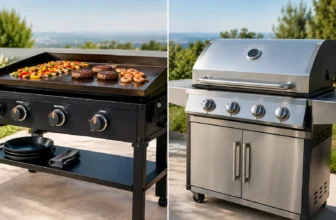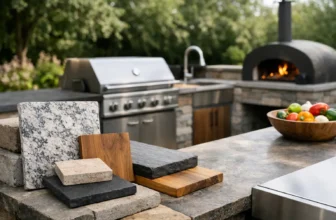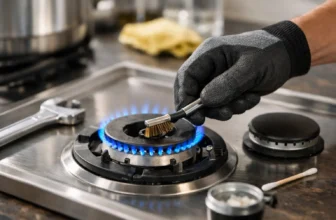

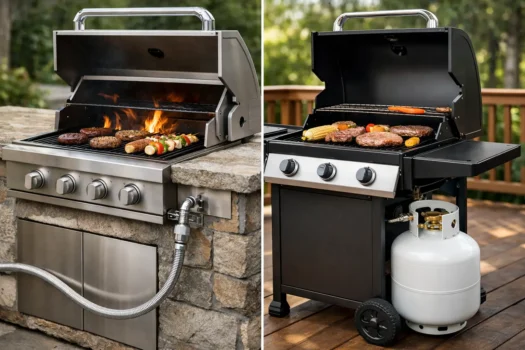
A gas grill that runs out of fuel halfway through dinner is frustrating. A grill that requires a costly gas-line project for a patio you may redesign next year can be just as frustrating. That is the real natural gas vs propane grill decision: not which fuel is universally better, but which one creates fewer problems for the way you cook and live.
Both fuels can produce excellent results on a well-built grill. Burner design, heat distribution, lid construction, grate material, and overall build quality affect cooking performance more than the fuel label on its own. The difference shows up in installation, convenience, mobility, ongoing cost, and the ownership chores that marketing rarely mentions.
Natural Gas vs Propane Grill: The Short Answer
Choose a natural gas grill if you own your home, have a usable gas line near the cooking area, and want a permanent backyard setup with no tank exchanges. It is the lower-hassle choice for people who grill often and plan to stay put.
Choose propane if you need flexibility. A propane grill works almost anywhere with adequate outdoor clearance, moves when you move, and avoids the upfront expense of extending a natural gas line. For many first-time buyers, it is the safer default because it does not lock the grill into one location.
Do not choose based on the idea that one fuel automatically makes food taste better. Neither natural gas nor propane adds meaningful smoke flavor. If you want stronger live-fire character, the grill design and the use of wood or charcoal matter far more.
Heat Output Is More Complicated Than BTUs
Propane contains more energy per unit of volume than natural gas. On paper, that can make propane sound like the clear performance winner. In actual grilling, the grill has to be built and configured for its fuel source. A properly designed natural gas grill can sear, roast, and cook indirect heat meals very effectively.
Do not compare a propane grill’s BTU rating directly with a natural gas model’s rating and assume the larger number cooks better. BTUs describe fuel input, not how efficiently the grill transfers heat to the cooking grate. A grill with thin firebox walls, weak burners, and poor heat management can post an impressive number and still struggle in wind or leave cold zones across the grate.
What matters in use is preheat time, grate temperature, recovery after you add cold food, evenness from front to back, and whether the grill can hold a reasonable indirect-cooking temperature without constant burner adjustments. Those are construction and design questions first.
There is one practical advantage for propane in some cases: portable grills. Small propane models can deliver strong heat from compact burner systems, making them useful for tailgates, camping, or cooking away from home. Natural gas is not a realistic option for that job.
Installation Is the Biggest Natural Gas Trade-Off
Natural gas convenience starts with installation. You need an existing outdoor gas stub or a licensed professional to run a line from the home’s gas system. The final cost depends on line length, local labor rates, permit requirements, and whether your existing system has enough capacity for another appliance.
This is not a do-it-yourself shortcut project. An undersized line can limit performance. Improper connections can create a serious safety hazard. A professional installation should include the correct shutoff valve, approved fittings, pressure testing, and verification that the grill is rated for natural gas.
Once installed, natural gas is hard to beat for routine use. Turn the valve, light the burners, and cook. There is no spare tank to store, no gauge to check, and no last-minute run to refill a cylinder before guests arrive.
That convenience comes with permanence. Your grill needs to live near the gas connection unless you pay to relocate the line. If you rent, expect to move soon, or routinely shift your grill around the patio to manage wind and shade, propane is the more sensible choice.
Propane Is Flexible, but Tanks Create Chores
Propane grills are easier to set up. Connect a standard 20-pound cylinder, leak-check the connection, and you are ready to cook. That simplicity is valuable when buying a freestanding grill for a deck, a small patio, or a home where a natural gas connection is not practical.
The downside is fuel management. A typical 20-pound tank may provide roughly 18 to 20 hours of cooking time, but actual runtime varies widely with burner settings, outside temperature, and how often you use side burners or high-heat searing zones. Long preheats and frequent high-temperature cooking drain a tank faster than many owners expect.
Keeping a second full tank is the practical solution. It prevents a cookout from ending early, but it also means storing and transporting two heavy cylinders. Tanks must remain upright, stay outdoors in a well-ventilated area, and be inspected for rust, damaged valves, or aging hoses. They should never be stored inside a garage, basement, shed, or enclosed porch.
Tank exchange programs are convenient, but they can be more expensive per gallon than refilling a tank. Exchange tanks also are not always filled to their full rated capacity. Refilling is often the better value if you have a reliable local refill station.
Cost Depends on How Long You Keep the Grill
A propane grill usually has the lower entry cost because it does not require a gas-line installation. That matters if your budget is tight or you are not sure how much you will actually grill. Buying a capable propane grill and learning how you use it is better than overspending on a built-in-style setup that becomes an expensive patio ornament.
Natural gas commonly costs less per unit of heat than propane, particularly for frequent grillers. But fuel savings can take years to offset the installation bill. If extending a gas line costs several hundred dollars or more, a household that grills once or twice a month may never recover that difference through lower fuel costs.
For someone who cooks outdoors several times a week, hosts often, or uses a grill as part of an outdoor kitchen, the math changes. The financial benefit may still be gradual, but the time saved and the lack of tank hassle have real value.
Also consider replacement options. Natural gas grills are often sold in fewer configurations than propane versions, especially at lower price points. If you prefer a particular cart design, compact size, or portable format, propane gives you a much wider selection.
Conversion Is Not Always a Simple Fix
Some manufacturers sell grills in separate natural gas and propane versions. Others offer approved conversion kits for specific models. Many do not allow conversion at all, even when aftermarket kits exist.
Do not assume a grill can be converted because the burner layout looks identical. Natural gas and propane require different gas pressures and orifice sizes. A poorly converted grill can have weak flames, uneven heating, excessive flare-ups, or unsafe combustion. It can also void the warranty.
If natural gas is your likely long-term plan, buy a factory natural gas model or use only the manufacturer-approved conversion kit installed according to its instructions. If the manufacturer does not support conversion, treat that as a firm no.
What to Check Before You Buy
Fuel type should narrow your options, not end the evaluation. Once you know whether natural gas or propane fits your home, look at the grill itself. Check whether the burners are durable and individually controlled, whether the firebox feels rigid rather than flimsy, and whether the grates and heat diffusers are easy to remove for cleaning.
Pay attention to usable cooking space instead of inflated total-area claims. Look at the primary grate first. A warming rack is helpful for holding food, but it is not a replacement for real direct and indirect cooking space.
For natural gas buyers, confirm the hose length, connection type, and required supply pressure before ordering. Measure the actual route from the gas outlet to the grill’s final position. For propane buyers, check whether the tank hangs securely, whether the cabinet has ventilation, and whether the tank scale or gauge is useful enough to trust.
The right choice should make grilling easier six months from now, not merely look good on delivery day. If your patio is a permanent cooking zone and you grill constantly, natural gas removes a recurring annoyance. If flexibility, lower startup cost, or portability matters more, propane remains the practical workhorse. Buy the fuel setup that fits your habits, then spend the rest of your budget on a grill built to cook consistently and last.