 globalgrillguidecom
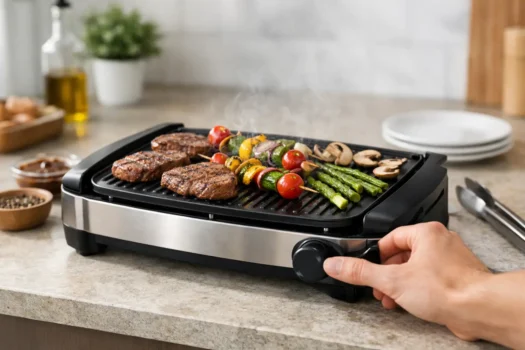
Apartment rules, winter weather, and small patios have a way of changing what matters in a grill. If you are asking are electric grills worth it, you are probably not chasing barbecue bragging rights. You want something that fits your space, works without drama, and cooks dinner reliably. That is the right way to frame the question.
The short answer is yes – electric grills are worth it for some buyers, and a bad fit for others. They solve real problems that gas and charcoal cannot always solve, especially where open flames are restricted. But they also come with clear limits in heat output, smoke flavor, and searing performance. If you expect them to cook exactly like a full-size gas grill, you will be disappointed. If you judge them by convenience, control, and practical use, they make a lot more sense.
Are electric grills worth it for real grilling?
That depends on what you mean by real grilling. If your definition is weeknight burgers, chicken breasts, vegetables, sausages, and the occasional steak on a balcony or small deck, an electric grill can absolutely do the job. If your definition is high-heat steakhouse searing, long low-and-slow barbecue, or feeding a crowd every weekend, electric is usually the wrong tool.
This is where a lot of buying advice goes off the rails. Electric grills are often judged against the best-case version of gas or charcoal. That is not how most people actually shop. Many electric buyers are comparing an electric grill to no grill at all because of HOA rules, condo regulations, or limited outdoor space. In that situation, the question is not whether electric beats charcoal on flavor. The question is whether it gives you a usable, low-hassle way to cook outside.
For that buyer, the answer is often yes.
Where electric grills make the most sense
Electric grills earn their keep in places where space, rules, and simplicity matter more than maximum heat. If you live in an apartment or condo with restrictions on propane tanks or open flame, electric may be the only realistic option. It plugs in, heats up, and avoids storing fuel. That alone removes a lot of friction.
They also make sense for buyers who do not grill often enough to justify a larger gas setup. A decent electric grill can be easy to roll out, preheat, cook on, and clean without the maintenance that comes with burners, igniters, propane refills, ash, or pellet storage. For a lot of households, that means the grill gets used more often.
There is also a climate angle, but not in the trendy sense. In cold or windy areas, small electric grills can be easier to manage than you might think, especially if you are cooking a couple of portions and have a sheltered outlet nearby. They are not miracle workers in bad weather, but they can be less of a project than lighting charcoal or dealing with propane in rough conditions.
The performance trade-offs you should expect
The biggest mistake with electric grills is expecting too much heat. Most electric models simply do not match the top-end temperature and heat recovery of a good gas or charcoal grill. When you open the lid, load cold food, or cook thicker cuts, recovery can be slower. That affects searing and overall cooking speed.
Steaks are where this shows up first. Some better electric grills can produce respectable grill marks and decent browning, especially if the grates are well designed and the lid stays closed. But many struggle to create the deep crust people expect from a strong gas burner or charcoal fire. You can still cook a steak well on electric. You are just less likely to get that aggressive, high-heat exterior.
Smoke flavor is another limitation. Without combustion, you are not getting the same flavor profile as charcoal or wood. Some electric grills can still produce enjoyable grilled taste from browning, rendered fat, and contact with hot grates. But if you are buying for classic live-fire flavor, electric will feel compromised.
Capacity can be an issue too. Most electric units are built for smaller households. That is fine for two to four people. It gets less appealing when you are trying to cook for a party, manage multiple temperature zones, or turn out several rounds of food without delays.
The upside owners actually notice
The strongest case for electric is not romance. It is repeatability.
Electric grills are simple to start and simple to control. Plug them in, set the temperature, wait for preheat, and cook. That matters more than people think. A grill that works every time with minimal setup often gets used more than a better-performing grill that feels like a chore.
Temperature stability is another real advantage, especially for beginners. You are not adjusting vents, monitoring fuel levels, or fighting flare-ups to the same degree. On a well-built electric grill, cooking chicken, fish, vegetables, or burgers can feel straightforward and predictable. That is valuable if you want reliable food, not a hobby built around fire management.
Cleanup is usually easier too. There is no ash, and grease management tends to be more contained. You still need to clean the grates and grease tray regularly, but ownership is generally lower hassle than charcoal and often cleaner than a neglected gas grill.
For some buyers, indoor-outdoor flexibility also matters. Certain electric grills are designed for patios, balconies, or even enclosed spaces where local rules allow them. That does not make them universal, and you still need to follow safety guidance, but it does make them more adaptable than fuel-burning alternatives.
Are electric grills worth it compared with gas?
Against gas, electric wins on convenience, storage, and rule-friendly operation. It loses on power, versatility, and often cooking capacity.
A gas grill is still the better all-around choice for most homeowners with the space and freedom to use one. You get more heat, faster recovery, larger cooking surfaces, and better flexibility for direct and indirect cooking. If your goal is backyard grilling as a regular part of home cooking, gas usually offers more headroom.
Electric becomes more compelling when gas is inconvenient or impossible. No propane tank, no refill trips, no burner maintenance, and no flame restrictions can outweigh the performance gap for a lot of people. It is not about electric being better in a vacuum. It is about whether the trade is worth it for your setup.
Cost, durability, and long-term ownership
Electric grills range from cheap disposable-feeling units to better-built models that hold temperature more consistently and last longer. That build gap matters. A flimsy electric grill with weak grates and poor heat retention will confirm every criticism people make about the category.
Operating cost is usually reasonable, and you are not buying fuel. But lower running costs do not cancel out weak construction. Pay more attention to grate quality, lid fit, grease handling, weather resistance, and how well the stand, housing, and controls are built. Long-term ownership depends less on fancy features and more on whether the thing feels stable and easy to maintain.
Preheat time also matters more than spec sheets suggest. Some electric grills claim attractive temperatures but take too long to get there or lose too much heat once food hits the grates. Real-world usability matters more than a number on a box.
At Global Grill Guide, that is the line we care about most: not whether a grill sounds good in marketing copy, but whether it performs consistently enough to justify the space it takes up and the money it costs.
Who should buy one and who should skip it
Buy an electric grill if you live somewhere with flame restrictions, cook for a small household, want easier cleanup, and care more about convenience than maximum heat. It is also a sensible choice if you are a first-time grill buyer who wants something manageable and predictable.
Skip it if your priority is searing steaks hard, cooking for larger groups, or getting close to charcoal flavor. You should also skip it if you already have the space and approval for a quality gas grill and know you grill often. In that case, electric may feel like a compromise you outgrow quickly.
There is one more group in the middle: people who want a secondary grill. For them, electric can be surprisingly useful. It can handle quick weeknight cooking or serve as a compact option for a screened porch, small patio, or seasonal setup where hauling fuel is more trouble than it is worth.
The best way to think about electric grills is simple. They are not the best grills overall. They are the best answer to a specific set of constraints. If those constraints are yours, an electric grill can be absolutely worth it. If they are not, you are probably better off with gas or charcoal.
Buy the grill that fits the way you actually cook, not the one that wins an argument on paper.