 globalgrillguidecom
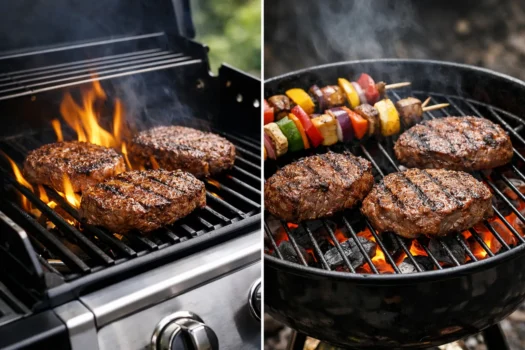
Ask ten backyard cooks about gas vs charcoal grill taste and you will usually get ten strong opinions and not many useful details. The real answer is less dramatic than grill marketing and more useful for buyers: yes, there is a taste difference, but it is not always huge, and it depends a lot on what you cook, how hot you cook it, and whether smoke is part of the equation.
If you are trying to decide which grill to buy, taste matters. But taste should be judged alongside heat control, cleanup, weeknight convenience, and how often you will realistically use the thing. A grill that makes slightly better chicken once a month is not automatically the better choice if the other one gets used three times a week.
Also read “Gas vs Charcoal Grills – Which One Actually Fits Your Life?”
Table of Contents
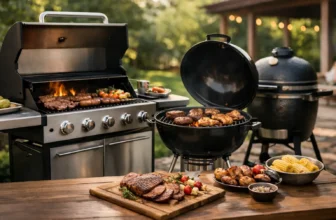
Gas vs charcoal grill taste: what actually changes flavor?
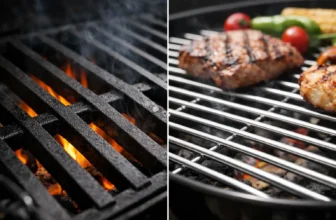
Charcoal adds combustion byproducts to the cooking environment. That sounds technical, but the result is simple: food picks up a more distinct grilled flavor. When charcoal burns, especially lump charcoal or briquettes mixed with drippings hitting hot coals, it creates smoke, vaporized fats, and aromatic compounds that cling to the surface of meat and vegetables. That is the classic cookout flavor many people picture when they say something tastes “grilled.”
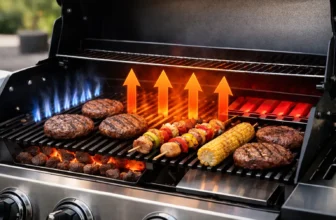
Gas grills do not create that same base flavor on their own. Propane or natural gas burns cleaner, so the grill contributes less flavor directly. On a gas grill, most of the grilled taste comes from browning, surface char, seasoning, marinades, and rendered fat hitting heat deflectors or flavorizer bars. You can still make very good food on gas. You just get a lighter smoke profile unless you intentionally add wood chips or another smoke source.
This is why the debate gets messy. Some people describe charcoal as richer, smokier, and more authentic. Others compare a well-run gas grill and a charcoal grill on burgers or hot dogs and honestly do not notice enough difference to care. Both reactions can be true.
Charcoal usually wins on flavor, but not by the same margin for every food
For steaks, burgers, bone-in chicken, and anything fatty enough to drip and sizzle over live fire, charcoal has an edge. The flavor is more noticeable because the food benefits from both smoke and aggressive browning. A charcoal-cooked ribeye often tastes deeper and more savory than the same steak on gas, especially if the charcoal setup produces strong radiant heat and some real crust.
For delicate foods, the gap narrows. Fish fillets, shrimp, sliced vegetables, and lean chicken breasts can taste excellent on gas because they do not need as much smoke to feel complete. In some cases, gas is actually easier to manage for these foods because the cleaner heat reduces the risk of bitter smoke or over-char.
Low-and-slow barbecue is a separate issue. If you are trying to build smoke flavor into ribs, pork shoulder, or brisket, charcoal is far better suited than a standard gas grill. A gas grill can fake some of that result with smoker boxes or foil packets of wood chips, but it usually takes more effort and still does not match the flavor depth of charcoal with wood chunks.
Why some people barely notice a difference
A lot of side-by-side taste claims ignore how people actually cook at home. If you are grilling pre-seasoned burgers for a crowd, using cheese, buns, condiments, and a fairly short cook time, the flavor difference between gas and charcoal may be smaller than expected. The meat quality, seasoning, and doneness can matter more.
The same goes for heavily marinated chicken or sauce-coated foods. Once you add sugar, spice rubs, barbecue sauce, or teriyaki glaze, the subtle advantage of charcoal gets partly covered up. Not erased, but reduced.
There is also a skill factor. A poorly managed charcoal fire can produce dirty smoke, temperature swings, and bitter flavor. A properly preheated gas grill can turn out cleaner, more evenly cooked food than charcoal in the hands of someone rushing the setup. Taste is not just about fuel type. It is also about execution.
Heat matters as much as smoke
When buyers focus only on smoke flavor, they miss another big part of the equation: heat quality. Charcoal often delivers stronger radiant heat, especially in compact grills where the coals sit relatively close to the grate. That helps create a darker sear and more texture on the surface of food.
Gas grills can absolutely get hot, but performance varies a lot by build quality, burner design, grate material, and how well the grill retains heat. A strong gas grill with heavy grates can produce excellent browning. A cheap gas grill with weak burners and poor heat retention can leave food tasting flatter, not just because it uses gas, but because it never gets hot enough to build the right crust.
This is one reason broad statements about gas vs charcoal grill taste are not always useful. A solid charcoal kettle and a flimsy gas grill are not a fair comparison. Neither is a premium gas grill against a bargain charcoal setup with poor airflow and inconsistent fuel.
Can a gas grill taste like charcoal?
Not fully, but it can get closer than some people think.
If you preheat the grill properly, cook at the right temperature, and use wood chips, a smoker tube, or a dedicated smoke box, a gas grill can add a noticeable layer of smoke flavor. For weeknight grilling, that may be enough. Plenty of homeowners are happy with that trade-off because the convenience is hard to ignore.
Still, added smoke on gas usually feels like an enhancement, not a full replacement for cooking over charcoal. The base flavor is different. Charcoal changes the whole cooking environment. Gas with wood chips adds flavor on top of a cleaner burn.
That distinction matters if taste is your top priority. If your goal is the strongest traditional grilled flavor, charcoal still has the advantage.
Gas vs charcoal grill taste in real ownership terms
This is where buying decisions get more practical.
If you grill often, especially on weeknights, gas makes a strong case. Fast startup, easier temperature adjustment, and simpler cleanup mean you are more likely to use it. That matters. The best-tasting grill is not helping much if it sits covered in the corner because lighting charcoal feels like a project every time.
Charcoal asks more from the owner. You need to light it, wait for it, manage airflow, deal with ash, and pay closer attention during the cook. For some people, that is part of the appeal. For others, it gets old fast. The flavor payoff is real, but so is the extra effort.
A lot of buyers know, deep down, which category they belong to. If you want ritual, fire management, and stronger flavor, buy charcoal. If you want reliable results with less friction, buy gas and be honest that you are trading some flavor potential for convenience.
Which grill should you buy if taste is the main concern?
If taste is clearly the top priority, charcoal is the safer answer. It delivers more smoke character, stronger live-fire flavor, and better potential for traditional grilling results across a wide range of foods.
If taste matters but convenience matters almost as much, gas is often the smarter long-term purchase. A good gas grill still produces excellent food, and for many households the consistency and ease of use outweigh the flavor gap. That is especially true if most of your cooking is burgers, chicken pieces, vegetables, sausages, and quick dinners rather than smoke-heavy barbecue.
If you are stuck between the two, think less about one perfect cook and more about your actual routine. How often do you grill? How much time do you want to spend lighting, managing, and cleaning? Are you chasing the best possible steak flavor, or are you trying to cook dinner outside without turning it into a weekend project?
That is the lens we use at Global Grill Guide because ownership reality matters more than internet mythology. The taste difference exists. It is just not the only difference that should drive the purchase.
The honest answer on gas vs charcoal grill taste
Charcoal usually tastes better. That is the straight answer. It gives food more smoke, more fire-cooked character, and often better searing conditions.
But the gap is not always dramatic, and it is not always worth the extra work for every cook. A good gas grill can turn out food that is satisfying, consistent, and very close for many everyday meals. For some buyers, that is the better fit.
Buy the grill that matches the way you cook when nobody is trying to impress the neighbors. That is usually the one you will enjoy using, keep using, and get the best food from over time.
| Feature | Gas Grill | Charcoal Grill | Winner |
|---|---|---|---|
| Overall grilled flavor | Mild, clean flavor | Rich, smoky, traditional BBQ taste | Charcoal |
| Smoke intensity | Low without accessories | Naturally high | Charcoal |
| Searing potential | Excellent on premium models | Excellent with strong radiant heat | Charcoal (slight edge) |
| Best for steaks & burgers | Very good | Outstanding | Charcoal |
| Best for fish & vegetables | Excellent temperature control | Good but requires more attention | Gas |
| Low-and-slow BBQ | Limited without accessories | Ideal for smoking | Charcoal |
| Flavor consistency | Very consistent | Depends on fire management | Gas |
| Ease of use | Instant ignition and easy control | Requires lighting and airflow management | Gas |
| Cleanup | Quick | Ash removal required | Gas |
| Best for weeknight grilling | Excellent | Less convenient | Gas |
| Best for BBQ enthusiasts | Good with smoke accessories | Excellent | Charcoal |
| Overall verdict | Best balance of convenience and taste | Best flavor for traditional grilling | Depends on your priorities |
FAQ
Does food really taste better on a charcoal grill?
Generally, yes. Charcoal produces smoke and combustion compounds that give food a deeper, smokier flavor. The difference is most noticeable on steaks, burgers, chicken, and other fatty meats.
Can a gas grill taste like charcoal?
Not completely. You can add wood chips, smoker boxes, or smoker tubes to increase smoke flavor, but a gas grill still produces a cleaner burn that doesn’t fully replicate charcoal’s distinctive taste.
Is the taste difference between gas and charcoal noticeable?
It depends on the food. Thick steaks, burgers, ribs, and barbecue show the biggest flavor difference, while vegetables, seafood, and heavily marinated foods often taste very similar on either grill.
Why does charcoal create more flavor than gas?
As charcoal burns, dripping fat vaporizes on the hot coals and creates flavorful smoke that coats the food. Gas burns much cleaner, so most of its flavor comes from browning and caramelization rather than smoke.
Should I buy a gas or charcoal grill if flavor is my priority?
If maximum flavor is your main goal, choose charcoal. If you grill frequently and value quick startup, easy temperature control, and simple cleanup, a quality gas grill offers excellent results with far greater convenience.