 globalgrillguidecom
Pellet grills usually don’t fail all at once. They get a little slower to ignite, a little worse at holding temp, and a little dirtier after each cook until one day you’re dealing with wild temperature swings or a hopper full of swollen pellets. That’s why a pellet grill maintenance checklist matters. It’s less about keeping your grill pretty and more about keeping it dependable when dinner is on the line.
Unlike a basic charcoal kettle, a pellet grill has moving parts, electrical components, airflow pathways, and fuel that reacts badly to moisture. Ignore maintenance long enough and performance drops fast. The good news is that most of the work is simple, and most expensive problems start as small, preventable ones.
Table of Contents
A practical pellet grill maintenance checklist
The easiest way to stay ahead of problems is to break maintenance into timing buckets: after every cook, every few cooks, monthly, and seasonally. That approach is more realistic than pretending you’ll do a full teardown every weekend.
After every cook
Start with the grease system. Once the grill is cool enough to handle safely, scrape or wipe down heavy grease buildup on the drip tray area and make sure the grease bucket or cup isn’t close to overflowing. Grease fires in pellet grills usually come from neglect, not bad luck.
Next, look at the grates. You do not need to make them spotless after every burger night, but you should brush off stuck food and carbon while they’re still slightly warm. If residue keeps stacking up, it holds moisture, affects flavor, and makes deep cleaning much harder later.
Check the hopper before you cover the grill. If rain or humidity is an issue where you live, don’t leave questionable pellets sitting for weeks. Pellets that absorb moisture can crumble into sawdust, jam the auger, or burn inconsistently. If the grill will sit unused for a while, empty the hopper.
Finally, give the inside a quick visual check. You’re looking for obvious ash buildup, grease pooling, loose foil if you use it on the drip tray, or anything out of place. This takes less than a minute and catches problems before the next cook.
Every 2 to 5 cooks
Ash management is the big one here. Even efficient pellet grills leave ash in the fire pot and lower barrel, and too much of it interferes with ignition and airflow. Vacuum the fire pot and surrounding cook chamber with an ash-safe shop vacuum only after the grill is fully cool. If your model has an easy ash cleanout system, use it, but still verify the fire pot itself is clear.
This is also the right time to clean the drip tray more thoroughly. Built-up grease and carbon don’t just look bad. They can affect heat distribution and increase the odds of flare-ups during hotter cooks. Some owners line trays with foil for convenience, which is fine if it fits cleanly and doesn’t block airflow or grease drainage. Sloppy foil jobs cause their own problems.
Wipe down the temperature sensor inside the cook chamber as well. A dirty RTD probe can feed the controller bad information, which leads to uneven or inaccurate temps. You don’t need harsh cleaners here. A soft cloth or non-abrasive pad is usually enough.
Monthly or every 20 to 30 hours of cooking
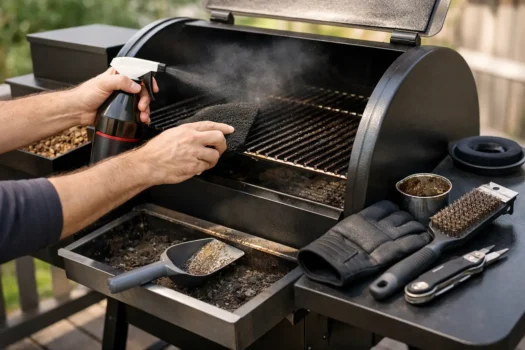
At this point, it’s worth doing a more complete interior clean. Remove the grates, drip tray, and heat diffuser. Scrape off heavy carbon, vacuum all loose debris, and inspect the fire pot for corrosion, warping, or blocked air holes. If the pot is starting to deteriorate, deal with it early. Waiting rarely makes the repair cheaper.
Look at the auger intake and hopper floor for excess pellet dust. A little sawdust is normal, but a heavy layer can affect feed consistency over time. If you notice squealing, grinding, or uneven pellet feeding, don’t keep running the grill and hope it sorts itself out. That usually means a jam is forming or the auger motor is under strain.
Check the door seal and lid alignment too. Not every pellet grill seals tightly by design, but a lid that suddenly leaks more smoke than usual or sits unevenly may have a hinge or fit issue. Small leaks can be harmless. Bigger changes often show up as reduced efficiency and weaker temp control.
Seasonal maintenance
A seasonal check is where long-term ownership costs get controlled. Inspect the power cord for wear, the controller face for moisture damage, the fan for debris, and all visible fasteners for rust or loosening. If your grill lives outdoors full time, these checks matter even more.
Clean the exterior with a grill-safe cleaner or mild soap and water, then inspect paint loss, rust spots, and corrosion around legs, shelves, and seams. Surface rust is manageable if caught early. Ignore it through one wet season and it can turn into structural deterioration.
If you use a cover, inspect that too. A damaged cover can trap water just as easily as it blocks it. Covers help, but they are not magic. In humid climates, they can create a damp environment if the grill is put away dirty or wet.
The parts that deserve extra attention
Not every area of a pellet grill needs the same level of attention. A few components do most of the heavy lifting, and when they get dirty or worn, performance drops fast.
Fire pot and ignition area
This is the heart of combustion. If ash piles up here, startup gets slower and flame quality gets weaker. If pellets partially burn and pile up, you can end up with failed ignitions or sudden flare-ups on restart. Keep this area clean and dry.
RTD probe or temperature sensor
When owners complain that a pellet grill is running 40 degrees off, the sensor is one of the first places to look. Grease and carbon act like insulation. That means the controller may react late or feed pellets based on bad readings.
Hopper and auger path
Pellets should move smoothly and stay dry. That sounds obvious, but it’s where many avoidable repairs begin. Cheap pellets, humid storage, and leaving old fuel in the hopper for long stretches all increase the chance of auger jams.
Grease management system
The drip tray, drain channel, and grease bucket need to stay open and functional. If grease has nowhere to go, it pools. Once that happens, a hot cook can turn into a grease fire quickly.
Cleaning mistakes that cause more trouble
The biggest mistake is overcleaning with the wrong tools. You do not need to pressure wash the inside of a pellet grill or soak electrical areas with degreaser. Water and electronics are a bad mix, and leftover moisture can ruin pellets on the next cook.
Another common mistake is using aggressive metal tools on coated surfaces. A little scraping is fine where appropriate, but gouging the finish on trays or interior panels shortens their life. Clean thoroughly, not recklessly.
There’s also the habit of treating temperature problems like a controller issue when the real cause is basic neglect. Before blaming the electronics, clean the fire pot, sensor, and grease-coated internals. Pellet grills are more sensitive to airflow and buildup than many first-time owners expect.
When maintenance depends on how you cook
A low-and-slow weekend cook every couple of weeks is different from running the grill three nights a week at mixed temperatures. High-heat cooks create different residue than long smoking sessions. Greasy foods like chicken thighs and burgers load the drip system faster than leaner cooks. If you cook often, your pellet grill maintenance checklist should be more aggressive than the manual’s minimum schedule.
Climate matters too. Dry regions are easier on pellets and steel. Wet, humid, or coastal environments are not. In those areas, hopper management, rust prevention, and cover use deserve extra attention. If winter storage is part of your routine, empty pellets before the off-season and do a full clean before the grill sits.
A simple routine that actually gets done
If you want a checklist you’ll follow, keep it short. After each cook, brush grates, empty grease if needed, and check pellet condition. Every few cooks, vacuum ash and wipe the sensor. Monthly, do a deeper interior clean and inspect the hopper, auger area, and fire pot. Seasonally, inspect for rust, wear, electrical issues, and weather damage.
That routine is enough for most home owners. It won’t make a mediocre pellet grill into a great one, but it will help a good one stay reliable longer and cook closer to the way it did when it was new.
At Global Grill Guide, we tend to judge grills the same way owners eventually do: not by how they look on day one, but by how they perform after a season of real use. Maintenance is a big part of that story. A pellet grill that gets basic care is usually safer, steadier, and cheaper to own. And if you’re spending real money on outdoor cooking gear, that’s the result that actually matters.
| Tip | Why It Helps |
|---|---|
| Vacuum the fire pot every 2–5 cooks | Prevents ignition issues and improves temperature stability. |
| Never leave damp pellets in the hopper | Moisture causes pellet swelling, auger jams, and poor combustion. |
| Wipe the RTD temperature probe regularly | A clean sensor provides more accurate temperature readings. |
| Empty the grease bucket before it overflows | Reduces the risk of dangerous grease fires. |
| Deep clean before long-term storage | Prevents rust, mold, and pellet damage during the off-season. |
FAQ
How often should you clean a pellet grill?
Brush the grates and check the grease system after every cook. Vacuum ash from the fire pot every 2–5 cooks, perform a deep interior cleaning every 20–30 cooking hours, and inspect the entire grill seasonally.
What happens if you don’t clean a pellet grill?
Ash buildup can cause ignition failures, unstable temperatures, poor airflow, and excessive smoke. Grease accumulation also increases the risk of dangerous grease fires.
Should you empty the pellet hopper after every use?
Not always. If you’ll use the grill again within a few days in dry weather, pellets can stay in the hopper. If the grill will sit unused for weeks or is exposed to humidity, it’s best to empty the hopper to prevent moisture damage.
How do you clean the temperature sensor on a pellet grill?
Allow the grill to cool completely, then gently wipe the RTD temperature probe with a soft cloth or a non-abrasive pad. Avoid harsh chemicals or aggressive scraping that could damage the sensor.
What is the most important part of pellet grill maintenance?
Keeping the fire pot, ash chamber, grease management system, and temperature sensor clean has the greatest impact on reliable ignition, accurate temperature control, cooking performance, and the overall lifespan of the grill.