
 globalgrillguidecom
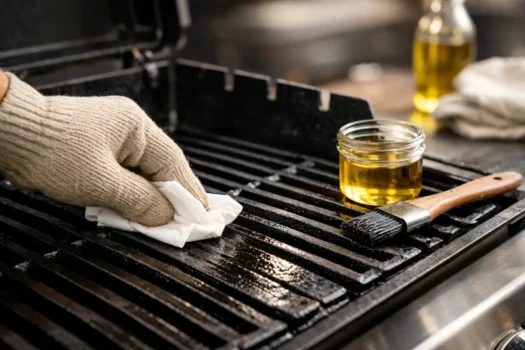
If your cast iron grates are sticking, rusting, or turning dull and patchy after a few cooks, the fix usually is not a new grill. It is learning how to season cast iron grates the right way and keeping up with that finish over time. Done properly, seasoning helps with rust protection, cleanup, and day-to-day cooking performance. Done poorly, it leaves you with flaky buildup and a lot of frustration.
Table of Contents
What seasoning actually does
Seasoning is a thin layer of oil that has been heated until it bonds to the metal. That bonded layer gives cast iron some protection from moisture and makes the surface less prone to sticking. It is not a magic nonstick coating, and it will not hide neglect. If grates are left wet, blasted with harsh chemicals, or caked with old grease, seasoning will not save them.
This matters most with cast iron because it performs well but asks more from the owner than stainless steel or porcelain-coated grates. Cast iron holds heat well and can produce strong sear marks, but it also rusts fast if maintenance slips. That is the trade-off.
Before you season cast iron grates, check the grate type
A lot of people assume every dark grate is bare cast iron. That is not always true. Some are porcelain-coated cast iron, and those should not be seasoned the same way.
If the grate has a smooth, glossy finish, it may be porcelain-coated. If the coating is intact, skip the heavy seasoning process. Clean it gently and keep it dry. Adding repeated layers of oil to porcelain-coated grates can create sticky residue rather than a useful finish.
If the grate is bare cast iron, usually with a more matte or raw-metal look once cleaned, seasoning makes sense. If you are unsure, check your grill manual before you start.
How to season cast iron grates step by step
The process is simple, but the details matter. You want a clean surface, a very light coat of oil, and enough heat to set that oil into the metal.
1. Clean the grates first
If the grates are new, wash off any factory residue with warm water and mild soap, then dry them completely. If they are used, scrub off food debris, loose rust, and old flaky buildup first. A grill brush, scraper, or non-metal scrub pad usually works. For heavier rust, steel wool can help, but do not stop halfway. Any loose material left behind will interfere with the new layer.
This is one of the biggest mistakes owners make. They oil over grime and call it seasoning. That just bakes old residue onto the grate.
2. Dry them completely
Moisture is the enemy here. After washing or scrubbing, dry the grates with a towel and then place them on the grill over low heat for several minutes to drive off any leftover moisture. If the grate still has hidden damp spots, you are setting up rust under the oil.
3. Apply a thin coat of oil
Use a high-smoke-point oil such as canola, grapeseed, avocado, or vegetable oil. Put a small amount on a cloth or paper towel and wipe the grates down lightly on all sides. Then wipe them again with a clean towel to remove excess.
The keyword is thin. You do not want shiny, wet grates. Too much oil turns gummy, uneven, or flaky once heated. A light film works better than a heavy coat every time.
4. Heat the grill to set the coating
Put the grates in the grill and heat it to around 400 to 450 degrees Fahrenheit for about 30 to 45 minutes. Keep the lid closed as much as possible. You may see some smoke at first, which is normal.
Once that cycle is done, let the grates cool. For brand-new bare cast iron or grates that were stripped down after rust, doing two or three light rounds is a good idea. That usually builds a better base than one heavier round.
The best oil for seasoning cast iron grates
There is a lot of overthinking around oil choice. For grill grates, the best oil is usually the one with a reasonably high smoke point that you can apply thinly and consistently.
Canola oil is a practical choice. Grapeseed works well too. Avocado oil handles heat well, though it costs more. Standard vegetable oil is fine for most people. You do not need anything fancy.
What tends to work less well is using butter, low-smoke-point cooking sprays, or slathering on animal fat as your primary seasoning layer. Those can leave uneven residue, especially if your heat is inconsistent. For routine cooking, animal fat is fine. For building seasoning, neutral oils are more predictable.
How often should you season cast iron grates?
It depends on how often you grill, what you cook, and how you clean. There is no fixed schedule that fits everyone.
If you grill several times a week, a light maintenance coat after cleaning can go a long way. If you grill occasionally, a more thorough re-seasoning every so often may be enough. The real signal is the surface itself. If the grates look dry, gray, patchy, or start showing rust, it is time.
For many owners, the most realistic routine is simple: clean after each cook, burn off residue, brush the grates, and wipe on a very light coat of oil while the grates are still warm. That takes less effort than letting them decline and trying to recover them later.
Common mistakes that ruin the seasoning
Most seasoning problems come from a few preventable habits.
Using too much oil is the biggest one. Thick oil layers do not build a better finish. They create sticky spots and carbon buildup. Cleaning too aggressively is another issue. If you use harsh degreasers every time or scrape with unnecessary force, you keep removing what you just built.
Leaving the grates exposed to moisture is just as damaging. Rain, humidity, and even a damp grill interior can start surface rust quickly. If your grill lives outside, seasoning helps, but a good cover and dry storage habits matter just as much.
There is also the issue of unrealistic expectations. Seasoned cast iron grill grates will not behave exactly like a well-seasoned cast iron skillet. Grates face open flame, dripping grease, weather swings, and frequent brushing. The finish will be less uniform, and that is normal.
What to do if your grates already have rust
Rust is not always the end of the grate. Light to moderate rust can usually be removed and followed by a fresh seasoning cycle.
Start by scrubbing off the rust thoroughly. If needed, use steel wool or a grill-safe abrasive pad until you get back to solid metal. Wash, dry fully, and then season with two or three light rounds of oil and heat. If the rust has deeply pitted the metal or the grate is starting to crack, replacement may make more sense than restoration.
This is where long-term ownership matters more than one-time cleanup. A heavily rusted grate can often be brought back, but if you keep storing the grill wet or skipping maintenance, you will be repeating the same job again soon.
Cleaning after cooking without stripping the finish
The best time to clean cast iron grates is while they are still warm. Burn off leftover residue for a few minutes, then brush the surface. If food is really stuck, a small amount of water on a hot grate can help loosen debris, but do not soak the grates or leave them wet.
After brushing, wipe on a very light coat of oil if the surface looks dry. That small step is what keeps seasoning from becoming a major project. No hype, no special trick, just consistency.
If you use sugary sauces often, expect more buildup and more frequent touch-ups. Sweet glazes burn onto grates faster than simple proteins or vegetables. Cooking style affects maintenance as much as grate material does.
Is seasoning cast iron grates worth the effort?
For bare cast iron, yes – if you actually want the benefits that make cast iron appealing in the first place. You get strong heat retention, good browning, and a grate that can last a long time if you take care of it. But bare cast iron is not low-maintenance. If you want something more forgiving, stainless steel is easier to live with.
That is the real trade-off. Cast iron rewards attention. It punishes neglect. If you are fine with a little routine upkeep, seasoning is absolutely worth doing. If you know you are not going to keep the grill dry or stay on top of cleaning, another grate material may fit you better.
A well-maintained grate does not need to look perfect. It needs to stay protected, cook evenly, and clean up without a fight. That is the standard to aim for, and once you get there, keeping it there is much easier than starting over.
| Tip | Why It Works |
|---|---|
| Apply very thin layers of oil | Thin coats bond better and won’t become sticky or flaky. |
| Always dry the grates before seasoning | Even small amounts of moisture can lead to rust under the oil layer. |
| Use high smoke-point oils like canola or grapeseed | They create a stronger, more durable seasoning than butter or low smoke-point oils. |
| Oil the grates while they’re still warm after cooking | A quick maintenance coat helps prevent rust and extends the seasoning. |
| Don’t season porcelain-coated cast iron grates | Oil can create gummy buildup instead of a protective finish on coated surfaces. |
FAQ
How do you season cast iron grill grates?
Clean and dry the grates completely, apply a very thin coat of high smoke-point oil, then heat the grill to 400–450°F (204–232°C) for 30–45 minutes. For new or heavily restored grates, repeat the process two or three times.
What is the best oil for seasoning cast iron grates?
Canola oil, grapeseed oil, avocado oil, and vegetable oil are all excellent choices because they have high smoke points and create durable seasoning layers.
How often should cast iron grill grates be seasoned?
Lightly oil the grates after regular cleaning whenever they begin to look dry. Perform a full seasoning whenever the surface becomes dull, patchy, or starts showing signs of rust.
Can rusty cast iron grill grates be restored?
Yes. Light to moderate rust can usually be removed with a grill brush or steel wool. After cleaning the metal back to a solid surface, dry it thoroughly and apply two or three fresh seasoning cycles.
Should porcelain-coated cast iron grates be seasoned?
No. If the porcelain coating is intact, seasoning isn’t necessary and can actually leave sticky residue. Simply clean the grates gently, avoid damaging the coating, and keep them dry to prevent rust where the coating remains intact.