
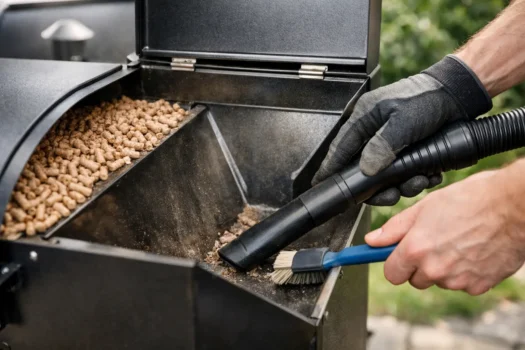
A pellet grill can be spotless on the cooking grate and still cook poorly if the hopper is full of damp pellets, sawdust, and leftovers from three months ago. Knowing how to clean pellet hopper parts properly is less about making the grill look tidy and more about protecting the auger, maintaining steady fuel flow, and avoiding the kind of mid-cook flameout that ruins dinner.
The job is simple, but timing and technique matter. You do not need to empty the hopper after every cook. You do need to stop treating pellets like they are unaffected by heat, humidity, or time.
When a Pellet Hopper Needs Cleaning
For most backyard cooks, cleaning the hopper every few bags of pellets is reasonable. If you use your grill weekly, inspect it at least once a month. The better schedule depends on where the grill lives and what pellets you burn.
A covered grill stored in a dry garage can hold clean, fresh pellets longer than one parked on an exposed patio through humid summer weather. Pellets absorb moisture easily. Once they soften, swell, or break down into heavy sawdust, they do not feed consistently through the auger. That can cause temperature swings, jams, excess smoke, or a fire that goes out during a long cook.
Clean the hopper immediately if you notice powder collecting at the bottom, pellets that look dull or swollen, a musty smell, inconsistent pellet feeding, or an auger that sounds like it is laboring. Also empty it before storing the grill for an extended period, especially if rain, snow, or high humidity is part of the forecast.
Changing wood flavors is a separate decision. A small amount of leftover pellets will not ruin a cook. But if you are moving from a strong mesquite blend to a mild fruitwood for fish or poultry, emptying the hopper gives you a more predictable result.
What You Need Before You Start
Wait until the grill is completely cool, then unplug it. This is not optional. The firepot and internal components can stay hot longer than expected, and a vacuum should never be used around warm ash or live embers.
Keep a clean bucket or storage container nearby if the pellets are dry, firm, and worth saving. You will also want a small scoop, a shop vacuum rated for fine debris, and a dry cloth or soft brush. Do not use water, degreaser, or a garden hose inside the hopper. Moisture is the problem you are trying to remove.
If your grill has a hopper cleanout chute, check that the container below it is large enough before opening the chute. A full hopper can empty faster than people expect.
How to Clean a Pellet Hopper Step by Step
Empty the pellets first
Start by removing as many pellets as possible. On grills with a cleanout door or chute, open it and let the pellets run into a bucket. Gently tap the side of the hopper if pellets bridge over the opening, but do not strike the grill hard or force pellets down toward the auger.
If there is no cleanout system, use a scoop to remove the bulk of the pellets by hand. A dry plastic cup works, though a dedicated scoop is less likely to spill. Save only pellets that are hard, smooth, and dry. Pellets that crumble between your fingers, feel soft, or leave an unusual amount of dust behind belong in the trash, not back in your fuel supply.
Do not pour questionable pellets into a new bag just because they look mostly fine. One damp batch can contaminate the rest, and pellets are cheaper than an auger repair.
Vacuum the hopper and auger opening
With the hopper empty, vacuum the loose sawdust from the bottom corners and around the auger intake. This fine dust is what causes many feeding problems. It packs around the auger entrance, restricts movement, and can leave the grill feeding unevenly even when the pellets above it look normal.
Use a narrow vacuum attachment if you have one. Work slowly around seams, corners, and the opening where pellets enter the auger tube. Avoid pushing the attachment deep into the tube or trying to vacuum the entire auger path from the hopper side. The goal is to remove loose debris, not to dislodge internal components.
A soft, dry brush can loosen stubborn dust before vacuuming. Skip compressed air unless you are working outdoors and are prepared to clean the rest of the grill afterward. It tends to send fine pellet dust into the controller area, fan housing, and every nearby surface.
Inspect what the hopper is telling you
Once clean, take a minute to inspect the hopper walls, drain chute, and auger opening. Look for rust, flaking paint, standing moisture, pellet residue stuck to the corners, or evidence that water entered through the lid seam.
A light coating of dust is normal. Wet, crusted material is not. If pellets have swelled inside the auger tube, the hopper cleaning alone may not solve the problem. You may need to run the auger empty according to your grill’s manual, or remove an auger jam if the motor will not turn. Do not keep cycling the power in hopes that a seized auger will clear itself. That can strain the motor or damage the drive components.
Refill with fresh, dry pellets
Wipe the hopper with a dry cloth, make sure the cleanout chute is fully closed, and add fresh pellets. Do not overfill it if rain is possible or if you will not cook again soon. A half-full hopper is easier to empty and less likely to sit for weeks absorbing moisture.
Before your next cook, run the grill through its normal startup procedure. Watch for pellets dropping into the firepot and listen for a steady auger sound. If the grill struggles to ignite after cleaning, inspect the firepot for ash buildup too. Hopper maintenance and firepot cleaning work together. A clean fuel path will not compensate for an ash-packed burn pot.
The Mistakes That Create Auger Problems
The biggest mistake is leaving pellets in the hopper through wet weather or long storage. A grill cover helps, but it is not an airtight moisture barrier. In humid areas, many owners get better results by storing pellets indoors in sealed containers and emptying the hopper whenever the grill will sit unused for more than a week or two.
Another common mistake is mixing the old dusty layer at the bottom with a fresh bag on top. The grill may run for a while, but the dust still reaches the auger eventually. Removing the old fuel before adding new pellets is less convenient in the moment and far more convenient than troubleshooting a jam during a brisket cook.
Finally, do not confuse cleaning the hopper with cleaning the whole grill. Grease, ash, and carbon buildup elsewhere still need regular attention. The hopper handles fuel storage and delivery. The firepot handles combustion. The grease system handles drippings. Each area has different risks and needs its own cleaning routine.
How Often Should You Empty the Hopper?
There is no single schedule that fits every owner. If you grill several times a week in a dry climate and use the same pellet flavor, you can often leave quality pellets in the hopper between cooks. Check the condition before firing up and vacuum out dust periodically.
Empty it more often if your grill stays outside, your area is humid, you buy pellets in bulk, or you regularly switch wood types. It is also smart to empty the hopper before a vacation, the end of the season, or any stretch when you know the grill will not be used.
The practical rule is simple: keep pellets in the hopper only when you expect to use them soon and can confirm they are dry. Treat the hopper as a short-term fuel bin, not a long-term storage container.
A clean hopper is not glamorous maintenance, but it is one of the few jobs that directly protects both cooking consistency and the parts that move fuel through your grill. Give it ten minutes before it becomes a problem, and your next cook is far more likely to start on your schedule.