
A backyard kitchen can look finished on installation day and become frustrating by the Fourth of July. The outdoor kitchen design trends worth paying attention to are not the ones built around a showroom photo. They are the ones that make cooking easier, protect expensive equipment, and still work after grease, weather, smoke, and heavy weekend use.
For most homeowners, the best trend is moving away from decorative outdoor counters with a grill dropped in the middle. Better setups are planned around the way people actually cook: where food lands, where hot tools go, how grease gets cleaned up, whether wind affects the burners, and whether there is room for more than one person outside.
Outdoor Kitchen Design Trends That Improve Real Cooking
The strongest current direction is the working kitchen, not the patio display. That means defining clear zones for grilling, prep, serving, and cleanup before choosing cabinet colors or countertop edges.
A grill needs landing space on both sides. One side should hold raw food, seasonings, and tools before cooking. The other needs enough room for cooked food, sheet pans, and a thermometer without forcing the cook to balance a hot grate brush on the counter. This sounds basic, but many compact islands sacrifice those few useful inches for a wider appliance lineup.
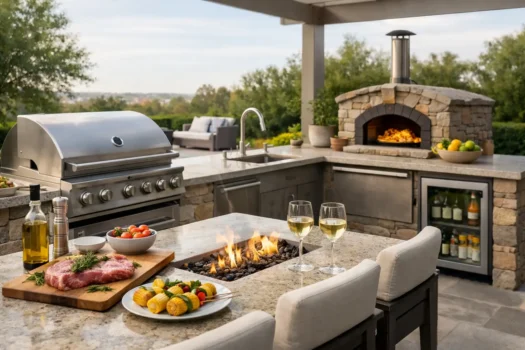
A straight run works well for a small patio and one primary cook. An L-shaped layout usually gives better separation between prep and heat, especially when guests gather nearby. A U-shaped kitchen can be efficient, but only if the center aisle stays open enough for doors, drawers, and people carrying trays. Bigger is not automatically better. A poorly planned large kitchen creates more steps and more unused countertop.
Another practical trend is positioning the grill at the edge of the kitchen rather than trapping it in the middle. It gives the cook a clearer path in and out, keeps heat away from the main prep area, and can reduce crowding when guests want to stand nearby.
Appliance packages are losing ground to focused setups
There is still plenty of demand for side burners, pizza ovens, refrigerators, sinks, smokers, ice makers, and specialty drawers. Some of these additions are genuinely useful. Many are expensive ways to create more things to clean, service, and winterize.
Start with the cooking equipment you use most. If you grill burgers, chicken, vegetables, and weeknight meals, put the budget into a capable built-in gas grill or a well-planned freestanding grill station. If low-and-slow barbecue is the main event, make room for a pellet grill, charcoal cooker, or ceramic kamado with safe clearance and a protected work surface.
A side burner makes sense for cooks who regularly make sauces, boil corn, or cook in pans outside. A refrigerator is helpful when the outdoor kitchen is far from the house or used for frequent entertaining. A sink can be valuable, but it brings plumbing, drainage, freeze protection, and maintenance requirements that are easy to underestimate. Do not add an appliance because it appears in a package deal.
Materials Are Becoming More Performance-Focused
The best outdoor kitchen material is not always the prettiest sample in a design studio. It needs to survive sun, rain, grease, temperature swings, cleaning chemicals, and the occasional dropped cast-iron pan.
Stainless steel cabinetry remains a sensible choice for many climates because it resists moisture and is easy to wipe down. Quality varies sharply, though. Thin stainless panels can rattle, flex, and show dents. Lower-grade stainless may stain or corrode near salt air. Look closely at door alignment, drawer slides, welded versus screwed construction, and whether replacement parts are realistically available.
Powder-coated aluminum cabinets are gaining ground because they do not rust and often offer more color options than stainless. They can be a strong choice in wet areas, but inspect the finish and hardware. A damaged coating may not ruin the cabinet, yet cheap hinges and latches still fail early.
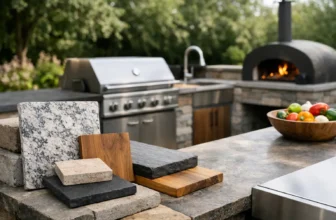
For counters, porcelain slabs and quality natural stone remain popular because they handle heat and weather better than many indoor-style surfaces. Granite is durable, though it may need periodic sealing depending on the slab and finish. Porcelain is highly stain-resistant and low-maintenance, but edges can chip if installation is poor. Concrete delivers a custom look, but it can crack and stain without proper reinforcement and sealing.
Wood accents are also showing up more often, especially on cabinet faces and bar tops. They add warmth, but they are not maintenance-free outdoors. Use wood where it can be protected, expect refinishing, and do not place it next to high heat or grease-heavy cooking zones if you want it to stay presentable.
Covered kitchens are more useful than fully exposed ones
A permanent roof, pergola, or well-designed canopy is one of the most valuable upgrades in an outdoor kitchen. It protects cabinets and counters, reduces glare, and makes the space more usable in light rain or intense sun. But covering a grill creates a safety and ventilation question, not just a design opportunity.
Gas and charcoal grills produce heat, smoke, and grease-laden vapor. A low roof directly above the grill can discolor, trap smoke, and create a fire risk. Manufacturer clearance requirements matter here. If the grill sits under a structure, use noncombustible materials where required and consider a properly sized outdoor-rated vent hood. A decorative hood that does not move enough air is mostly an expensive light fixture.
Open pergolas can provide shade without fully trapping smoke, but they still need thoughtful grill placement. Wind direction matters too. A beautiful kitchen that sends smoke straight toward the dining table will not feel like a good investment.
Storage Is Replacing Open-Shelf Styling
Open shelves look clean before the first cook. After a season outside, they collect dust, pollen, spider webs, grease film, and whatever the wind carries through the yard. Closed storage is a more durable trend because it matches real ownership.
Deep drawers are especially useful for grill tools, foil, gloves, griddle accessories, and cleaning supplies. A dedicated trash pullout keeps bags and packaging from accumulating on the counter. A dry drawer near the grill is better than leaving probes, batteries, and ignition tools exposed to humidity.
Not everything should live outdoors. Cast-iron cookware, wood cutting boards, paper goods, and many pellet grill accessories can suffer in damp conditions. Outdoor storage should be treated as convenience storage, not an excuse to leave every kitchen item outside year-round.
Lighting and Power Need a Plan Early
Outdoor kitchens are being designed for evening cooking rather than just daytime patio use. The useful version of this trend is layered lighting: task lighting at the grill and prep counter, softer lighting around seating, and safe path lighting between the house and kitchen.
Avoid relying only on overhead ambient fixtures. They can create shadows exactly where you need to see food color, thermometer readings, and grease buildup. Under-counter or under-cap task lights can help, provided they are rated for outdoor use and installed away from heat.
Plan electrical service before the concrete is poured or the cabinets are installed. You may need outlets for a pellet grill, rotisserie, refrigerator, blender, phone charging, lighting, or a small appliance. Use properly protected outdoor outlets and hire a qualified electrician for permanent wiring. Extension cords across a patio are a temporary workaround, not a kitchen design strategy.
Build for Cleaning, Not Just Cooking
The least glamorous outdoor kitchen design trend is also one of the smartest: easier cleanup. Grease management, access panels, removable drip trays, and open service access determine whether a kitchen remains enjoyable after the first year.
Make sure the grill’s grease tray can slide out without removing cabinets or crawling underneath the island. Leave room to remove burners, flavorizer bars, grates, ash pans, or pellet components for routine maintenance. Built-in equipment should not become impossible to service simply because the surrounding stonework was designed too tightly.
Drainage matters around the entire kitchen. Water should move away from cabinets and the house, not pool beneath the grill. In freeze-prone regions, plumbing lines and outdoor refrigerators need a seasonal plan. In coastal regions, corrosion resistance should carry more weight than a trendy finish.
The right outdoor kitchen will not be the one with the longest appliance list or the most dramatic countertop. It will be the one that gives you a dependable grill, enough room to work, a realistic cleaning routine, and a reason to cook outside more often.