
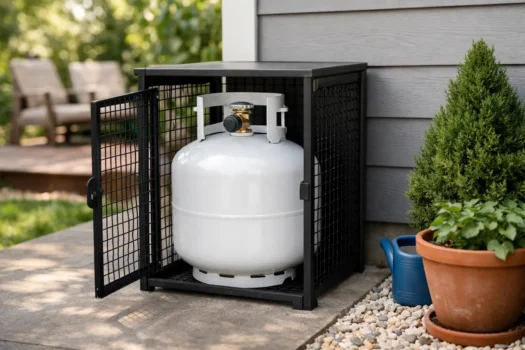
A propane cylinder is easy to ignore until it becomes the one part of your grill setup that creates a real safety problem. Knowing how to store propane tank properly is not complicated, but a few details matter: where the tank sits, whether it stays upright, and how well the valve is protected. Get those right and your fuel will be ready when grilling season starts. Get them wrong and a small leak can become a serious hazard.
For the standard 20-pound cylinder used on most gas grills, the basic rule is simple: store it upright, outdoors, in an open and well-ventilated area. That rules out several common storage spots that seem convenient but are not worth the risk.
Store propane tanks outdoors, never in enclosed spaces
Propane is heavier than air. If gas escapes from a cylinder in a garage, shed, basement, crawlspace, vehicle, or enclosed porch, it can settle in low areas instead of quickly dispersing. All it takes is a pilot light, electrical spark, or other ignition source for that accumulated gas to ignite.
A detached garage is not a safe exception. Neither is a shed that has a few gaps around the doors. A storage building may feel ventilated when you are standing in it, but it is still an enclosure where leaking vapor can collect.
The better choice is a level outdoor location with free airflow on all sides. A side yard, patio edge, or open area near the grill can work well if it is away from doors, windows, dryer vents, air-conditioning equipment, and any source of flame or sparks. Keep cylinders clear of children’s play areas and places where a mower, car, or lawn equipment could knock them over.
Do not store a propane cylinder inside your home, even temporarily. The same applies to a car trunk, SUV cargo area, or truck cab. If you bring home a newly filled tank, take it directly to its outdoor storage spot rather than leaving it in the vehicle while you run other errands.
How to store propane tank upright and protected
Always keep a propane tank vertical, with the valve at the top. Cylinders are designed to release vapor through the service valve and pressure-relief device in that position. Laying a cylinder on its side can interfere with safe operation and makes it more likely to roll, get damaged, or expose the valve to impact.
A flat concrete pad, paver, or stable grill deck is better than bare soil. Damp ground encourages rust around the bottom ring, and a tank that slowly sinks or leans into soft soil is more likely to tip. The goal is not a fancy rack. It is a stable, dry spot where the cylinder cannot fall over.
If wind, pets, kids, or a busy patio make tipping a realistic concern, use a purpose-built cylinder stand or a noncombustible restraint that holds the tank upright without damaging it. Do not wrap chains, rope, or bungee cords around the valve or regulator. The valve is the part you most need to protect.
When the cylinder is disconnected from the grill, close the valve fully by turning it clockwise. Remove the regulator and install the plastic valve plug or cap that came with the cylinder, if available. That keeps dirt, water, and insects out of the valve opening and offers another layer of protection if the valve is bumped.
A grill cover is not a propane tank cover. Do not tuck a disconnected cylinder under a fully covered grill or wrap it in a tarp. Trapped moisture speeds corrosion, and a tightly covered setup can limit ventilation if a leak occurs.
Keep heat, flames, and impact away
Propane cylinders are built for outdoor use and normal weather, but they are not indestructible. Avoid placing one directly beside a fire pit, smoker exhaust, outdoor heater, generator, or grill that throws a lot of heat toward the cylinder compartment. The tank should never be exposed to temperatures above 120 degrees Fahrenheit.
Direct sunlight alone does not automatically make a tank unsafe. Propane cylinders are made to be outdoors, and the pressure-relief valve is there to protect against excessive internal pressure. Still, shade is useful in very hot climates because it reduces heat exposure and makes handling the cylinder more comfortable. The trade-off is that shade cannot come from an unventilated shed, enclosed cabinet, or sealed deck box.
Do not store a tank next to gasoline cans, paint thinner, charcoal lighter fluid, or other flammable materials. Keeping all fuel in one spot may seem organized, but it concentrates hazards. Give the propane cylinder its own clear area.
Winter brings a different concern. Cold weather reduces propane pressure and can make a grill feel weak, especially with a nearly empty cylinder. That is a performance issue, not a reason to move the tank indoors. Leave it outside, upright, and clear of snow buildup around the valve. If your grill runs poorly in freezing weather, start by checking the fuel level and regulator rather than trying to warm the cylinder with a heater or hot water. Never apply direct heat to a propane tank.
Check the tank before long-term storage
A tank sitting unused for months should still get a quick inspection before you put it away. Look for deep rust, dents, a bent foot ring, valve damage, or an out-of-date certification date stamped on the collar. Surface rust is not always a reason to discard a cylinder, but heavy corrosion around the bottom or welds is a reason to stop using it and exchange or recycle it through an approved provider.
Before disconnecting a tank from the grill, turn off the cylinder valve first, then let the grill burn briefly until the flame dies. This uses the gas left in the hose and regulator. Turn the burner controls off afterward. Once the tank is removed, check that the valve is closed and capped.
If you smell propane, hear a hiss, or see damage around the valve, do not store the cylinder next to your home while you decide what to do. Move away from ignition sources, avoid operating electrical switches nearby, and contact the propane supplier or local fire department for guidance if the leak is significant. Do not try to repair a valve, replace a relief device, or force a fitting yourself.
A simple leak test is worthwhile when reconnecting a tank after storage. With the grill burners off, connect the regulator, open the cylinder valve slowly, and apply a soap-and-water solution to the connection. Steady bubbles indicate a leak. Close the valve and correct the connection or replace the faulty part before lighting the grill. Never test for leaks with a match or lighter.
What about a spare propane tank?
Keeping one spare 20-pound cylinder is practical for frequent grillers. It prevents a half-cooked dinner from turning into a fuel run, particularly when you are using a gas grill for longer cooks. Store the spare under the same conditions as the active cylinder: outdoors, upright, protected from impact, and separated from heat and ignition sources.
More tanks are not always better. If you rarely grill, multiple cylinders add clutter, complicate inspection, and increase the chance that an old tank sits unnoticed until it rusts or ages out of certification. Buy the amount of reserve fuel that matches your cooking habits, not the amount that makes the storage area look prepared.
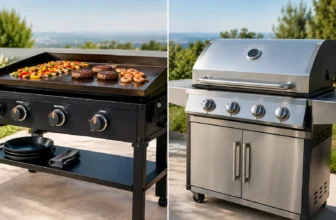
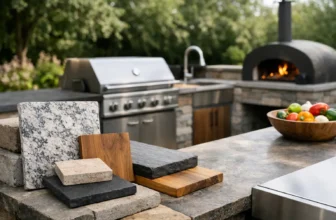
There is also a difference between a detached cylinder and one mounted on a grill. Many gas grills are designed to hold a 20-pound cylinder in a ventilated lower cart area during normal use and outdoor storage. Check the grill manual, make sure the tank is secured in its designated holder, and keep the cabinet vents clear. A sealed custom outdoor-kitchen enclosure is different. If it houses propane, it needs the ventilation and tank access required by the equipment design and local code.
Good propane storage is not about buying another accessory or turning the patio into a fuel depot. It is about giving one small cylinder a stable outdoor spot, checking it occasionally, and treating the valve with the same respect you give the flame at the grill.