
A glove can claim protection at 900 degrees and still be a poor choice for lifting a hot grate, moving a chimney starter, or reaching into a charcoal cooker. The best grill gloves for heat are not the ones with the biggest temperature number on the package. They are the ones that give you enough insulation, coverage, grip, and control for the jobs you actually do at the grill.
That distinction matters because grill heat is not one thing. Brief radiant heat from a fire is different from holding a cast-iron pan, grabbing a greasy grate, or working near a live coal bed for several minutes. A good glove for one can be a bad glove for another.
What Heat Ratings Leave Out
Most heat-resistant grill gloves use a maximum-temperature claim as their main selling point. Treat that number carefully. It may refer to a short contact test under controlled conditions, not the amount of time you can safely hold a 600-degree grate or a Dutch oven full of food.
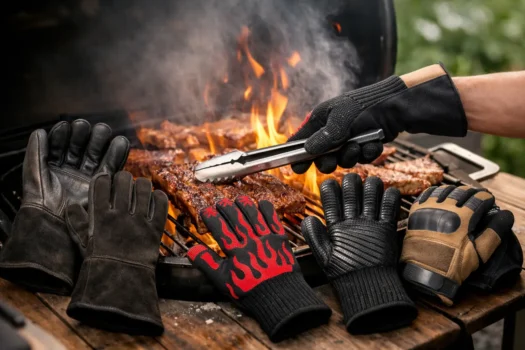
For real barbecue work, insulation thickness and exposure time matter more than a headline rating. So do the materials. Aramid knit gloves, often made with fibers such as Kevlar or Nomex, are flexible and useful for quick handling. Leather gloves are generally better around charcoal, wood, and hot metal because they offer more structure and better protection from sparks. Silicone adds grip and sheds grease, but silicone-only gloves can feel bulky and may transfer heat faster during long contact with heavy cookware.
Length is another overlooked factor. A glove that protects your palm but leaves your wrist exposed is not much help when you are adding fuel through a side door or reaching past a hot kettle rim. For live-fire cooking, a cuff of at least 10 inches is worth having. A 14- to 16-inch gauntlet is better for fire management.
The Best Grill Gloves for Heat by Cooking Task
There is no single glove that is best at every job. These are the types and established models worth considering, based on the work they are built to handle.
Best overall: RAPICCA 16-inch leather BBQ gloves
RAPICCA’s long-cuff leather gloves are the practical all-around choice for charcoal grilling, smoking, and wood-fired cooking. The leather exterior handles sparks and rough surfaces better than knit gloves, while the long sleeve coverage protects the wrist and lower forearm when adjusting charcoal baskets or moving hot grill grates.
They are not the most precise option for delicate work. You will not want to use them to turn small wings or adjust a thermometer probe. But for lifting a chimney, repositioning a hot deflector plate, or handling a grate after a cook, the extra bulk is a fair trade. They also tend to hold up better than thin knit gloves when used around abrasive cast iron and sharp grill hardware.
Best for dexterity: Grill Armor Extreme Heat Resistant Gloves
Grill Armor’s aramid knit gloves are a better fit for cooks who need hand control. The knit construction flexes naturally, and the silicone grip pattern gives you a more secure hold on tools, sheet pans, and moderately hot cookware than plain cotton liners or smooth leather.
This style works well for quick, controlled tasks: moving a chicken rack, rotating a pizza stone with the right tool, or pulling a pan from an indirect zone. The limitation is clear. Knit gloves provide less protection at the cuff and less insulation when your hand stays in contact with a heavy hot object. Keep them for quick moves, not prolonged contact with hot grates or firebox parts.
Best for charcoal and fire tending: G & F 16-inch leather work gloves
Heavy leather welding-style gloves from G & F are less polished than many gloves marketed specifically for barbecue. That is part of their appeal. They are built around heat, sparks, abrasion, and forearm coverage rather than flashy heat claims.
For managing lump charcoal, adding split wood to an offset smoker, or clearing ash near a fire, this is the right design. Look for a fully lined pair with a wide gauntlet cuff. The downside is reduced feel at the fingertips, especially compared with aramid knit gloves. For fire tending, that is an acceptable compromise. For food handling, it is not.
Best for hot cookware: Steven Raichlen leather grill gloves
Steven Raichlen’s leather grill gloves suit the cook who regularly uses planchas, cast-iron skillets, grill baskets, and heavy accessory grates. The leather construction has enough substance for brief handling of hot metal while remaining less cumbersome than oversized fireplace gloves.
They make sense for gas grill owners as well as charcoal cooks. If your main heat exposure comes from moving cookware instead of feeding a live fire, a medium-length leather glove can be easier to wear than a full 16-inch gauntlet. Just do not confuse a shorter cuff with full forearm protection.
Best for greasy, wet cleanup tasks: silicone barbecue gloves
A pair of food-grade silicone gloves is useful for handling greasy pork shoulders, rinsing grates, and washing down removable grill parts. Unlike leather or knit gloves, silicone does not absorb grease, sauce, or moisture. That makes cleanup simpler and reduces lingering odor.
Silicone is not the first choice for serious fire management. It can be clumsy around small hardware, and some styles do not insulate well enough for long contact with hot metal. Think of these as a secondary pair for messy prep and cleanup, not your only heat-protection solution.
How to Choose Grill Gloves That Actually Fit Your Setup
Start with the grill you own and the jobs that cause you to reach toward heat. A pellet grill owner who mostly removes drip pans and cast-iron cookware needs a different glove from someone running an offset smoker every weekend.
For a gas grill, prioritize grip and enough insulation to move grates, baskets, and pans. An aramid glove or medium-weight leather pair is usually sufficient. For charcoal kettles, ceramic cookers, and hibachis, longer leather gloves make more sense because your hands often work close to burning fuel and exposed metal.
Offset smoker owners and open-fire cooks should lean toward heavy leather gauntlets. Loading wood, adjusting coal beds, and reaching into a hot firebox are jobs where cuff coverage and spark resistance matter more than finger dexterity. Keep a second, more flexible pair nearby for routine food handling.
Before buying, check four details that tell you more than a giant heat-resistance number:
- Cuff length: Ten inches is workable. Fourteen to 16 inches is safer for charcoal and wood fires.
- Grip pattern: Silicone strips or textured leather help with smooth cookware and greasy grill parts.
- Liner construction: A soft cotton or insulated liner improves comfort, but it can retain sweat and grease.
- Stitching and seams: Loose seams near the fingers are a warning sign. Heat, grease, and repeated flexing will expose weak construction quickly.
Fit matters as much as material. Gloves that are too loose make it harder to grip a grate securely. Gloves that are too tight reduce air space around your hand, which can make heat transfer feel faster. You should be able to close your hand around a grill tool without fighting the material, but the fingertips should not extend far beyond your fingers.
Do Not Use One Pair for Every Job
The most practical setup is two pairs: long leather gloves for fuel and hot metal, plus flexible aramid or silicone gloves for quick handling and cleanup. That may sound excessive until a single pair becomes stiff with grease, wet from washing, or too hot to safely use.
Moisture is a serious problem with heat gloves. A damp cotton liner or wet knit glove can transmit heat rapidly and may create steam against your skin. Let gloves dry completely before using them near a hot cooker. If a glove becomes saturated with grease, replace it rather than trusting it around high heat.
Leather gloves need basic maintenance. Brush off ash, wipe away surface grease, and let them air dry away from direct heat. Do not toss leather gloves into a washing machine or dry them on the grill lid. Excessive heat can harden the leather and weaken the seams. Knit gloves can usually be washed according to their care label, but silicone grip patterns eventually wear down with repeated washing and abrasion.
A Better Rule Than Chasing the Highest Rating
Buy gloves for the hottest, most awkward task you perform regularly, not for the easiest one. If you cook over charcoal or wood, start with long leather gauntlets and add a dexterous pair later. If you mostly cook on gas and handle pans or baskets, a flexible aramid glove may be all you need.
A good grill glove should make you more deliberate around heat, not more reckless. If a task requires holding a hot object for more than a few seconds, use the right tool, clear a safe landing spot first, and let the glove provide a margin of safety rather than false confidence.