
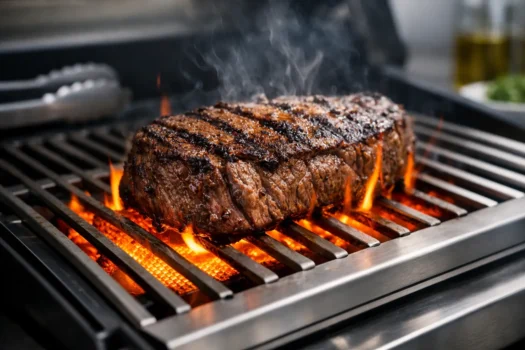
A steak can look cooked long before it has a real crust. That is the problem infrared burners are built to solve. The practical infrared burner searing benefits are not about making backyard cooking more complicated. They are about putting intense, focused heat where a gas grill often falls short: at the surface of the food.
For some buyers, an infrared sear burner is a genuinely useful upgrade. For others, it is an expensive feature that takes up valuable grill space and sees little use after the first few cookouts. The difference comes down to what you cook, how often you want restaurant-style searing, and whether you are willing to learn a hotter, less forgiving cooking zone.
What an infrared sear burner actually does
A standard gas burner heats the cooking grates mostly through convection. Flames heat the air and the metal components under the grate, then that heat reaches the food. It works well for burgers, chicken, vegetables, and indirect cooking, but its ceiling is often lower than owners expect. Opening the lid, adding cold food, or grilling on a breezy day can pull heat away quickly.
An infrared burner works differently. Gas heats a ceramic, metal, or glass panel until it glows, and that panel emits radiant heat directly toward the food. The burner does not need to heat as much surrounding air to do its job. That concentrated energy can create a very hot cooking surface in a short time, commonly far hotter than the main grate area of a typical gas grill.
The result is a sear zone designed for finishing steaks, chops, tuna, and other foods that benefit from intense surface heat. It is not a replacement for the rest of the grill. Think of it as a specialized station, not a better version of every burner.
Infrared burner searing benefits in real cooking
The biggest benefit is speed. A good infrared burner can brown the outside of a steak quickly enough to develop a dark crust before the center overcooks. That matters most with thinner steaks, pork chops, fish, and burgers, where a few extra minutes over moderate heat can turn a good result dry.
The heat is also more direct. On a conventional gas grill, cooks often chase grill marks while the broader surface stays relatively pale. With infrared heat, the food can develop more even browning across the contact and exposed surface. Grill marks may look good in photos, but a full crust is where much of the flavor comes from.
Recovery is another real advantage. When you place several cold steaks on a standard grill, grate temperature drops. Better grills recover faster, but the delay is still there. An infrared burner has enough concentrated output to keep working hard even after food hits the grate. That helps when cooking for a group, especially if you are trying to finish several steaks to the same level of doneness.
There is also less dependence on perfect weather. Wind can interfere with an open grill and reduce effective grate heat. An infrared panel still needs protection from the elements, but radiant heat is less vulnerable to moving air than a conventional burner trying to heat the entire cook box.
None of this means infrared makes every cook better. It makes high-heat finishing better. That distinction matters when comparing grills and deciding whether a sear burner earns its price.
Better crust, not automatic better steak
An infrared burner cannot fix a poorly selected or poorly prepared steak. A wet surface will steam before it browns. A steak straight from the refrigerator cooks unevenly. Heavy sugar-based rubs can burn before the interior is ready. And if you leave a ribeye unattended over infrared heat, the rendered fat can create aggressive flare-ups.
Use the burner as a tool with a specific job. Pat food dry, season it appropriately, and stay close. For thick steaks, reverse searing is often the most reliable approach: cook gently on the main grill with indirect heat, then finish briefly over the infrared burner. For thinner steaks, you may be able to sear first and finish on a cooler section of the grill.
Where infrared burners fall short
High heat is useful, but it narrows the margin for error. A burner that can create a crust in 60 to 90 seconds per side can also scorch food just as quickly. New owners sometimes treat the sear zone like a normal burner, close the lid, walk away, and return to charred meat. That is user error, but it is a predictable consequence of the feature.
Cooking area is another limitation. Most infrared sear burners occupy one narrow section of the grill. That may be enough for two large steaks or several burgers, but it is not ideal if you want to cook a full meal over the same intense heat. On a compact grill, giving up a standard burner for a small sear zone may be a poor trade.
Infrared systems can also be less convenient for messy foods. Marinades, sticky sauces, and fatty cuts can leave residue on the emitter or grate. The burner itself may be protected by a screen, but that screen still needs regular cleaning. Neglect it, and performance can become uneven. Some designs are easier to maintain than others, so do not assume every infrared setup is equal just because the product page uses the word “infrared.”
Cost deserves an honest look as well. A built-in sear burner can raise the price of a grill, and a separate infrared side burner adds another component to maintain. If you cook mostly chicken thighs, vegetables, sausages, and low-and-slow barbecue, the money may be better spent on heavier grates, better burner controls, a stronger firebox, or a reliable thermometer.
Who should buy a grill with an infrared sear burner?
An infrared sear burner makes the most sense for buyers who regularly cook steaks, chops, seafood, or burgers and care about a hard exterior crust. It is especially useful for people moving from a basic gas grill who are frustrated by weak browning despite long preheats and clean grates.
It also fits cooks who use a two-stage method. If you like smoking or indirect-roasting a thick steak, tri-tip, or pork tenderloin before finishing it over direct heat, the dedicated sear zone is more than a gimmick. It gives you control. The main grill handles gentle cooking, while the infrared burner handles the final color and texture.
Buyers who want one grill to do everything with minimal attention may be happier without it. A quality conventional gas grill with good heat retention can still make excellent food. Give it adequate preheat time, keep the grates clean, and use the hottest zone intelligently. You will not get the same instant blast of radiant heat, but you may prefer the larger usable surface and simpler cleanup.
For first-time grill buyers, build quality should come before a sear burner. Check the firebox, lid fit, grates, burner construction, ignition system, grease management, and availability of replacement parts. A cheap grill with an infrared badge is still a cheap grill. The sear burner does not compensate for thin metal, weak heat control, or poor long-term support.
How to use an infrared burner without wasting the feature
Preheat the infrared zone according to the grill maker’s instructions, usually with the lid closed. Unlike standard grill burners, these units may not need a long preheat, but they still need enough time to reach stable output. Do not judge readiness solely by the control knob position.
Keep the cooking grate clean and lightly oil the food instead of flooding the grate with oil. Excess oil and loose seasoning are common sources of flare-ups. Place the food over the burner, watch it closely, and move it away as soon as the crust is where you want it.
Use a thermometer for thicker cuts. Surface color tells you about the sear, not the internal temperature. This is where many cooks get fooled: the steak looks perfect after a fast infrared finish, but the center may still be underdone or may climb past the target temperature while resting.
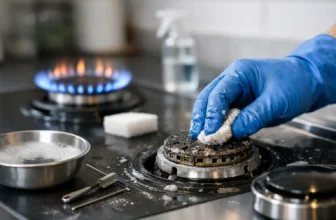
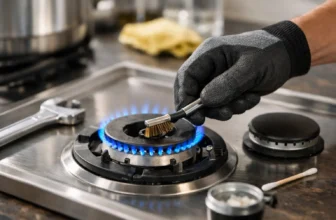
After the grill cools, brush the grate and remove any visible buildup around the sear area. Regular, light cleaning is easier than waiting until grease and carbon interfere with burner performance. Long-term ownership gets better when routine maintenance stays routine.
An infrared burner is worth paying for when it matches the way you actually cook, not the way a product photo says you should cook. If a great crust is part of your normal backyard routine, it can be one of the most satisfying features on a gas grill. If it is not, put the budget into a grill that will still light reliably, control heat well, and hold up after years outside.