
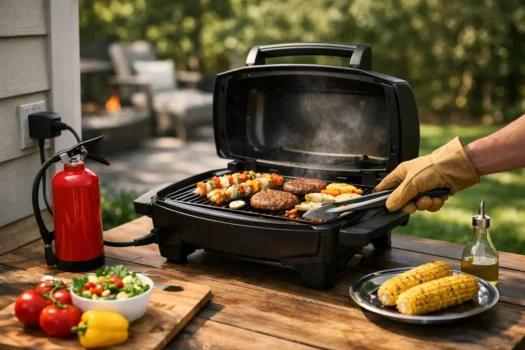
A 1,500-watt electric grill plugged into the wrong extension cord can create more trouble than a charcoal chimney ever will. Electric grill outdoor safety rules are less about dramatic flare-ups and more about preventing the quiet failures: overloaded circuits, wet connections, unstable carts, damaged cords, and grease left to build up beneath the grate.
Electric grilling is a practical answer for many patios, decks, and condo balconies where open-flame grills are restricted. But “no flame” does not mean “no risk.” The heating element still gets hot enough to burn skin, ignite accumulated grease, and damage nearby materials. Treat the grill as an outdoor cooking appliance, not a countertop gadget you happened to roll outside.
Start With a Safe Outdoor Power Source
The outlet matters as much as the grill. Use a grounded, outdoor-rated receptacle protected by a ground-fault circuit interrupter, commonly called GFCI protection. These outlets are designed to cut power quickly if moisture or a wiring fault creates a shock hazard. If your patio outlet lacks GFCI protection, have a qualified electrician evaluate it rather than assuming an indoor outlet and a long cord are a workable substitute.
Plug the grill directly into the outlet whenever possible. Most full-size electric grills draw significant power for long periods, often close to the limit of a standard household circuit. A power strip, splitter, or cheap extension cord adds another point of failure and can overheat under a sustained load.
Sometimes an extension cord is unavoidable. In that case, use a single outdoor-rated, grounded cord with an amp rating that meets or exceeds the grill manufacturer’s requirement. Keep it as short as practical, fully uncoil it, and route it where nobody will step on it, roll furniture over it, or catch it with a mower. Do not run it under rugs, through windows, or across a walkway without protection. If the plug, cord, or outlet feels warm during use, stop cooking and find the cause.
Electric Grill Outdoor Safety Rules for Placement
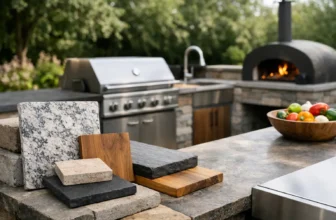
A grill needs room around it even if it produces less open flame than gas or charcoal. Set it on a level, stable surface made of concrete, pavers, or another noncombustible material when possible. A wobbly balcony table or a sloped deck is a bad foundation for a hot appliance carrying grease and food.
Follow the clearance distances in the owner’s manual. If the manual is vague, leave generous space between the grill and siding, railings, outdoor furniture, planters, awnings, and any overhang. Heat rises, grease vapor travels, and plastic furniture can soften long before it catches fire.
Avoid enclosed or partially enclosed spaces. A garage, screened porch, enclosed patio, or beneath a low ceiling can trap smoke and heat. Electric grills do not produce the same combustion gases as charcoal grills, but they still create smoke from cooking fats and food residue. Ventilation is part of safe operation, not a luxury.
For apartment and condo residents, local rules may be stricter than the grill manual. Some properties allow electric grills only on certain patios, prohibit them near railings, or restrict extension cords. Check the lease, HOA rules, and local fire code before buying. A grill that technically works in your space is not a good purchase if using it puts you in violation of building rules.
Keep Water and Weather Out of the Equation
Electric grills are built for outdoor use, not for operation in standing water or a downpour. Do not cook during rain, snow, or conditions that leave the plug, controller, and outlet exposed to moisture. A covered patio can help, provided the grill still has proper clearance and ventilation.
Wind deserves more attention than it gets. It may not blow out an electric heating element, but it can push smoke toward doors and windows, make the cooking surface less consistent, and knock lightweight tables or lids around. Secure the grill according to its design and skip the cook if gusts make the setup unstable.
After cooking, let the unit cool completely before installing a cover. Covers keep off rain and debris, but they also trap moisture. Putting one over a hot grill can shorten the life of finishes, encourage condensation, and leave you with a damp appliance the next time you want to cook.
Grease Is Still the Main Fire Risk
The absence of charcoal or gas does not eliminate grease fires. Burgers, chicken thighs, skin-on poultry, bacon, and heavily marbled steaks can release enough fat to smoke aggressively and ignite on a hot element or accumulated residue. This is especially common when the drip tray has been ignored for several cooks.
Check the drip tray or grease cup before every session. Empty it when it is cool, and make sure it is seated correctly. Also inspect the area beneath the cooking grate for grease deposits, foil fragments, food debris, or anything that can interfere with drainage. Do not line areas with foil unless the manufacturer specifically permits it. Foil can block designed grease channels and create a larger, hotter mess.
If grease starts smoking heavily, lower the temperature and move food away from the hottest area if you can do so safely. If a fire develops, keep the lid closed to limit oxygen, turn off the grill, and unplug it only if the outlet can be reached safely. Never throw water on a grease or electrical fire. Keep a multipurpose ABC fire extinguisher nearby, and call emergency services if the fire does not stop immediately or spreads beyond the grill.
Use the Grill Like a Hot Appliance, Not a Set-and-Forget Cooker
Preheating is useful for browning and reducing sticking, but it is also when neglected grease can reveal itself. Stay nearby while the grill heats, especially after a long break between cooks. If you see unusual smoke before food hits the grate, shut it down, allow it to cool, and clean it before proceeding.
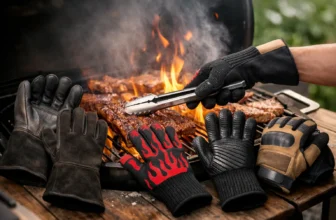
Keep children and pets away from the cooking zone. The lid, side shelves, handle area, and exterior housing can all become hot. Do not assume an insulated-looking plastic handle means the entire surrounding surface is safe to touch. Use long-handled tools, wear close-fitting clothing, and avoid loose sleeves that can brush a hot grate or knock food into the element area.
Food safety also belongs in the conversation. Electric grills can cook very well, but small models may recover heat slowly after cold food is loaded. Use an instant-read thermometer instead of guessing from grill marks. Cook poultry to 165°F, ground meats to the appropriate safe temperature, and whole cuts based on your preferred doneness and food-safety guidance. Consistent heat is one reason to avoid opening the lid every minute.
Clean It Without Damaging the Electrical Parts
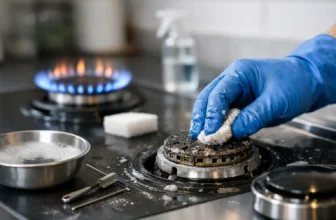
Unplug the grill and let it cool before cleaning. Remove the cooking grates and drip components according to the manual, then wash only the parts identified as washable. The temperature control probe, electrical connections, and heating element assembly are not items to soak in a sink or blast with a hose.
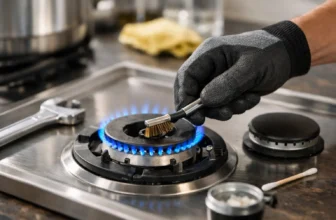
Use a grill brush that will not shed loose bristles, a scraper suited to the grate material, and a damp cloth for exterior surfaces. For stubborn grease, use a cleaner approved for the grill’s finish and cooking surfaces. Harsh oven cleaners and abrasive pads can damage coatings, dull stainless steel, and shorten the life of nonstick grates.
Before the next cook, inspect the cord for cracks, flattened sections, exposed wire, or loose plug blades. Check that the controller inserts fully and the heating element sits correctly in its mounting points. Replacing a damaged component is cheaper than replacing a grill after an electrical fault.
Store It for Long-Term Reliability
When the season ends or the grill will sit unused for weeks, clean out grease first. Store it under a fitted cover in a dry location, with the controller removed if the manufacturer recommends it. Keep the cord loosely coiled rather than tightly wrapped around hot or sharp parts of the grill.
A clean, dry grill is safer on the first cook of spring than one left with a full drip tray and a weathered extension cord. That is not glamorous maintenance, but it is the kind that keeps an electric grill dependable when dinner needs to be simple.