
A pellet grill looks like an easy answer to a hard backyard question: should I buy a pellet grill if I want better barbecue without tending a fire all day? For the right cook, yes. It can produce reliably good smoked food with far less babysitting than charcoal or a stick burner. But it is not a magic button, and it is not the best grill for every kind of cooking.
The short version is this: buy a pellet grill if you value temperature control, long unattended cooks, and wood-fired flavor more than hard searing power, low operating cost, or complete mechanical simplicity. If your main goal is burgers, steaks, hot dogs, and quick weeknight grilling, a gas grill or charcoal kettle may make more sense.
What You Are Really Buying With a Pellet Grill
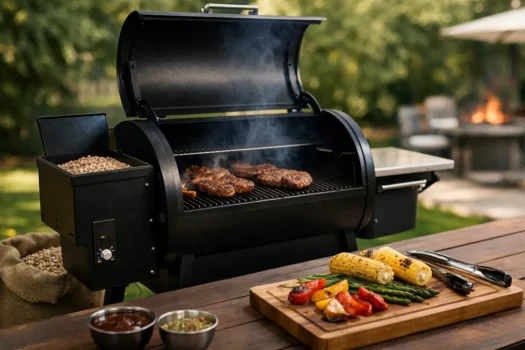
A pellet grill burns compressed hardwood pellets fed from a hopper into a fire pot by an electric auger. A controller manages the feed rate and fan to hold a selected cooking temperature. Set it to 225°F for ribs or 350°F for chicken, and the grill does most of the fire management for you.
That is the real appeal. Pellet grills are outdoor convection ovens with a live wood fire underneath. They make low-and-slow cooking far more approachable than traditional charcoal or wood-fired equipment. Brisket, pork shoulder, ribs, turkey, and reverse-seared roasts are all easier when you are not adjusting vents, adding fuel, and wondering whether the cooker drifted 40 degrees while you were inside.
The best models hold temperature well, recover reasonably after the lid is opened, and distribute heat evenly enough that you can cook without constantly rotating food. Those ownership benefits matter more than a long feature list or a flashy touchscreen.
There is a flavor benefit, too. Food cooked over quality hardwood pellets has a cleaner smoke profile than many beginners expect. It is usually lighter than food from an offset smoker or a charcoal cooker with wood chunks, but it is real wood smoke, not a bottled flavor.
Should I Buy a Pellet Grill for Everyday Grilling?
This is where many buyers get disappointed. Pellet grills can cook burgers, chicken thighs, vegetables, and sausages well. They are especially good when you want to roast, smoke, or bake outdoors without heating the kitchen. But most do not grill like a dedicated gas grill, charcoal grill, or ceramic cooker.
Their standard cooking setup uses indirect heat. Heat rises from the fire pot, hits a diffuser plate, and circulates around the cooking chamber. That design is excellent for even cooking and smoke, but it limits direct radiant heat at the grate.
A pellet grill advertised with a 500°F maximum temperature may still not put the same crust on a steak as a charcoal chimney, a cast-iron grate over gas burners, or a dedicated high-heat sear burner. Some models include direct-flame access, sliding heat shields, or a separate sear zone. Those can help, but they are not all equally effective. Treat direct-flame claims as a feature to verify, not a promise.
If steaks are your signature meal, a pellet grill can still work well as part of a two-step method. Smoke the steak at a lower temperature, then finish it in a cast-iron skillet, on a separate hot grill, or over the direct-flame area if the grill has one. If you want one cooker that turns out great steaks every Friday night with minimal fuss, pellet may not be your first choice.
The Good Reasons to Buy One
A pellet grill makes the most sense for people who regularly cook larger cuts and want consistency. It reduces the learning curve without removing the satisfaction of cooking over real wood.
You cook barbecue more than you grill fast meals
If your ideal weekend meal is pulled pork, ribs, smoked chicken, tri-tip, or a full turkey, the pellet format is hard to beat for convenience. You can load the hopper, set a temperature, and spend more time with guests instead of managing the fire.
You want repeatable results
Temperature control is the main reason many owners stay with pellet grills. A well-built unit with a capable controller can produce similar results from cook to cook. That is useful for beginners, but experienced cooks appreciate it too. Consistency is not cheating. It is a performance advantage.
You need a flexible outdoor cooker
Most pellet grills can smoke at low temperatures, roast at moderate temperatures, and bake surprisingly well. They are useful for meatloaf, pizza, casseroles, vegetables, and desserts, not just barbecue. That range can justify the space and cost if you use it.
You prefer clean, mild smoke
Pellet smoke is usually gentler than the heavy, sometimes bitter smoke produced by poorly managed wood fires. For chicken, fish, vegetables, and families who do not want every meal tasting like a campfire, that can be a plus rather than a compromise.
The Reasons You May Regret It
Pellet grills have real trade-offs. Ignoring them before purchase is how a convenient cooker becomes an expensive patio decoration.
First, they need electricity. The auger, fan, ignition system, and controller do not run without power. A pellet grill is not the best choice for off-grid cooking, frequent camping, or households that expect to use their grill during long outages without a generator.
Second, pellets cost more than many buyers assume. Prices vary by region and brand, but long cooks consume a meaningful amount of fuel, especially in cold or windy weather. Avoid cheap fuel with excessive dust and questionable wood blends. Poor pellets can cause inconsistent feeding, ash buildup, and weaker performance.
Third, maintenance is not optional. Ash collects in and around the fire pot. Grease accumulates on the drip tray and grease channel. Left alone, that buildup can affect ignition, airflow, and, in worst cases, contribute to grease fires. Expect to vacuum ash from the cooker periodically and clean grease management parts regularly. The exact schedule depends on how often you cook, but “set it and forget it” should describe the temperature controller, not the cleanup.
Fourth, pellet grills have more parts that can fail than a basic charcoal kettle. Controllers, fans, hot rods, augers, probes, and wiring all add convenience, but they also add repair considerations. Buy based on build quality, parts availability, warranty support, and a manufacturer’s reputation for standing behind older units. A bargain grill that cannot get replacement parts in two years is rarely a bargain.
What Matters More Than Wi-Fi and Marketing Claims
When comparing pellet grills, start with construction and cooking performance. Thick steel, a well-fitting lid, solid legs, a stable cart, durable wheels, and a properly designed grease system matter every time you cook. A bright display does not compensate for thin metal, poor heat retention, or a hopper that lets rainwater reach the pellets.
Pay close attention to temperature range and accuracy, but do not obsess over a single advertised number. What matters is whether the grill holds a steady cooking temperature in normal outdoor conditions and whether it reaches useful high heat for the foods you actually make. Independent grate-level temperature readings are more valuable than controller display claims.
Hopper capacity matters if you plan to cook overnight or run long brisket sessions. A large hopper is convenient, but it does not eliminate the need to check fuel before an extended cook. Pellet consumption rises in cold weather, and some hoppers do not feed every pellet cleanly without occasional attention.
Cleaning access is another overlooked factor. Can you reach the fire pot without dismantling half the grill? Is there a practical ash cleanout system? Does the grease bucket sit where it is easy to remove without spilling? These small details determine whether you maintain the grill properly after the newness wears off.
Pellet Grill vs. Gas or Charcoal
A gas grill wins for speed and direct heat. It starts quickly, handles weeknight meals well, and usually produces stronger searing performance at a comparable price. It does not provide the same wood smoke flavor or low-and-slow ease.
A charcoal grill wins for high heat, simplicity, and value. A basic kettle can sear a steak, smoke a pork shoulder, and last for years with minimal parts to replace. The trade-off is a steeper learning curve and more active fire management.
A pellet grill wins for controlled smoking and convenience. It is the best fit for the cook who wants barbecue often but does not want barbecue to become an all-day fire-tending project. None of these fuel types is universally better. The right choice depends on what lands on your grate most often.
A Straight Answer Before You Spend
Buy a pellet grill if you will use its strengths: long cooks, steady temperatures, mild wood flavor, and hands-off outdoor roasting. Spend enough for a machine with sound construction, reliable temperature control, and support you can still count on after the warranty brochure is forgotten.
Pass if you mostly cook quick grilled meals, demand steakhouse-level searing from one appliance, dislike cleaning, or want equipment that works without an outlet. The best grill is not the one with the most settings. It is the one you will maintain, use often, and trust when dinner is on the line.
Before choosing, write down the five meals you cook outdoors most often. That list will tell you more about whether a pellet grill belongs on your patio than any marketing photo ever will.