
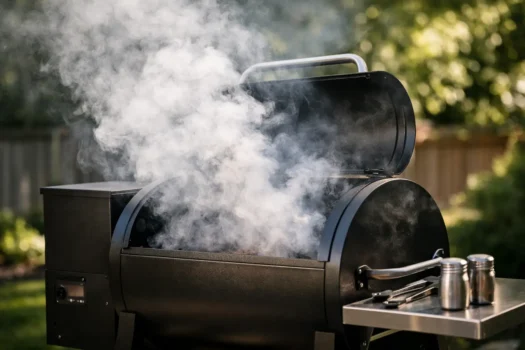
A pellet grill should produce smoke, but not every kind of smoke means the cooker is doing its job well. If you are asking, why is my pellet grill smoking so much, start by looking at the color, smell, timing, and location of that smoke. A light, thin stream with a mild wood-fired smell is normal. Thick white or gray clouds that linger, sting your eyes, or make food taste bitter usually point to a combustion or maintenance problem.
Pellet grills are built to manage fire automatically. The auger feeds pellets into a fire pot, an igniter starts them, and a fan supplies oxygen while the controller adjusts fuel delivery. When one part of that system is dirty, damp, restricted, or simply operating at a low setting, smoke increases. The fix is often straightforward, but guessing can lead to a dirty burn, temperature swings, or a grease fire.
When Pellet Grill Smoke Is Normal
The most dramatic smoke often happens during startup. Before the pellets are fully burning, the fire pot fills with fuel and the grill may release a heavy burst of white smoke. This typically settles down within 10 to 20 minutes as the fire establishes itself and the cooker approaches its set temperature.
You will also see more visible smoke at lower temperatures, especially between 180 and 250 degrees Fahrenheit. At these settings, pellets smolder more than they burn aggressively. That is part of how pellet grills add smoke flavor to ribs, pork shoulder, chicken, and other longer cooks.
Thin blue smoke is the goal, although it can be hard to see in daylight. It signals a cleaner, hotter burn. Light white smoke can also be normal during a low-and-slow cook, particularly when the controller cycles pellets into the fire pot. The concern is dense, billowing smoke that continues after warmup or smells sharp and sour rather than like clean hardwood.
Why Is My Pellet Grill Smoking With Thick White Smoke?
Persistent white smoke usually means the pellets are not burning completely. In practical terms, the fire is getting too much fuel, too little air, or poor-quality fuel. The most common causes are ash buildup, wet pellets, a blocked airflow path, and an overloaded fire pot.
The Fire Pot Is Full of Ash
Ash is not just a cleanup issue. It changes how the grill burns. A layer of ash in the fire pot can bury the igniter, restrict airflow through the burn holes, and prevent pellets from catching efficiently. The result is a lazy, smoky fire that struggles to reach or hold temperature.
Vacuum the fire pot and the lower barrel after every few long cooks, or more often if you use the grill heavily. The exact interval depends on the grill and pellet quality, but waiting until ash is visibly piled up is too long. Make sure the grill is cold and unplugged before cleaning it.
Ash can also collect around the fan intake and under the heat deflector. If your grill has been performing worse over time rather than failing suddenly, accumulated debris is a more likely explanation than a bad controller.
Your Pellets Have Absorbed Moisture
Pellets should be hard, dry, and glossy enough to snap cleanly. If they look swollen, dull, crumbly, or packed with sawdust, do not use them. Moist pellets burn poorly, create excess smoke, and can expand inside the auger. That can cause a jam that turns a simple fuel issue into a repair job.
Store pellets indoors or in a sealed, weather-resistant container. A bag left in a damp garage, under a grill shelf, or on a humid patio is a bad long-term plan. Even if the outside of the bag feels dry, pellets can pull moisture from the air after the seal is opened.
Not all pellet brands burn the same way, either. Cheap pellets with excessive dust, fillers, or inconsistent pellet size can make a clean grill run dirtier. A bargain bag is not a bargain if it causes bitter food and more cleanup.
Airflow Is Restricted
A pellet fire needs steady air from the combustion fan. If the fan is obstructed, coated in grease and dust, or failing mechanically, pellets will smolder instead of burning cleanly. You may hear the fan running but still get weak airflow if debris has built up around the intake or inside the housing.
Inspect the grill with power off and fully cool. Clear loose ash from the fire pot, air channels, and fan intake. Check that the chimney cap is not adjusted too low, packed with soot, or blocked by an insect nest. A chimney cap that is nearly closed can trap smoke and reduce draft.
Do not remove internal parts or alter air settings without checking your owner’s manual. Some pellet grills have specific chimney clearance or exhaust requirements, and changing them blindly can create new problems.
There Are Too Many Pellets in the Fire Pot
If the grill shuts down unexpectedly, loses power, or fails to ignite correctly, the auger may continue feeding pellets before the fire is fully established. On the next startup, that excess fuel can produce a large amount of white smoke before it ignites. In some cases, it can flare up.
When a startup goes wrong, turn the grill off, let it cool completely, then empty the fire pot before trying again. Do not keep restarting a grill that is overflowing with pellets. Repeated restarts can overfill the pot and create a much bigger fire when those pellets finally catch.
Dark Smoke and Bitter Food Point to a Different Problem
Dark gray or black smoke is more serious than normal pellet smoke. It often means grease, food residue, or accumulated carbon is burning somewhere inside the cooking chamber. If you see dark smoke along with flames above the heat diffuser, treat it as a grease fire, not a flavor issue.
Turn the grill off and keep the lid closed unless your manufacturer says otherwise. Closing the lid limits oxygen. Do not spray water into a grease fire. Once the grill is fully cool, scrape the grease tray, clean the drain channel, empty the grease bucket, and inspect the drip system for blockage.
Grease management is one of the less glamorous parts of pellet-grill ownership, but it matters. Fatty cuts such as chicken thighs, burgers, brisket trimmings, and pork belly can leave enough residue to ignite during a hotter cook. Foil liners can simplify cleanup if your grill allows them, but they still need regular replacement and cannot compensate for a clogged drain.
Food residue is another source of dirty smoke. Burned sauce, fallen cheese, and charred scraps on the heat diffuser will keep smoking long after the food is off the grate. A clean diffuser and drip tray improve both flavor and temperature consistency.
A Simple Troubleshooting Order That Saves Time
Before replacing parts, work through the basics in order. Pellet grills are complex enough to have electrical failures, but most smoke complaints come from fuel, ash, airflow, or grease.
- Let the grill cool, then vacuum ash from the fire pot and bottom of the barrel.
- Remove questionable pellets from the hopper and inspect for moisture, dust, or swelling.
- Clean the grease tray, drain channel, and grease bucket.
- Check the chimney cap and fan intake for obstructions.
- Restart the grill with an empty, clean fire pot and observe the first 20 minutes.
Watch whether the igniter creates a flame, whether the fan is running, and whether smoke thins out as the grill heats. If the grill continues producing heavy smoke while it cannot reach temperature, or if the fan and igniter do not operate normally, it may be time for a replacement part or manufacturer service.
Smoke Coming From the Hopper Is Not Normal
Smoke in the cooking chamber and out the chimney is expected. Smoke backing into the hopper is not. This can happen when a fire burns backward through the auger tube, usually after improper shutdown, an airflow issue, or a severe fire-pot problem.
If you see hopper smoke, turn the grill off, unplug it if safe to do so, and keep the hopper lid closed. Do not add pellets or reach into the hopper. Once everything is cold, empty the hopper and auger path as directed by the manufacturer, then inspect the grill before using it again.
Using the grill’s shutdown cycle every time helps prevent this problem. The fan needs time to burn out remaining pellets and cool the fire pot. Cutting power at the outlet immediately after cooking leaves fuel and heat in the wrong places.
A pellet grill will never run as invisibly clean as an indoor oven, and it should not. Some smoke is the point. But thick, harsh, persistent smoke is usually the grill telling you it needs attention. Clean it before the next cook, use dry pellets, and let the fire establish properly. That small routine does more for better barbecue than chasing another bag of heavily marketed pellets.