
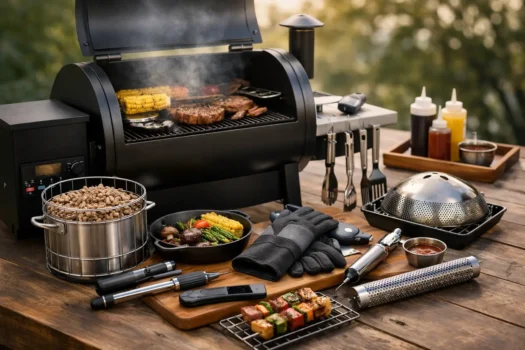
A pellet grill can turn out excellent food with the basics it came with. But the best pellet grill accessories solve the problems that show up after a few real cooks: uneven temperatures, greasy cleanup, bad weather, low pellet storage, and guessing whether a brisket is actually done. The goal is not to fill your patio with gadgets. It is to make the grill more consistent, easier to maintain, and less frustrating to use.
Start with the accessory that addresses the weak point in your current setup. A cover matters more than a pizza oven if the grill sits outside year-round. A good thermometer matters more than a front shelf if you cook large cuts of meat. That sounds obvious, but it is how buyers avoid spending money on accessories that look useful and then collect dust.
The best pellet grill accessories fix real cooking problems
Most add-ons fall into one of three categories: they improve cooking control, reduce cleanup, or make the grill easier to live with. The right order depends on how you cook, how often you use the grill, and whether it stays protected from weather.
1. A reliable leave-in probe thermometer
The built-in probe that comes with many pellet grills is fine for basic monitoring, but it is not always accurate enough to trust on expensive cuts of meat. A quality leave-in thermometer with a heat-resistant probe gives you a second opinion on internal temperature and lets you monitor food without repeatedly opening the lid.
This is especially useful for brisket, pork shoulder, turkey, and reverse-seared steaks. Look for a model with stable readings, probes that are easy to replace, and a display you can read outdoors. Wireless monitoring is convenient, but it is not mandatory. Accuracy and durability matter more than another app on your phone.
2. A heavy-duty grill cover
A cover is one of the least exciting purchases and one of the most worthwhile. Pellet grills have electronics, a hopper, steel surfaces, and moving parts that do not benefit from rain, snow, pollen, or constant UV exposure. Even a grill marketed for outdoor use will last longer when it is kept dry.
Choose a fitted cover made from substantial material with secure straps or drawstrings. A loose cover that blows off in a storm is not protection. Also, do not put a cover over a hot grill. Let the cooker cool fully first, or trapped moisture and heat can work against the very protection you are trying to provide.
3. A front shelf or side shelf
Pellet grill makers often treat workspace as an upgrade, even though it changes the day-to-day experience more than many cooking attachments. A sturdy shelf gives you a place for trays, seasonings, thermometers, and hot gloves without balancing everything on a patio table.
Prioritize shelves that are designed for your specific grill model and have a meaningful weight rating. Cheap universal shelves can wobble, interfere with the lid, or create an awkward obstruction around the hopper. If your grill already has adequate workspace nearby, skip this one. If it does not, you will use it every time you cook.
4. A grill griddle insert or cast-iron griddle
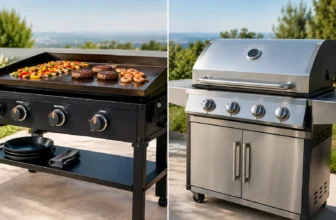
Pellet grills are strong at smoking and roasting, but many struggle to deliver the aggressive direct heat needed for a hard sear. A cast-iron griddle helps close that gap. It creates a flat, hot surface for smash burgers, fajitas, breakfast, fish, and vegetables that might fall through standard grates.
There is a trade-off. A griddle takes time to preheat and requires regular cleaning and seasoning. It also does not turn every pellet grill into a restaurant-quality steakhouse. But for cooks who want more than low-and-slow barbecue, it is one of the more practical ways to expand what the grill can do.
5. Heat-resistant grilling gloves
Tongs are useful until you need to reposition a pork butt, lift a hot griddle, rotate a turkey, or handle grates during cleanup. A pair of well-insulated gloves makes those jobs safer and faster. Look for gloves with a secure grip and enough dexterity to handle smaller items without feeling like you are wearing oven mitts.
Avoid treating heat ratings as the whole story. A glove can claim a high temperature rating but still be clumsy, stiff, or difficult to clean. For most backyard cooks, a washable pair with a grippy surface is a better long-term choice than a bulky pair that stays in a drawer.
6. An ash vacuum made for grills
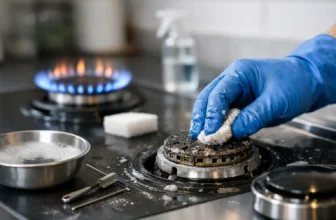
Ash is part of pellet grilling. As it builds up in the firepot and lower body of the cooker, it can restrict airflow, contribute to ignition problems, and make temperature performance less predictable. A small ash vacuum designed for cold ash makes routine cleaning faster than scooping debris out by hand.
This is not an accessory for every cookout. It is a maintenance tool, and it earns its place if you use the grill regularly. Never vacuum a warm firepot or assume all ash is cold just because the grill is off. Give it adequate time to cool, then clean according to the grill manufacturer’s schedule.
7. A grease bucket liner or disposable foil liners
Grease management is not glamorous, but neglected grease is a fire risk and a source of bad odors. Disposable liners for the grease bucket simplify cleanup, especially after long cooks with pork shoulder, ribs, or poultry. They are inexpensive and keep grease from becoming a hardened mess inside the bucket.
Use liners that fit securely and check the bucket before every cook. A liner can still overflow, tear, or be knocked loose. If you prefer to avoid disposable products, a dedicated metal bucket that you wash regularly works just as well. The important part is having a routine, not buying a particular format.
8. A pellet storage container with a tight seal
Pellets perform best when they are dry. Once they absorb moisture, they can swell, crumble, feed poorly, and create inconsistent burns. The original pellet bag is acceptable for short-term storage indoors, but it is not a good long-term solution in a humid garage, shed, or covered patio.
A sealed container keeps pellets organized and protects your fuel investment. Clear containers are convenient because you can see what is left, though they should be kept out of direct sunlight. If you keep multiple wood blends on hand, use separate labeled containers rather than mixing pellets and hoping you remember what is in the hopper.
9. A grill brush that will not shed wire bristles
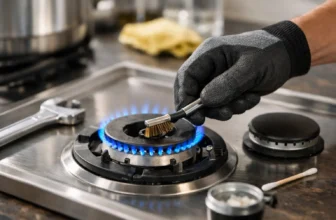
Cleaning cooking grates is necessary, but traditional wire-bristle brushes bring a risk that is not worth ignoring. Loose bristles can stick to food and cause a serious problem. Better options include bristle-free coil brushes, scraper-style tools, or nylon brushes used only after the grill has cooled.
The best choice depends on your grate material. Cast iron needs a different touch than porcelain-coated steel or stainless steel. Whatever tool you choose, inspect it regularly and clean the grates while residue is still manageable. Waiting until grease and carbon are baked on makes every cleaning job harder.
10. A chimney starter for pellet grill cleanup and emergency cooks
This is not a must-have for everyone, but it is a useful tool for owners who also cook with charcoal or want a simple way to dispose of partially burned pellets and ash safely after everything has cooled. More broadly, it points to a practical truth: pellet grill ownership goes better when you have a plan for fuel, ash, and backup cooking options.
For most pellet-only households, a basic metal ash can with a tight lid is the better purchase. Store it away from combustible surfaces and only add fully cooled ash. Do not treat a plastic trash can as an ash container.
What not to buy first
Skip novelty attachments until the basics are covered. Pizza ovens, rotisseries, custom grates, smoke tubes, and decorative tool sets can be fun, but they rarely improve the first-year ownership experience as much as a cover, thermometer, cleaning tool, and dry pellet storage.
Smoke tubes deserve a specific mention. They can add more smoke during short cooks or on lighter-smoking pellet grills, but they also add another fuel source to manage and can produce harsh smoke if used poorly. Buy one only if you understand what your grill is missing and want to correct that limitation.
Build your accessory setup around how you cook
If you mainly smoke brisket and pork shoulder, start with a dependable thermometer, grease liners, an ash vacuum, and sealed pellet storage. If you cook weeknight burgers, chicken, and vegetables, a front shelf, heat-resistant gloves, and a griddle may improve your results more.
The best accessory is usually the one that removes a recurring annoyance rather than adding another cooking mode you use twice a year. Buy for cleaner maintenance, better temperature confidence, and easier handling first. The rest can wait until your cooking habits prove you need it.