
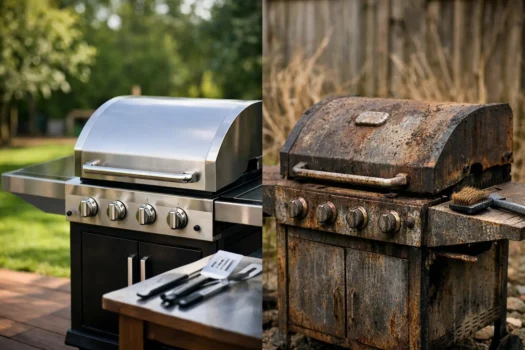
A grill can look fine on the patio and still be deteriorating where you cannot see it: inside the firebox, under the lid, around burner tubes, and in the controller housing. So, can you leave grill outside? Yes, in many cases. But leaving it outdoors year-round is not the same as leaving it unprotected and expecting it to last.
The honest answer depends on the grill type, the material quality, your climate, and how well you manage moisture. A basic cover helps, but it is not a force field. For long-term ownership, the goal is simple: keep water from sitting on the grill, keep grease from attracting pests, and inspect the parts that fail before they become a safety problem.
Can You Leave Grill Outside Year-Round?
Most gas, charcoal, and pellet grills are designed to live outdoors. Manufacturers know these products will sit on decks, patios, and in backyards. If your grill is placed on a stable, well-drained surface and receives regular care, leaving it outside through the year is usually reasonable.
What is not reasonable is assuming a stainless-steel badge means the grill is weatherproof. Lower-cost stainless is often thin and can still discolor, pit, or rust around fasteners and welded seams. Painted steel can last well, too, but chipped paint exposes bare metal that will corrode quickly in wet conditions.
The real dividing line is exposure. A grill under a covered patio in a dry climate has an easy life. A grill parked beside a salty coast, below dripping trees, or in a snowy yard with no cover has a much harder one. The latter may need seasonal storage, even if the grill technically can stay outside.
What Outdoor Weather Does to a Grill
Rain is the obvious threat, but trapped moisture does more damage than a single downpour. Water gets into the lid, pools in grease trays, and settles in corners below the cook box. Repeated wet-dry cycles create rust, seize hardware, and shorten the life of burner tubes and charcoal grates.
Humidity deserves the same respect as rain. In humid regions, a tightly covered grill can hold condensation overnight, especially if the cover is not breathable. That creates a damp enclosure around metal parts. A cover that sheds rain but allows some airflow is usually the better choice.
Sun creates a different set of problems. Constant UV exposure makes plastic control knobs brittle, fades powder-coated finishes, and breaks down cheap vinyl covers. Wind can lift an unsecured cover, scrape the finish, or tip a lightweight grill. In freezing weather, water trapped in seams expands and worsens small cracks in paint or coatings.
Coastal owners have one more problem: salt. Salt air accelerates corrosion on burners, fasteners, cart frames, and even stainless components. If you live near the ocean, routine wipe-downs and more frequent inspections are not optional maintenance. They are the price of keeping a grill outdoors.
The Right Answer Depends on Your Grill Type
Gas grills can stay outside with basic protection
A gas grill is generally the easiest type to leave outdoors because the fuel system is self-contained and the cooking chamber is designed for open-air use. Still, burners, igniters, flavorizer bars, and grease-management parts are consumable pieces. Moisture and grease buildup speed up their decline.
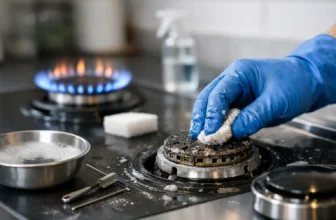
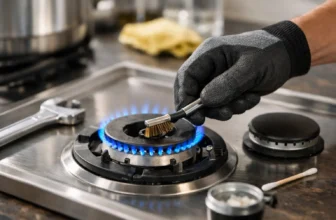
Keep the lid closed, use a properly fitting cover once the grill is fully cool and dry, and clean the grease tray before it overflows. Check burner ports at least a few times each season. Spiders and insects can build nests in burner tubes, causing uneven flames or dangerous flare-ups at the control panel.
If you store a propane tank outdoors, keep it upright, away from direct heat, and never place it in a sealed shed or garage. The grill can stay outside. The tank should, too.
Charcoal grills tolerate weather, but grates do not
A porcelain-enameled charcoal grill body can handle a surprising amount of weather. The weak spots are usually the cooking grate, charcoal grate, ash catcher, lid vent, and lower bowl where ash holds moisture against the metal.
Do not leave old ash in the grill after cooking, particularly if rain or humidity is expected. Ash absorbs moisture and becomes a corrosive paste. Empty it once the grill is completely cold, then leave the vents slightly open long enough for the interior to dry before covering it.
Cast-iron grates need extra attention. They can rust quickly outdoors if their seasoning is neglected. Clean them, dry them with heat after use, and apply a very light coat of oil before longer periods of storage.
Pellet grills need the most protection
Pellet grills have electronics, motors, augers, fans, and a hopper full of wood-based fuel. That makes them less forgiving of moisture than a gas or charcoal grill. A pellet grill can remain outside, but it should be covered carefully and ideally kept under a roof, awning, or other sheltered area.
Wet pellets swell, crumble, and can jam the auger. Moisture in the hopper or burn pot can also lead to ignition problems and inconsistent temperatures. In wet climates, remove unused pellets from the hopper before extended periods without cooking. Keep pellets in a sealed indoor container, not in the grill cart.
If your pellet grill has a digital controller, avoid placing it where wind-driven rain can hit the control panel directly. A cover is helpful, but a protected location is better.
Electric grills should not live fully exposed
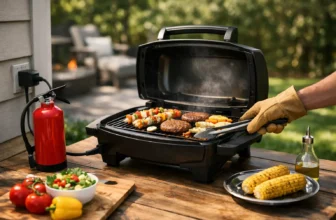
Outdoor-rated electric grills can be used outside, but their plugs, cords, and control components need more protection than a basic kettle grill. Keep connections dry, use a proper weather-rated outlet, and cover the appliance when it is not in use. If heavy rain, snow, or prolonged freezing conditions are common, moving an electric grill into a shed or garage is the safer call.
A Grill Cover Helps, but It Can Also Cause Problems
A good cover is worth using, especially if the grill sits in direct rain or sunlight. It keeps leaves, bird droppings, dust, and standing water off the lid. It also reduces UV damage to painted finishes and plastic parts.
But a cover should fit without dragging on the ground. A cover that is too loose flaps in the wind and rubs the finish. One that is too tight is difficult to remove and may trap moisture. Look for durable material, reinforced seams, venting, and straps or buckles that keep it in place.
Never cover a hot or damp grill. Let the grill cool after cooking, then give it time to dry. If you close up a wet grill after a rainstorm, remove the cover on the next dry day and let the unit air out. This small habit prevents a lot of hidden rust.
Set Up the Grill So Water Has Somewhere to Go
Where the grill sits matters as much as the cover you buy. Avoid low spots in the yard or patio where water pools around the wheels and cart legs. Keep the grill away from sprinkler spray, roof runoff, and branches that drip sap and debris onto the lid.
A covered patio is ideal, provided there is adequate clearance and ventilation for cooking. Do not operate any grill in a garage, enclosed porch, or under a low structure that does not meet the grill manufacturer’s clearance requirements. Storage protection is useful. Fire and carbon monoxide risks are not worth trading for it.
If your grill stays on an exposed deck, position it so prevailing wind does not blow rain directly into the back vent, hopper, or control panel. Lock the wheels if equipped, particularly in storm-prone areas.
The Maintenance That Makes Outdoor Storage Work
Leaving a grill outside is manageable when maintenance is routine instead of reactive. Four habits do most of the work:
- Brush the grates and empty grease or ash after the grill has cooled.
- Inspect the cover, cart frame, lid seams, and fasteners for rust or peeling finish every month or two.
- Clean burner tubes and check ignition performance at the start of each grilling season.
- Remove pellets before long wet spells and keep electrical components dry.
For rust on painted steel, clean the affected spot, remove loose material, and touch it up before corrosion spreads. For surface rust on cast iron or stainless grates, scrub it off, heat the grate dry, and re-season it lightly. Deep corrosion in a burner, firebox, or structural cart component is different. Replace the part if possible rather than pretending it is only cosmetic.
When It Makes Sense to Move the Grill Inside
Seasonal indoor storage is worth the trouble if you will not cook for months, your area has harsh winters, or the grill is a pellet or electric model with sensitive parts. A dry shed is best. A garage can work for storage only when the grill is cool, clean, and the propane cylinder is stored outdoors.
Before storing any grill, remove food residue, grease, ash, and loose pellets. Dry it thoroughly. Rodents are drawn to grease and pellet dust, and they can chew wires, insulation, and covers while the grill sits unused.
A grill is outdoor equipment, not outdoor decoration. Give it a dry place to sit, cover it intelligently, and address small corrosion early. That is how a grill earns years of dependable cooking instead of becoming an expensive rust project.