
A grill basket can turn loose vegetables into an easy side dish, or turn them into a steamed, unevenly browned mess. The best grill baskets for vegetables have enough open area to let heat and smoke through, sturdy enough construction to survive stirring, and a shape that works with the way you actually cook. That matters more than a polished finish or a large logo stamped into the steel.
For most backyard cooks, a flat stainless steel basket with medium perforations is the sensible starting point. It handles onions, peppers, zucchini, mushrooms, asparagus, and cubed squash without letting half the meal fall through the grates. But there is no single best basket for every grill or every vegetable. A deep wok-style pan behaves differently from a shallow tray, and a compact kettle grill needs a different footprint than a six-burner gas model.
Best Grill Baskets for Vegetables by Cooking Style
Best overall: Weber Deluxe Grilling Basket
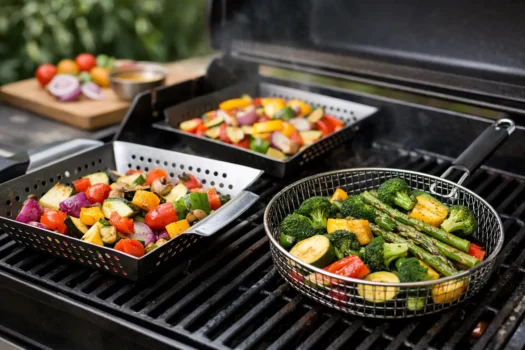
The Weber Deluxe Grilling Basket is the straightforward choice for cooks who want one basket to handle most weeknight vegetable jobs. Its broad, shallow shape gives vegetables room to spread out rather than pile into a thick layer. That is important. Crowded vegetables release moisture faster than it can evaporate, so they soften before they brown.
The stainless steel construction is durable, and the raised edges make stirring less risky than on a flat grill pan. It is particularly well suited to sliced peppers, onions, zucchini half-moons, broccoli florets, and mushrooms. On a gas grill, it is easy to move from direct heat to a cooler zone when the onions start getting ahead of everything else.
The trade-off is size. It takes up meaningful grate space, which can be a problem on compact grills when you are also cooking burgers, chicken, or steaks. It also has more surface area to scrub than a small basket. Still, for most households, that is a reasonable price for a basket that does not force vegetables into a heap.
Best for small vegetables: Napoleon Stainless Steel Wok Topper
A perforated wok topper, such as Napoleon’s stainless steel version, is a better fit when you cook smaller, irregular pieces. Think cherry tomatoes, diced peppers, chopped onions, cauliflower bits, green beans, or thinly sliced mushrooms. The higher curved sides keep food contained during frequent tossing, which makes it more forgiving than a shallow tray.
This style works especially well over charcoal because you can set it over a concentrated bed of coals and keep the vegetables moving. The heat is more aggressive, and the bowl shape makes tossing practical instead of awkward. It is also useful for vegetable mixes that include ingredients with different cooking times, since you can push slower-cooking pieces toward the center and keep tender items nearer the edge.
The downside is reduced contact with the grill grates and less exposure to open heat than a flat basket provides. You will get charred edges, but not the same broad browning you can get from a single layer in a shallow basket. If your goal is crisp-edged asparagus or wide strips of pepper, choose a tray instead.
Best for grilling delicate vegetables: a fine-perforated stainless tray
Fine-perforated trays are the right tool for vegetables that are easy to lose through standard basket holes. Peas in their pods, small diced squash, thin green beans, chopped kale, and tiny mushroom pieces all benefit from a tighter perforation pattern. A good tray should still have enough openings to drain moisture. If it looks more like a solid baking sheet with a few decorative holes, it will trap steam and work more like an oven pan.
This category is less about one brand and more about construction. Look for stainless steel, folded or rolled edges, and holes that are punched cleanly without sharp burrs. Thin metal can warp over a hot charcoal fire, and rough holes make cleanup harder because food fibers catch at the edges.
Fine perforations also demand more attention to preheating. Put a cold tray on a cold grill and vegetables are likely to stick before they begin to brown. Preheat the basket for several minutes, then add lightly oiled vegetables. Do not pour oil directly onto a hot basket over open flame.
Best for long vegetables: a narrow grill basket with a lid
A narrow hinged basket earns its place when asparagus, scallions, carrots, green beans, or long zucchini planks are regular parts of the menu. The lid keeps long pieces from rolling away and lets you flip the entire load at once. That is convenient when grilling over charcoal, where turning individual pieces can mean working too close to a hot fire.
These baskets have a limitation that marketing photos rarely show: they can crush soft vegetables. Thick asparagus and sturdy carrots are fine. Delicate sliced eggplant, mushrooms, or ripe tomato wedges can stick to the upper grate and tear when you open the lid. They also tend to hold food closer to the metal, so burned spots are more likely if the fire is running hot.
Buy a hinged model for its specific job, not as your only vegetable basket. It is a useful specialty tool, not the most flexible option on the patio.
What Separates a Good Vegetable Grill Basket From a Gimmick
Material comes first. Stainless steel is the practical choice for most people because it resists corrosion, tolerates repeated high-heat use, and does not require seasoning. It is not maintenance-free. Grease and carbon can still build up, especially if the basket sits over a flare-up. But it will generally outlast coated steel baskets once the coating begins to chip.
Cast iron baskets hold heat well and can brown vegetables aggressively, but they are heavier, slower to clean, and need the same seasoning discipline as any cast iron cookware. They make sense for cooks who already maintain cast iron and want deep searing. They do not make sense for someone looking for a low-maintenance accessory to hang beside a gas grill.
Hole size is the next decision. Medium holes are the best all-around compromise. They expose food to heat while holding typical chopped vegetables. Large slots create better flame access and can produce stronger char, but small pieces disappear through them. Tiny holes prevent losses but restrict airflow and promote steaming if the basket is crowded.
Handle design deserves more attention than it gets. Long handles can be useful on a deep grill, but they may prevent the lid from closing on smaller models. Integrated side handles are compact and sturdy, yet they require good heat-resistant gloves. Avoid flimsy wire handles that flex under a full load. A basket full of hot vegetables is not heavy until one handle twists and sends it sideways.
Size Matters More Than Most Buyers Expect
Measure your usable cooking grate before buying. Do not rely on the grill’s advertised square inches, which can include warming racks or awkward edge areas. A basket needs room around it for airflow, and on a gas grill you may want an open zone beside it for direct cooking.
For a family of two to four, a basket around 12 to 14 inches wide is usually enough for a vegetable side dish without overloading the grill. Larger baskets work well for meal prep, cookouts, and mixed vegetables, but only if you can keep the food in a loose layer. More capacity is not automatically better. A half-full basket browns better than an oversized one packed to the rim.
Round charcoal grills bring another constraint. A rectangular basket can fit inside the grate but leave inefficient gaps around the edges. That is not a deal-breaker, though a round or wok-style basket often uses the available coal zone more effectively. On a pellet grill, where direct radiant heat is lower, choose a shallow basket and avoid piling food high. Pellet grills can roast vegetables well, but they need airflow and time to develop color.
How to Get Better Results From Any Basket
The basket is only part of the result. Cut vegetables to similar sizes, but do not assume every vegetable belongs in the same batch. Dense carrots and potatoes need a head start. Zucchini, mushrooms, and onions cook quickly. Tomatoes are best added near the end unless you want them collapsed into a sauce-like mixture.
Preheat the basket, toss vegetables with a modest amount of oil, and season with salt shortly before cooking. Too much oil causes flare-ups and leaves a greasy film that burns onto the steel. Too much salt too early can pull moisture from watery vegetables, especially zucchini and eggplant.
Keep the lid closed between stirs. Open-lid cooking may feel more active, but it slows browning on most grills and makes temperature control harder. Stir every few minutes instead of constantly. Vegetables need contact time with the hot metal and hot air to develop color.
Cleanup is easier when you deal with the basket while it is still warm, not cold and crusted the next morning. Let it cool enough to handle safely, soak it if necessary, and use a non-abrasive scrubber on stainless steel. A dishwasher may be convenient, but repeated dishwasher cycles can dull the finish and leave residue in tight perforations.
A good grill basket should make vegetables easier to cook, not become another awkward tool that stays in the cabinet. Choose the shape that matches your usual vegetables, leave room for food to brown, and buy enough steel to last longer than one grilling season. That is the useful standard, not the promise on the package.